

Running injuries usually follow one predictable pattern
Runner's knee, shin splints, Achilles tendinopathy, IT band pain: these show up so consistently across runners of every level that they're often grouped together as overuse running injuries. What's less well known is that most of them share the same underlying cause: a mismatch between how much load the body is being asked to handle and how much load it's actually prepared for.
The most common running injuries, briefly
Runner's knee (patellofemoral pain). Pain around or behind the kneecap, usually worse going downhill, downstairs, or after sitting for a while. Often linked to weakness in the hip and quad muscles that control kneecap tracking.
Shin splints (medial tibial stress syndrome). An aching pain along the inner shin, typically from a sudden increase in running volume or intensity that the shin bone and surrounding muscles haven't yet adapted to.
Achilles tendinopathy. Pain and stiffness at the back of the heel or lower calf, often worse first thing in the morning, linked to overload of the Achilles tendon, frequently from a sudden increase in hill work, speed sessions, or overall mileage.
IT band syndrome. Sharp pain on the outside of the knee, often appearing at a consistent distance into a run, related to hip weakness affecting how the leg tracks during the running stride.
Why these injuries keep happening: the real common thread
Training load increased faster than tissue could adapt. The single biggest driver behind most running injuries is a spike in weekly mileage, pace, or hill and speed work without giving muscles, tendons, and bones time to adapt to the new demand. Tissue adaptation takes weeks; motivation to run further, faster, sooner rarely waits that long.
Strength deficits, especially at the hip. Weak hip abductors and glutes are linked to runner's knee, IT band syndrome, and several other common running injuries, since the hip controls how the leg tracks throughout the stride. Runners who only run and never strength train are more prone to these overuse patterns.
Running form and habits, in some cases. While there's no single "correct" running form for everyone, certain individual patterns, like excessive inward knee movement or overstriding, can contribute to a specific person's injury pattern and are worth assessing case by case, rather than assuming a generic form correction applies to everyone.
Inadequate recovery between sessions. Running hard or long on tissue that hasn't recovered from the previous session accumulates fatigue and micro-damage faster than the body can repair it, which eventually shows up as an overuse injury.
A sensible way to build up mileage
A commonly used guideline is to avoid increasing total weekly mileage by more than roughly 10% from one week to the next, and to build in a lighter recovery week every three to four weeks rather than increasing continuously. In practical terms, that might mean going from 20km one week to 22km the next, not jumping to 28km because a race is approaching. The same logic applies to adding speed work or hills: introduce one new stress at a time, not a faster pace and higher mileage and more hill sessions all in the same week. Runners preparing for a specific event often break this rule under time pressure, which is exactly when overuse injuries tend to appear in the weeks before a race.
What actually prevents running injuries
A sensible, gradual build-up in training load, as above, remains one of the most effective and well-supported ways to reduce running injury risk.
Regular strength training, not just running. Building strength in the glutes, hips, and quads specifically supports the demands of running and directly addresses the weakness pattern behind several of the most common injuries.
Addressing niggles early, not running through them. A minor ache that's ignored for weeks often becomes a proper injury that takes months to resolve. Early, mild symptoms respond far faster to treatment than established ones.
A running-specific assessment when problems recur. For recurring injuries, a gait and strength assessment can identify the specific pattern driving your particular issue, rather than applying generic advice that may not address your actual limitation.
Getting back to running the right way
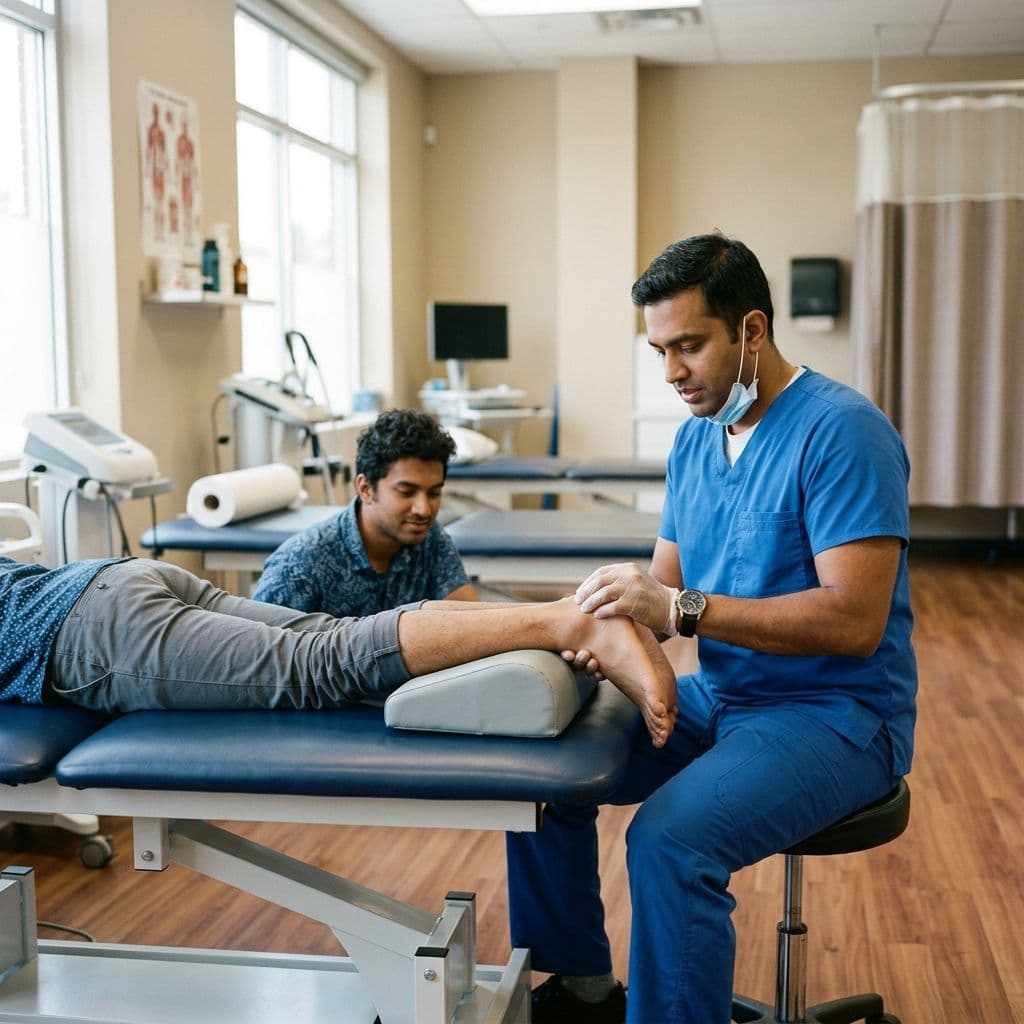
At Physynex, running injury assessment and rehab includes a review of training history and load progression, strength testing focused on the hip and lower limb, and where relevant, a look at running mechanics, to build a plan that resolves the current injury and reduces the chance of it becoming a repeat problem.
If a running injury keeps coming back or isn't improving with rest alone, book an assessment at Physynex in Purasaiwakkam, Chennai, or call +91 92117 36580.