

The main types of physiotherapy are musculoskeletal, orthopaedic, neurological, cardiopulmonary, sports, paediatric, geriatric, and women's health. Each one focuses on a different body system or stage of life. The right choice depends on what is causing your problem, not only where it hurts. A physiotherapy assessment is the surest way to find out.
Key Highlights
- Physiotherapy has eight main types: musculoskeletal, orthopaedic, neurological, cardiopulmonary, sports, paediatric, geriatric, and women's health.
- Musculoskeletal physiotherapy treats muscles, joints, and bones, so it covers most back, neck, shoulder, and knee pain.
- Neurological physiotherapy helps people with stroke, Parkinson's disease, and other brain or nerve problems relearn movement and balance.
- A type of physiotherapy describes who you treat and why. Methods like manual therapy and electrotherapy are the tools used inside each type.
- Many people need more than one type. An older adult after a knee replacement can benefit from orthopaedic and geriatric care together.
- A proper assessment by a licensed physiotherapist decides which type fits you, so you do not have to guess.
What Is Physiotherapy?
Physiotherapy is a health profession that helps people restore, maintain, and improve movement and physical function. It treats problems caused by injury, illness, ageing, and long periods of inactivity. According to World Physiotherapy, it covers prevention, treatment, and rehabilitation at every stage of life.
A physiotherapist looks at how your whole body moves. They do not only treat the sore spot. They find the cause, build a plan, and teach you what to do between visits. Because bodies and health problems differ so much, the profession has grown into several branches. Knowing them helps you ask for the right care.
What Are the Main Types of Physiotherapy?
Most clinics and guides group physiotherapy into the eight types below. Some names overlap, and clinics sometimes use slightly different labels. Each type is built around a body system or a stage of life, so the list shows who it treats and why.
What Is Musculoskeletal Physiotherapy?
Musculoskeletal physiotherapy treats problems in muscles, bones, joints, ligaments, and tendons. It is the most common type, and it covers everyday problems like back pain, neck pain, shoulder pain, and knee pain. Treatment usually mixes hands-on techniques with targeted exercise.
Typical reasons to see a musculoskeletal physiotherapist include sciatica, tennis elbow, arthritis, and stiff shoulders. The aim is to reduce pain first, then rebuild strength and movement so the problem does not return. If you live in the city, you can read about musculoskeletal physiotherapy in Chennai and how an assessment works.
What Is Orthopaedic Physiotherapy?
Orthopaedic physiotherapy helps you recover after bone, joint, or ligament injuries and surgeries. It is used after fractures, joint replacements, and ligament repairs. The goal is to restore strength, range of motion, and safe movement one stage at a time.
You will often hear this called by the same name as musculoskeletal care, and the two overlap a lot. In simple terms, orthopaedic care leans toward recovery around surgery and serious injury. Your physiotherapist follows the protocol set by your surgeon and adjusts it to how your body responds.
What Is Neurological Physiotherapy?
Neurological physiotherapy helps people whose movement is affected by damage to the brain, spinal cord, or nerves. Common examples are stroke, Parkinson's disease, multiple sclerosis, and spinal cord injury. It focuses on walking, balance, coordination, and the daily tasks that keep you independent.
Progress often comes from repeating the right movements many times, because the nervous system can build new pathways with practice. Sessions may include balance work, gait training, and task practice like standing up or reaching. You can see how this works in neuro and balance rehabilitation.
What Is Cardiopulmonary Physiotherapy?
Cardiopulmonary physiotherapy supports people with heart and lung conditions. It uses breathing techniques, airway clearance, and safe, graded exercise to improve stamina and ease breathlessness. It is used for chronic lung disease and after heart surgery or a heart attack.
This type is also called cardiorespiratory or respiratory physiotherapy. Your therapist checks how your heart rate and breathing respond to activity, then raises the load slowly. It often runs alongside your doctor's treatment plan, not in place of it.
What Is Sports Physiotherapy?
Sports physiotherapy treats injuries in athletes and active people, and helps prevent new ones. It covers problems like ankle sprains, hamstring strains, and ACL injuries, along with a planned return to play. You do not need to be a professional athlete to use it.
Weekend runners, gym-goers, and cricketers all benefit. The plan looks at your sport, your training load, and the movement habits that led to the injury. Learn more about sports and performance rehabilitation if you want to get back to training safely.
What Is Paediatric Physiotherapy?
Paediatric physiotherapy helps babies, children, and teenagers with movement and development problems. It is used for delayed milestones, cerebral palsy, muscle weakness, and injuries. Sessions are usually play based, so children stay relaxed, enjoy the activities, and keep practising without feeling like it is a chore.
Parents are part of the team. The therapist shows the family simple activities to repeat at home, because regular practice matters more than any single visit.
What Is Geriatric Physiotherapy?
Geriatric physiotherapy helps older adults stay strong, mobile, and independent. It targets problems like arthritis, weak bones, poor balance, and the fear of falling. A big part of the work is fall prevention, along with safe, confident movement in daily life.
Programmes are gentle and built around real tasks, such as getting out of a chair, climbing stairs, or walking outside. The focus is on keeping people doing what matters to them for as long as possible.
What Is Women's Health Physiotherapy?
Women's health physiotherapy supports women through pregnancy, childbirth recovery, and pelvic health concerns. It helps with back and pelvic pain during pregnancy, postnatal recovery, and pelvic floor weakness. Care is private, gentle, and matched to each stage, from the first trimester to the months after birth.
Many women only hear about it after a problem appears, but starting early can make pregnancy more comfortable. See how pre and post natal care is planned around the different stages.
What Are the Different Types of Physiotherapy Treatment?
Physiotherapy treatment methods are the tools a physiotherapist uses inside any type of care. The common ones are manual therapy, exercise therapy, electrotherapy, hydrotherapy, and heat or cold therapy. Your physiotherapist picks a mix based on your diagnosis, pain level, and goals.
- Manual therapy: hands-on techniques such as joint mobilisation, soft tissue massage, and stretching to ease pain and stiffness.
- Exercise therapy: planned strengthening, mobility, balance, and endurance work. This is usually the part that gives lasting results.
- Electrotherapy: machines such as TENS and therapeutic ultrasound that help manage pain and support healing.
- Hydrotherapy: exercises done in warm water, where buoyancy takes pressure off painful joints.
- Heat and cold therapy: simple ways to calm pain and swelling before or after exercise.
Notice the difference. The eight types describe who you are treating and why. These methods describe how the treatment is delivered. A neurological patient and a sports patient may both get exercise therapy, but the exercises will look very different.
Which Type of Physiotherapy Do I Need?
The type you need depends on the cause of your problem. If it comes from muscles or joints, start with musculoskeletal care. If it follows surgery, a nerve condition, or a life stage like pregnancy, choose the type built for that. The table below gives a quick starting point.
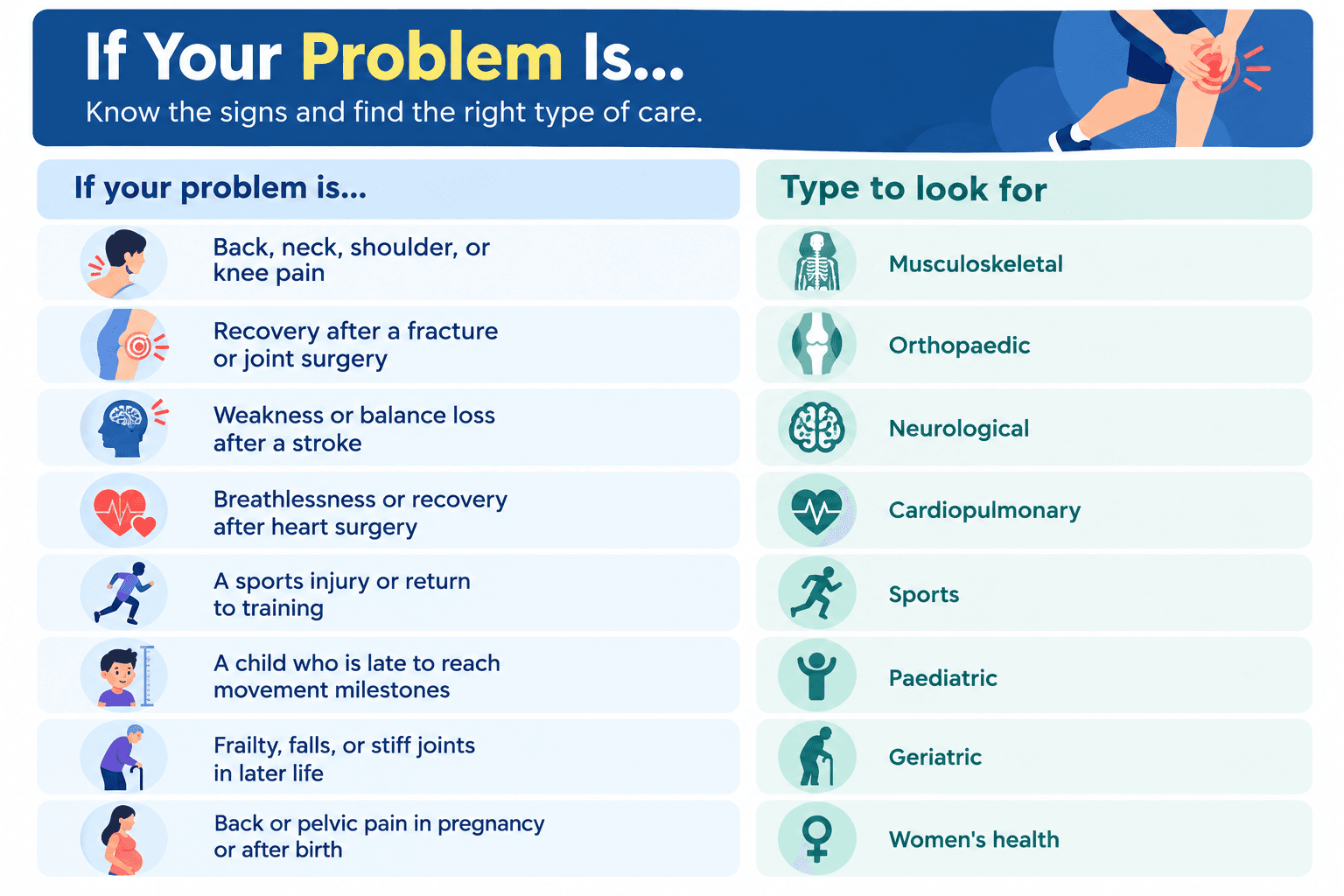
Real life is rarely that tidy. A 70 year old recovering from a hip fracture, for example, may need orthopaedic and geriatric care together. That is why the first step is an assessment, not a guess.
How Do I Choose the Right Physiotherapist?
Choose a licensed physiotherapist who starts with a full assessment before treatment. Ask them to explain your diagnosis in plain words, set clear goals, and give you a written plan with home exercises. Good care changes as you improve, and you should always understand why each exercise is in your programme.
If you are unsure where to begin, book an assessment at Physynex in Chennai. The physiotherapist will work out which type of care fits your problem, so you start on the right path from day one.
Frequently Asked Questions
What are the 4 types of physiotherapy?
Many guides list four core types: orthopaedic (musculoskeletal), neurological, cardiopulmonary, and paediatric. Some swap in geriatric or sports physiotherapy. This guide uses eight types so that more everyday needs are covered.
What are the three types of physiotherapy?
The three most common are musculoskeletal or orthopaedic, neurological, and cardiopulmonary physiotherapy. They match the three body systems physiotherapists treat most: muscles and joints, the nervous system, and the heart and lungs.
How many types of physiotherapy treatment are there?
There is no single official number. The main treatment methods are manual therapy, exercise therapy, electrotherapy, hydrotherapy, and heat or cold therapy. Your physiotherapist combines them to suit your condition.
What techniques are used in physiotherapy?
Common techniques include joint mobilisation, soft tissue massage, stretching, strengthening exercises, balance training, TENS, therapeutic ultrasound, and hydrotherapy. The mix depends on your diagnosis and goals.
Which type of physiotherapy do I need?
It depends on the cause of your problem. Muscle and joint pain usually calls for musculoskeletal care, while stroke or nerve problems call for neurological care. A physiotherapy assessment will confirm the right type.