Section Guide
6 Sections

Targeted physiotherapy for neck pain, stiffness, desk-related strain, and movement-linked cervical flare-ups.
Section Guide
6 Sections
This section explains how symptoms typically behave, what often keeps them going, and which physical capacities usually need to improve for recovery to hold up in daily life.
Neck pain often builds through prolonged desk work, stress, poor sleep, movement avoidance, or repeated strain rather than one isolated cause. An effective plan needs to look at movement quality, aggravating patterns, and how sensitive the area has become.
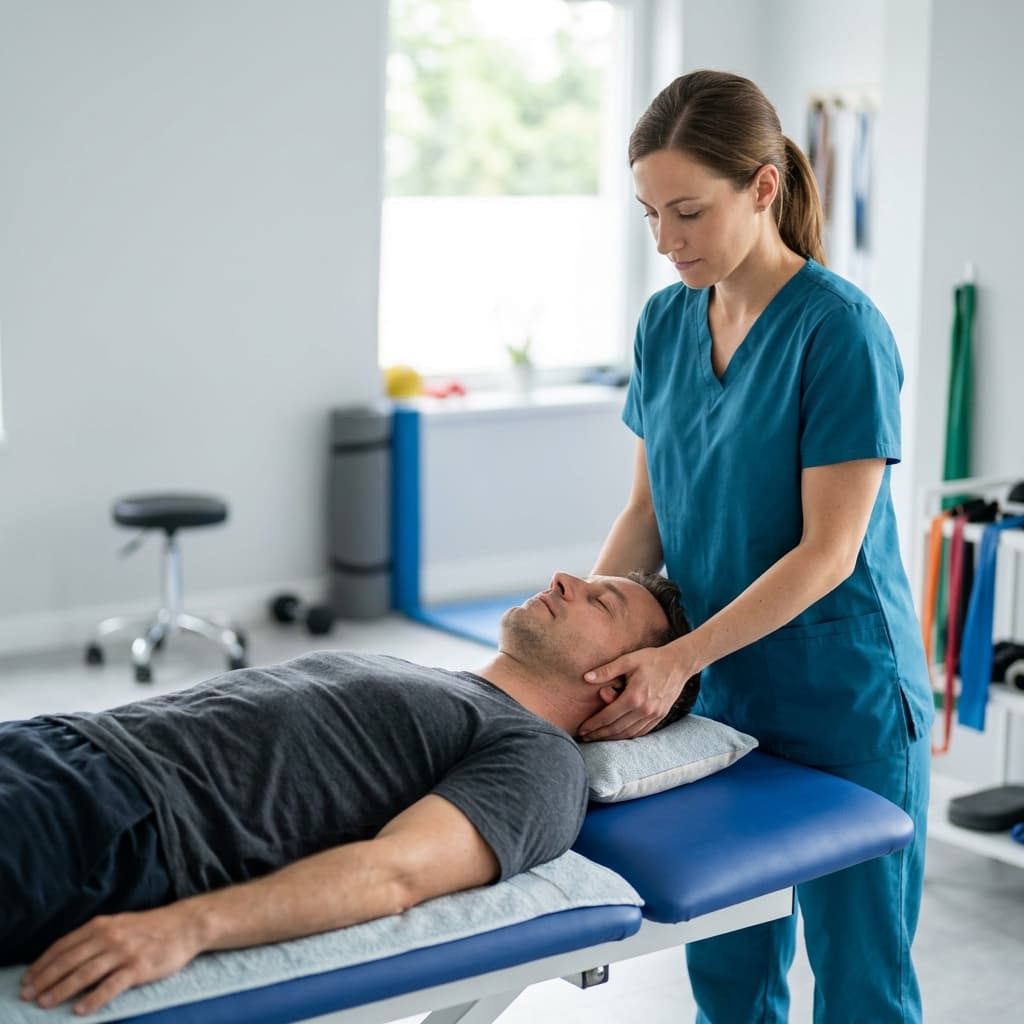
Our treatment combines symptom relief, mobility restoration, and progressive strengthening so you can turn your head, work longer, and return to daily activity with less fear of aggravation.
Clinical Snapshot
Targeted physiotherapy for neck pain, stiffness, desk-related strain, and movement-linked cervical flare-ups.
Typical Symptom Pattern
What We Clarify During Assessment
Related Guides
If your symptoms feel more specific or overlap with another pattern, these guides can help you understand the closest condition pathways.
Upper Back Pain
Assessment-led care for upper back pain, thoracic stiffness, posture-related discomfort, and desk or lifting-related flare-ups.
Back Pain
Assessment-led physiotherapy for mechanical low back pain, recurrent flare-ups, stiffness, and load-related lumbar symptoms.
Cervical Spondylosis
Physiotherapy support for cervical spondylosis with stiffness, pain, movement restriction, and functional limitation.
We assess neck pain in the context of desk load, sleep, stress, thoracic movement, and how sensitive the area has become. That helps us decide when mobility, exercise, or work-habit changes should lead the plan.
Treatment then progresses from symptom relief and movement restoration toward better endurance for turning, working, driving, and normal daily activity.
Your Plan May Include
Yes. Prolonged desk work, static positioning, and reduced movement variety can all contribute, especially when combined with poor load tolerance and fatigue.
In some cases, yes. When headaches are linked to neck stiffness, tension, or cervical movement sensitivity, treatment can help reduce one of the contributing drivers.
Not necessarily. Treatment is matched to your presentation and can include mobility work, exercise, education, and manual therapy when appropriate.
It depends on irritability, duration, work demands, and how consistently the plan is followed, but steady progress usually comes from a mix of treatment and practical self-management.