
A fall can change more than physical health. Even without a fracture, an older adult may become afraid to walk alone, stop using stairs, avoid leaving home, and lose strength through reduced activity. That cycle can increase the likelihood of another fall.
Falls are not an unavoidable result of ageing. Risk usually comes from several interacting factors: leg weakness, reduced balance, medication effects, vision, foot problems, blood-pressure changes, home hazards, cognitive changes, and the need for an appropriate walking aid. Addressing only one factor can miss the larger picture.
Physiotherapy contributes by measuring movement and building capacity, but good fall prevention may also require medical, medication, vision, hearing, footwear, nutrition, and home-safety review. The safest plan is coordinated and specific to the person.
Who should consider a fall-risk assessment?
Assessment is appropriate after any fall, near-fall, new unsteadiness, or noticeable reduction in walking confidence. It is also useful when someone begins holding furniture, struggles to rise from a chair, avoids uneven ground, or has recently returned home after illness or hospitalisation.
A person does not need to wait for a serious fall. Near-falls and activity avoidance are meaningful early signs. Family members may notice slower walking, difficulty turning, or increasing dependence before the older adult describes a problem.
- One or more falls in the past year
- Frequent trips, slips, or near-falls
- New use of walls or furniture for support
- Difficulty standing from a chair or climbing steps
- Fear that is reducing normal activity
What a physiotherapy fall assessment examines
The assessment begins with the circumstances of previous falls: where they happened, what the person was doing, whether dizziness or loss of consciousness occurred, and whether injury followed. Medical diagnoses, medication changes, vision, footwear, continence urgency, and home setup are relevant.
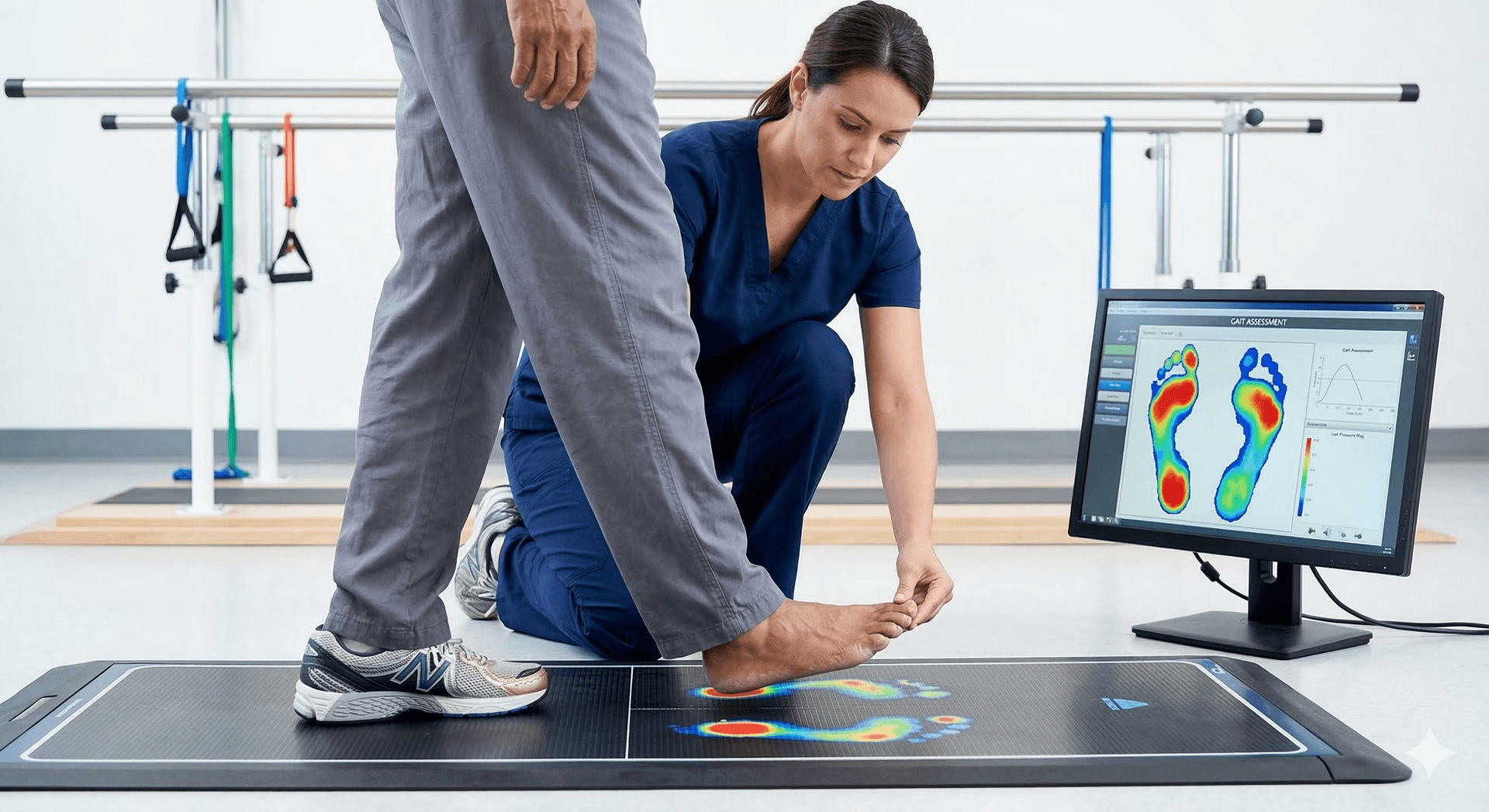
Movement testing may include chair rises, standing balance, turning, walking speed, step negotiation, reaching, and use of a walking aid. Strength of the hips, knees, ankles, and trunk contributes to the ability to recover from a loss of balance.
- Leg strength and repeated chair-rise ability
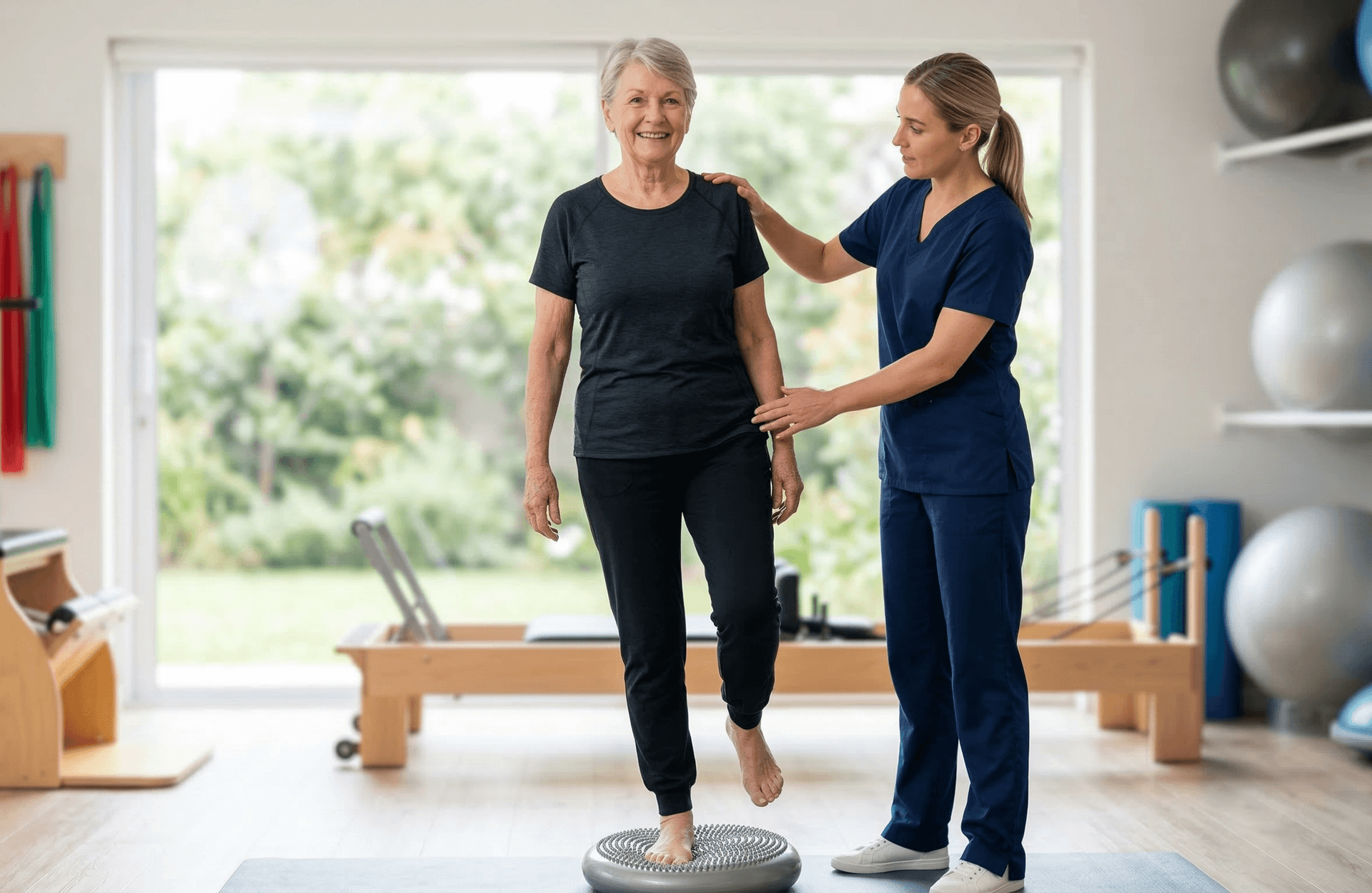
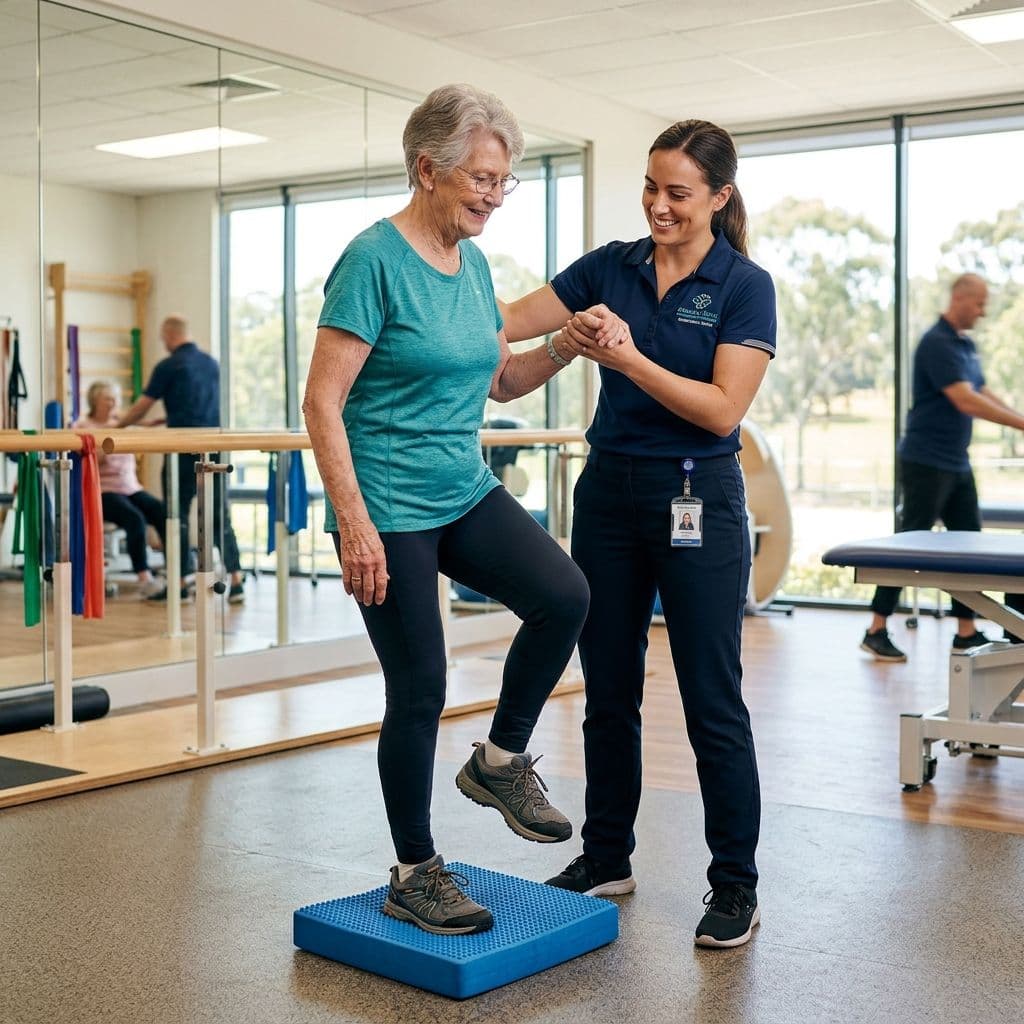
- Static and moving balance under safe supervision
- Walking speed, step length, turning, and obstacle negotiation
- Dizziness, sensation, foot health, and walking-aid use
- Confidence and the activities being avoided
Strength and balance training that transfers to daily life
Effective fall-prevention exercise should be challenging enough to create adaptation while remaining safely supervised. Strength exercises may include sit-to-stand, step-ups, heel raises, hip strengthening, and loaded carrying. Balance work changes the base of support, visual input, reaching, stepping, and direction.
Easy exercises performed indefinitely may stop producing improvement. The therapist should progress support, repetitions, resistance, speed, or task complexity. Practice must also resemble real life: turning in a narrow area, stepping over an obstacle, carrying an item, or recovering from a small loss of balance.
- Progress sit-to-stand from higher to lower surfaces
- Strengthen calves and hips for stepping and recovery
- Practise controlled turns and changes of direction
- Train stepping reactions near a secure support
- Build walking distance and community confidence gradually
Why walking alone may not be enough
Walking supports health and endurance, but it may not challenge strength and balance sufficiently on its own. A well-rounded program includes resistance and balance tasks in addition to regular walking.
The amount should suit health and ability. Older adults with medical conditions or recent falls may need supervised progression before performing more difficult tasks independently.
Home and daily-life changes that reduce risk
Environmental changes should make movement safer without unnecessarily restricting independence. Improve lighting, secure loose rugs, keep frequently used items accessible, and create a clear route to the bathroom. Rails and grab bars should be installed correctly rather than improvised.
Footwear should fit securely and provide a stable base. A walking aid must be the correct type and height, and the person should know how to use it during turns and stairs. Medication or dizziness concerns should be reviewed by the appropriate clinician.
- Improve lighting in bedrooms, hallways, and stairs
- Remove loose cables and unstable rugs from walking routes
- Use secure footwear rather than loose slippers
- Keep glasses and the prescribed walking aid within reach
- Discuss dizziness or medication-related drowsiness medically
Rebuilding confidence after a fall
Fear should be taken seriously without allowing it to dictate permanent avoidance. The therapist can grade the feared task: indoor walking before outdoor walking, quiet environments before crowded ones, or a low step before a full staircase.
Success needs to be repeated. One supervised attempt may prove the task is possible, but confidence comes from predictable practice and clear strategies for fatigue, uneven ground, and unexpected obstacles.
- Set goals based on meaningful places and activities
- Practise feared tasks in controlled stages
- Use the least support that remains safe
- Track near-falls and confidence as well as strength
- Include family without making the person unnecessarily dependent
Create a plan that works beyond the clinic
Clinic performance can overestimate real-world safety because the environment is level, well lit, and supervised. Rehabilitation should prepare for door thresholds, uneven paths, crowded spaces, carrying items, low chairs, and divided attention. Home practice begins with tasks that remain safe and clearly understood.
Family support works best when it enables practice rather than replacing every activity. Agree which tasks require supervision, where an aid should be used, and how to respond after a near-fall. Excessive assistance can reduce opportunities to build strength and confidence, while insufficient support can expose the person to avoidable risk.
Community goals make the plan meaningful. Walking to a nearby shop, attending a place of worship, using transport, or visiting family can be broken into distance, surfaces, steps, and fatigue. Training those components creates a clearer route back to participation than repeating balance exercises without a destination.
- Identify home tasks that need supervision
- Practise real surfaces and obstacles in safe stages
- Teach family how much assistance is appropriate
- Link exercise milestones to community activities
- Review the plan after illness, medication change, or another fall
Red flags: when symptoms need urgent medical review
A fall may be the first sign of an acute medical problem. Seek urgent medical help when injury or new neurological, cardiac, or systemic symptoms are present.
- Head injury with confusion, vomiting, severe headache, or unusual drowsiness
- Suspected fracture, deformity, severe pain, or inability to bear weight
- New facial weakness, speech difficulty, one-sided weakness, or collapse
- Chest pain, palpitations, breathlessness, or loss of consciousness
- A sudden major change in walking, balance, or alertness
Questions patients commonly ask
These answers are general guidance. The right decision depends on your symptoms, medical history, examination findings, and the activities you need to return to.
Is it normal to fall more often with age?
Risk can increase, but repeated falls should not be dismissed as normal. Many contributing factors are modifiable, and assessment can identify medical, environmental, strength, balance, or equipment needs.
Should an older adult use a walking stick?
A correctly selected aid can improve safety and confidence. The type, height, and technique matter. An assessment is useful when someone is borrowing furniture for support or using an aid incorrectly.
Can balance improve after several falls?
Often yes. Strength, stepping reactions, walking, and confidence can improve with appropriately challenging practice. The program should also address vision, medication, sensation, and home risks where relevant.
How often should fall-prevention exercises be done?
Frequency depends on intensity and health, but balance practice and strength work need regular repetition over time. A therapist can create a safe weekly dose and progress it as ability changes.
The clinic takeaway for preventing falls
Fall prevention is not one balance exercise. It combines physical training, safer environments, correct equipment, health review, and graded return to the activities fear has removed. The goal is safer independence, not simply fewer steps.
At Physynex, bring a list of recent falls or near-falls, medications, and the walking aid currently used. Family observations and a short video of difficult home tasks can also help create a practical plan.
Relevant Physynex care pathways
Use these pages to understand the related condition or service. An assessment is still the right starting point when the diagnosis is uncertain.