
Physiotherapy for seniors is not about chasing youth or forcing difficult exercise. It is about protecting the movements that make daily life independent: standing from a chair, walking safely, climbing steps, turning without fear, bathing, cooking, shopping, and getting out of the house. When those tasks start feeling harder, life can shrink quietly. Physiotherapy helps reverse that shrinkage with a structured plan.
Many older adults do not lose independence because of one dramatic injury. They lose it through small reductions: walking less after knee pain, avoiding stairs after a near-fall, sitting more after back pain, stopping social outings because balance feels uncertain, or relying more on family for tasks that used to feel easy. Each change seems reasonable in the moment, but together they reduce strength, balance, confidence, and conditioning.
The best senior rehab is practical. It does not ask someone to train like an athlete. It asks: what do you need your body to do this month, and what is stopping it?
Why movement gets harder with age
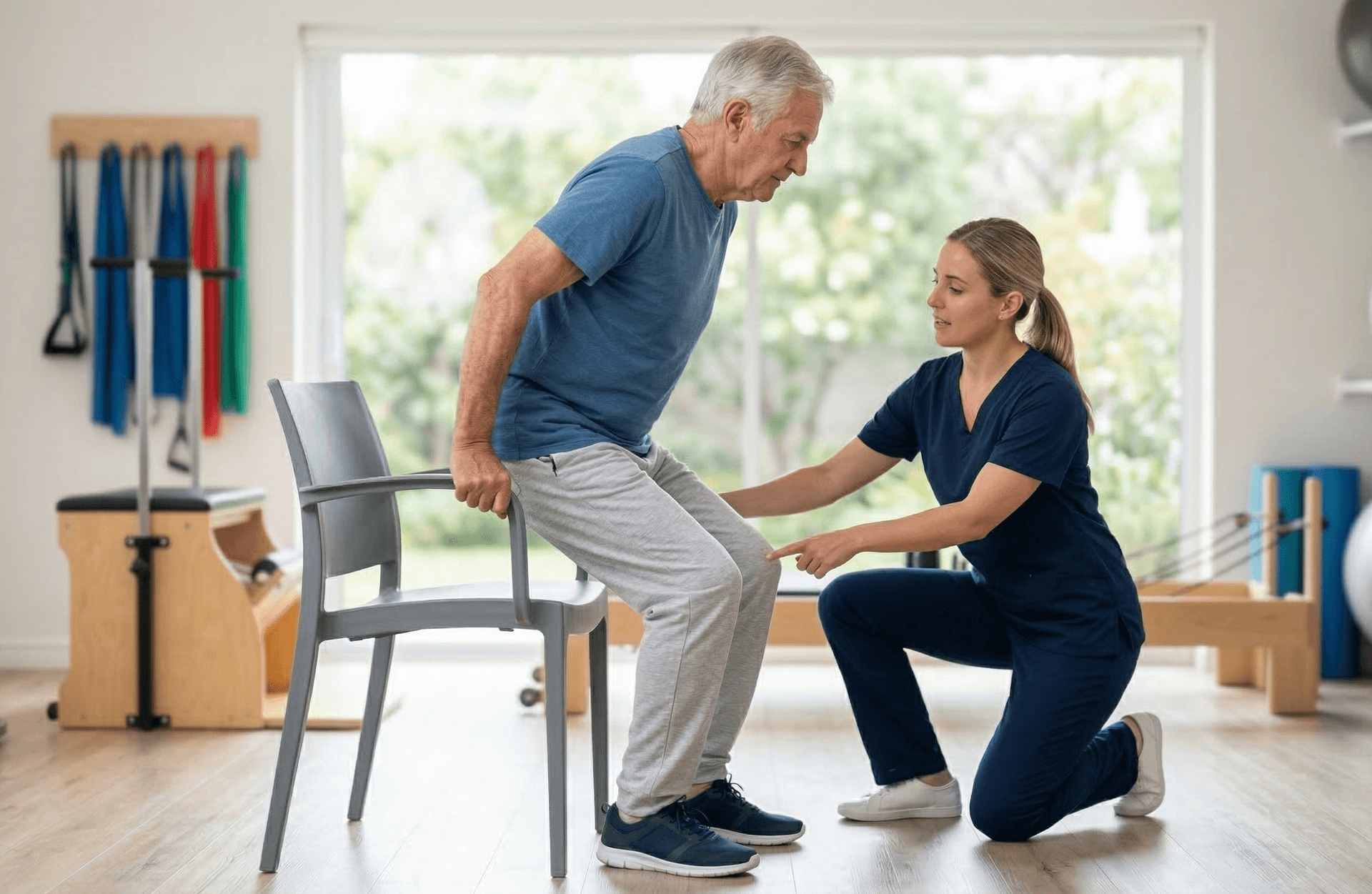
Ageing can bring changes in muscle mass, joint mobility, bone health, reaction time, vision, confidence, and recovery speed. Pain can make these changes worse because people move less when they hurt. Less movement then creates more stiffness and weakness. This is the cycle we want to interrupt.
Common signs that a senior may benefit from physiotherapy include:
- Difficulty getting up from a low chair
- Holding furniture while walking indoors
- Fear of falling on stairs or uneven surfaces
- Knee, hip, shoulder, neck, or back pain that limits routine
Also note: Reduced walking distance; Slower walking speed or shuffling steps; Trouble getting up from the floor; Reduced confidence after a fall or hospital stay.
These signs should not be dismissed as "just age." Many are trainable.
The four pillars of senior physiotherapy
Strength: Strength is the foundation of independence. Chair rise, stair climbing, balance recovery, walking speed, and carrying household items all depend on muscle capacity. Strength work may begin with sit-to-stands, supported squats, heel raises, step practice, bridging, wall push-ups, or resistance band work.
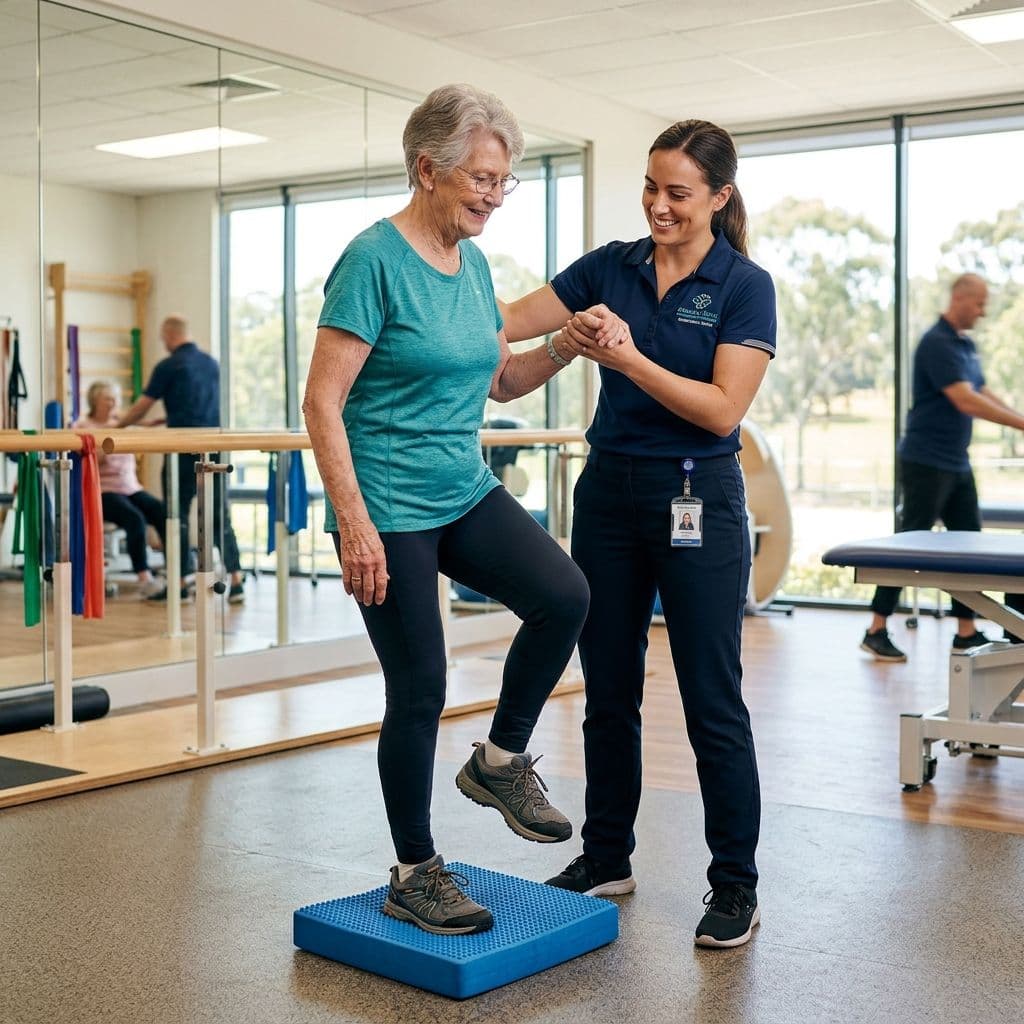
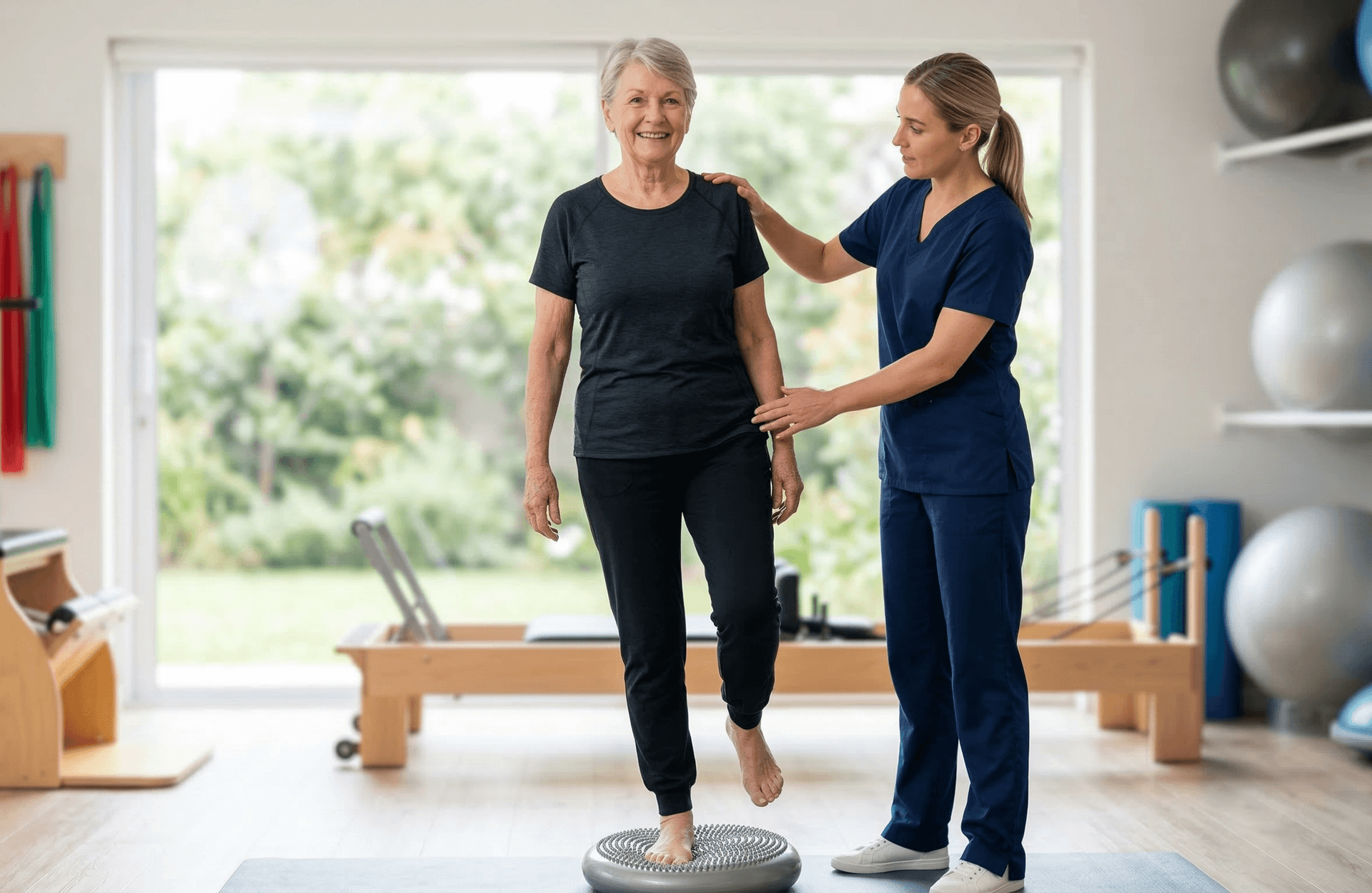
Balance: Balance is not one skill. It includes vision, vestibular input, joint position sense, foot strength, reaction time, and confidence. A balance program may include supported narrow stance, stepping in different directions, heel-to-toe practice, turning drills, reaching tasks, and real-world walking challenges.
Mobility: Stiff joints make daily movement inefficient. Hip stiffness can make walking harder. Ankle stiffness can affect stairs. Shoulder stiffness can make dressing difficult. Gentle mobility work helps the body move with less effort.
Pain control and pacing: Pain does not always mean the body should stop completely. A senior rehab plan should help the person keep moving while adjusting the painful task. The goal is to reduce flare-ups without creating fear of movement.
A practical self-check for independence
Try these simple questions:
- Can you stand from a chair without using your hands?
- Can you walk for 10 minutes without needing a long recovery?
- Can you turn around without grabbing support?
- Can you climb a flight of stairs at your normal pace?
Also note: Can you carry a light bag without feeling unstable?; Can you get up from the floor with or without support?; Are you avoiding outings because of pain or balance?.
If two or more are difficult, a physiotherapy assessment can help identify whether the main limitation is strength, mobility, balance, pain, confidence, or a mix.
What a useful plan looks like
A good plan should connect directly to daily life. For example:
- If standing from a chair is hard, train chair height, foot position, leg strength, and confidence.
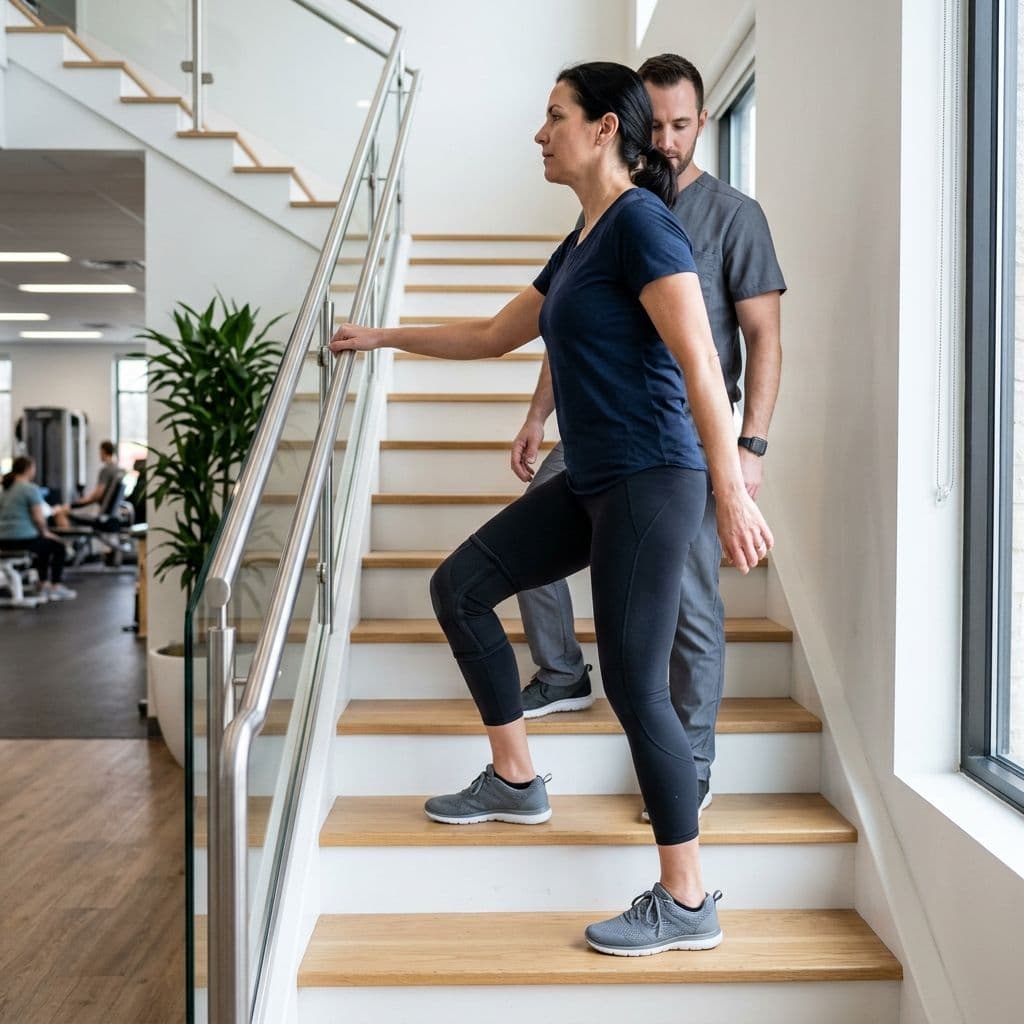
- If stairs are hard, train step height, knee control, hip strength, and safe handrail use.
- If walking is tiring, train walking intervals, calf strength, pacing, and recovery.
- If balance is poor, train stepping reactions and turning, not only static standing.
- If shoulder pain limits dressing, train shoulder mobility and practical reach patterns.
The plan should be measurable. "Exercise more" is too vague. "Five sit-to-stands from a firm chair, twice daily, with a weekly progression if pain stays controlled" is useful.
A 7-day starter routine
This is a general example and should be modified for safety.
- Day 1: Track chair stands, walking time, and balance confidence.
- Day 2: Add two short walks, even if each is only five minutes.
- Day 3: Practise sit-to-stands from a safe chair.
- Day 4: Add supported heel raises near a counter.
Also note: Day 5: Practise slow turns and stepping in place with support nearby.; Day 6: Repeat the easiest two exercises from the week.; Day 7: Review what felt better, worse, or unsafe..
This is not about doing everything. It is about finding the right starting dose.
How to progress without overdoing it
Senior rehab works best when progress is small, steady, and visible. A jump from no exercise to a long daily routine often fails because it creates soreness, fear, or fatigue. A better approach is to choose two or three important tasks and build them gradually.
For example, if chair rise is the main problem, the first target may be standing up from a slightly higher chair with good control. Then the height can reduce. Then repetitions can increase. Then the person can practise from different chairs at home. This is more useful than doing random leg exercises that never connect to daily life.
If walking is the main issue, the first target may be time rather than distance. A person may begin with five minutes twice a day, then add one or two minutes every few days if recovery is good. If balance is the main issue, the first target may be safe stepping practice near support before outdoor walking becomes the goal.
Progress should feel challenging but not threatening. The person should finish with a sense of "I can do this again tomorrow," not "I survived that session."
Signs the program is working
Look for changes that matter at home:
- Standing from a chair feels smoother.
- Walking speed improves slightly.
- Stairs feel less intimidating.
- The person needs fewer pauses during routine tasks.
Also note: Pain settles faster after activity.; Confidence improves enough to resume a normal outing..
These are clinical wins because they translate directly into independence.
When home exercise is not enough
Home exercise is useful, but some situations need closer supervision. If a person has fallen more than once, cannot stand safely without support, has dizziness, has rapidly changing walking ability, or is afraid to move alone, the program should be assessed in clinic. The same is true after surgery, hospital admission, stroke, fracture, or a long period of bed rest.
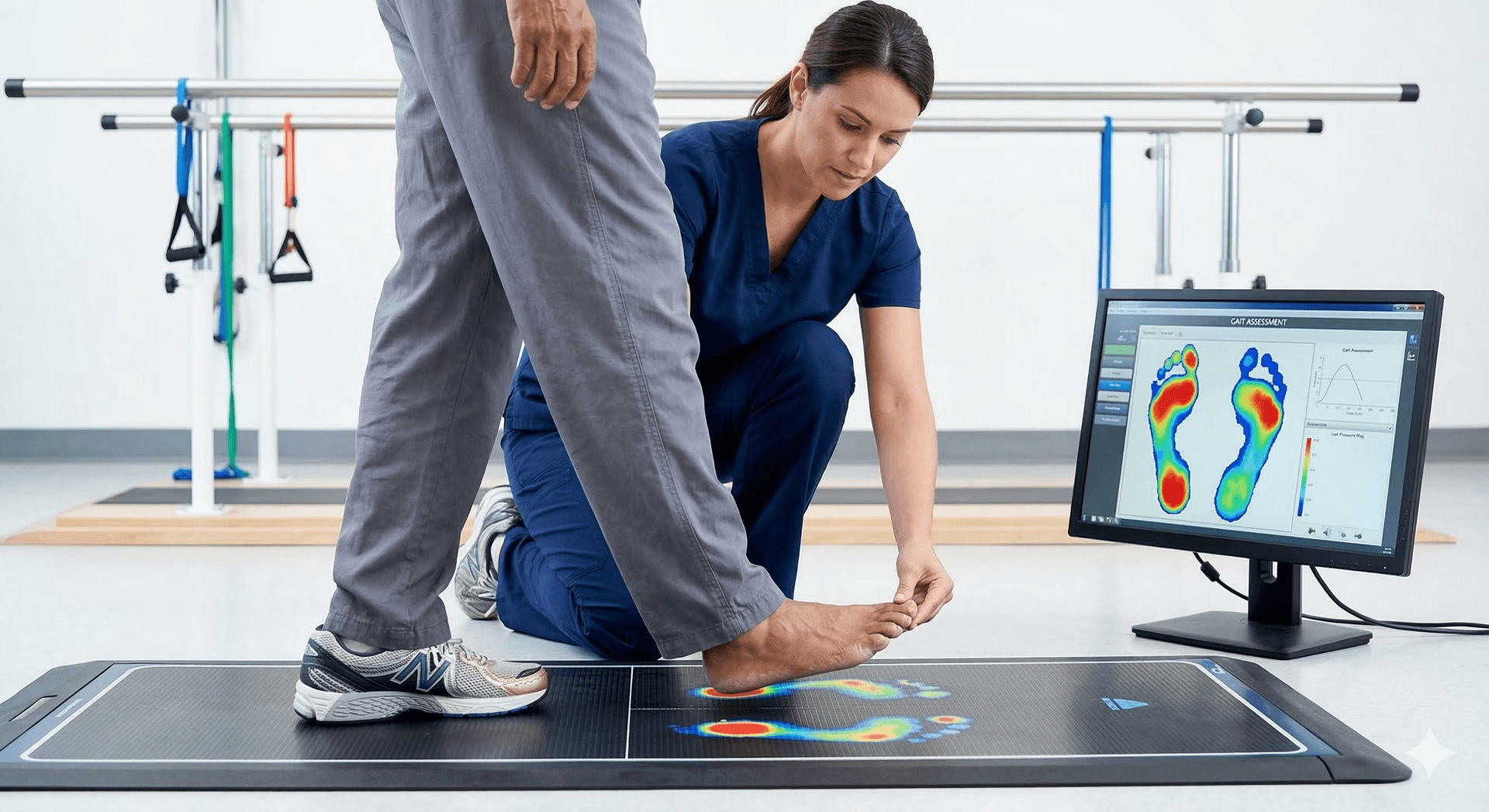
In these cases, physiotherapy is not just an exercise list. It becomes a safety plan. The clinician may check blood pressure response, walking aids, strength asymmetry, balance reactions, pain behaviour, and whether the home setup is making movement harder. The plan may include caregiver education too, because the safest exercise is the one the person can actually perform consistently at home.
Red flags
Seek medical review if there is:
- A sudden fall with head injury, confusion, or dizziness
- New weakness, facial drooping, speech difficulty, or one-sided symptoms
- Chest pain, shortness of breath, or fainting
- A hot swollen joint with fever
- Sudden severe pain after a fall
- Loss of bowel or bladder control
Common questions about senior physiotherapy
Is physiotherapy safe for seniors?
Yes, when it is tailored. The right plan respects medical history, pain level, balance risk, and daily goals.
Do seniors need strength training?
Yes. Strength work is one of the most useful tools for protecting independence. It does not need to be extreme, but it must be progressive enough to create adaptation.
Can physiotherapy reduce falls?
It can reduce risk by improving strength, balance, stepping reactions, and confidence. Fall prevention should also include vision, footwear, medications, home setup, and medical factors.
What if the person is afraid to exercise?
Fear is common after pain or a fall. The starting point should be safe, supported, and achievable. Confidence grows when the body proves it can do small tasks reliably.
When older adults should book a physiotherapy assessment
Book an assessment when daily tasks are becoming smaller: fewer walks, fewer outings, more furniture support, more hesitation with stairs, or more reliance on family for routine movement. The goal is not to wait until independence is lost. It is to identify the weak link early.
A good senior assessment should include strength, balance, walking, pain behaviour, medication or medical considerations, home demands, and the tasks the person most wants to keep doing. This helps the plan feel relevant. For one person, the priority may be getting up from a chair. For another, it may be temple visits, shopping, gardening, or walking safely to the bathroom at night. Rehab works better when it protects real life.
Explore strength, arthritis, and balance care
Clinic takeaway for older adults
If pain, stiffness, or unsteadiness is making life smaller, physiotherapy can help rebuild what matters. At Physynex, we focus on the movements that protect independence: standing, walking, turning, stairs, balance, and confidence in daily life.