
Persistent lower back pain can make ordinary tasks feel like a negotiation. Sitting through a meeting, getting out of a car, lifting a shopping bag, or sleeping comfortably may become unpredictable. That uncertainty often creates a second problem: people begin avoiding movement because they fear they are causing more damage.
This article uses a representative clinic-style example rather than claiming a specific patient result. Imagine a 34-year-old technology professional in Chennai with two years of recurring lower back pain. Symptoms are worse after long sitting, bending feels guarded, and short periods of rest or pain medication help only temporarily. There has been no major accident, progressive weakness, unexplained weight loss, or loss of bladder or bowel control.
The important clinical question is not simply, “Where does it hurt?” A useful assessment asks what movements provoke symptoms, what settles them, how sleep and stress influence the problem, whether nerve symptoms are present, and what the person has stopped doing. Chronic back pain is rarely explained by one weak muscle or one poor posture. It is usually a combination of sensitivity, reduced capacity, movement habits, workload, recovery, and beliefs about pain.
What a thorough lower back assessment should examine
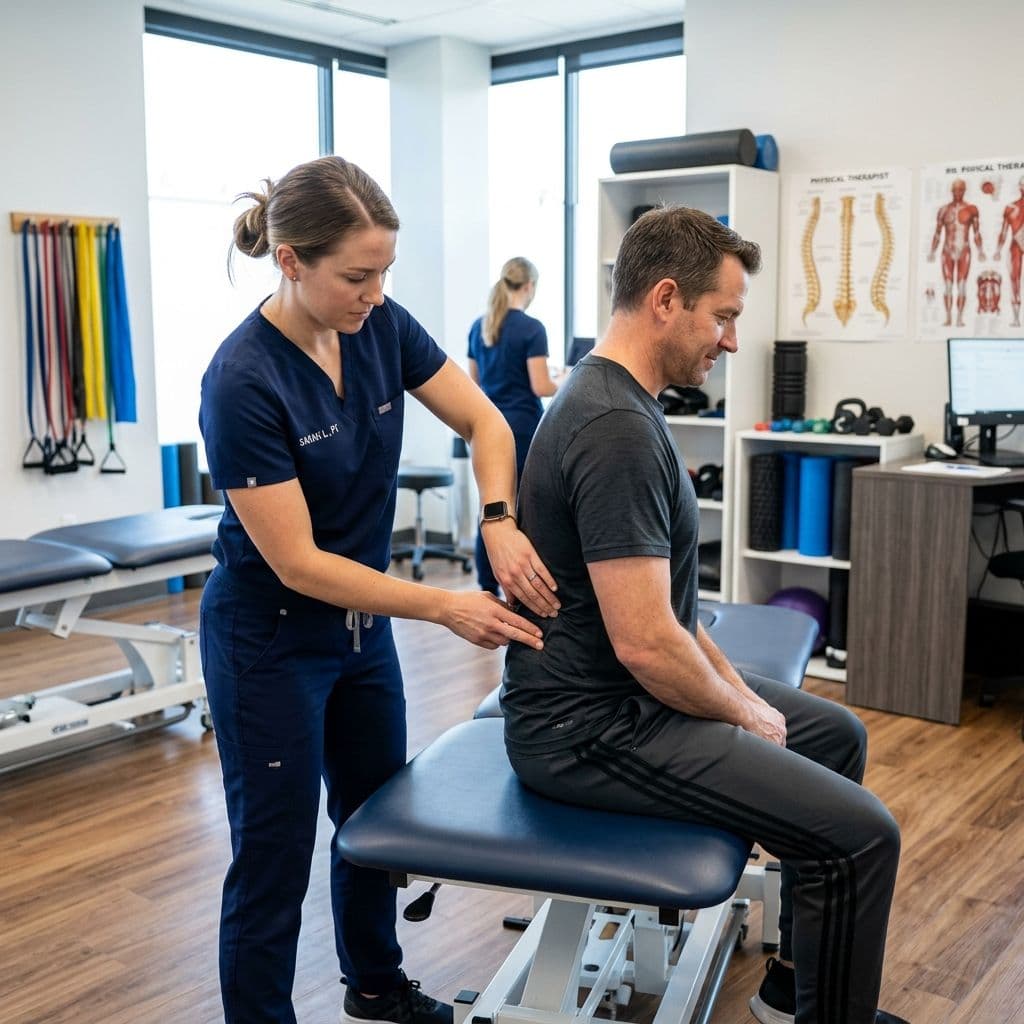
A physiotherapy assessment begins with the history. The clinician should clarify the pattern of pain, morning stiffness, sitting tolerance, walking tolerance, previous episodes, medical conditions, medication, sleep, work demands, and exercise history. Pain that stays in the lower back may behave differently from pain that travels below the knee with numbness or weakness.
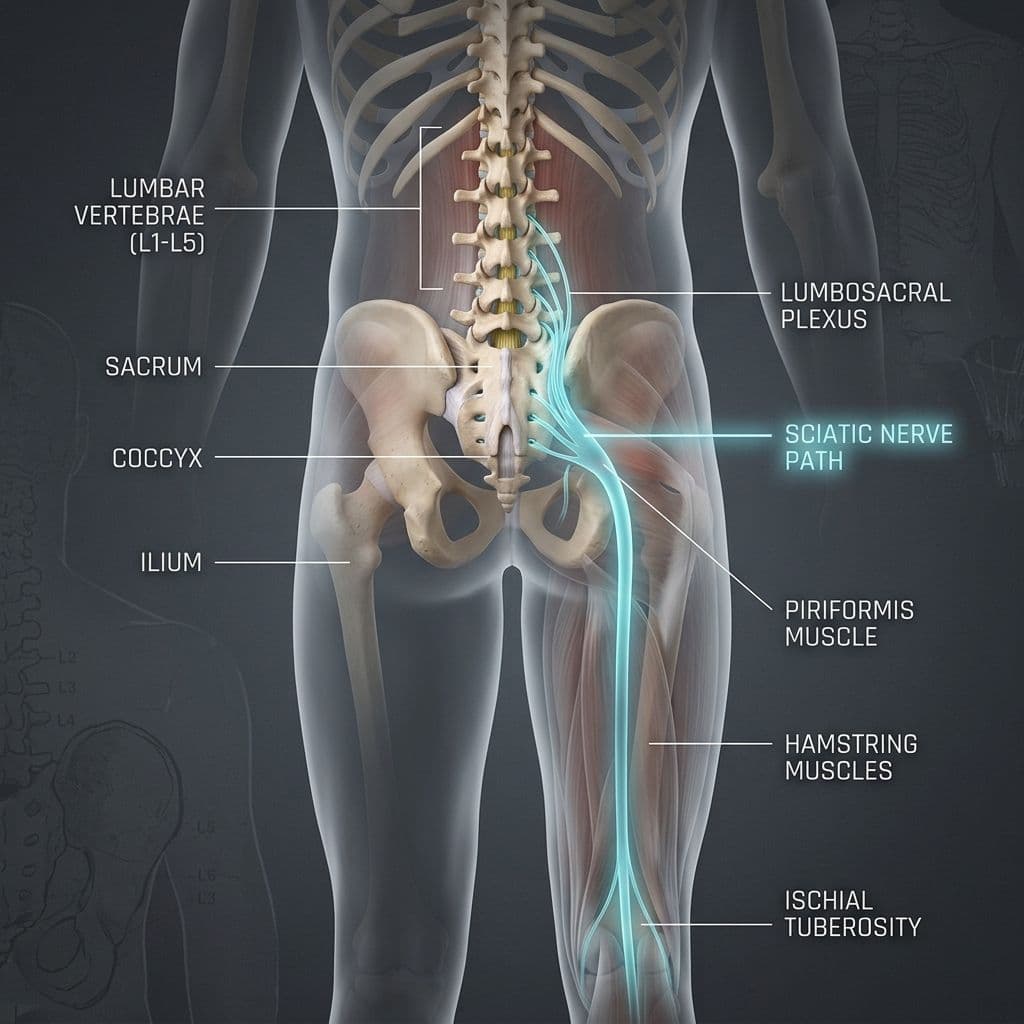
The physical examination then tests movements rather than searching for a single “perfect posture.” Bending, extending, rotating, squatting, stepping, walking, and lifting can show which tasks are sensitive and which strategies reduce symptoms. Strength testing may include the hips, trunk, legs, and calf muscles. Neurological screening is appropriate when symptoms suggest nerve involvement.
- How symptoms change through the day and with different positions
- Whether pain spreads into the buttock or leg
- Confidence and control during bending, lifting, and getting up
- Hip, trunk, and leg strength relative to daily demands
- Workstation habits, movement breaks, sleep, and activity levels
Why an MRI is not automatically the first step
Imaging can be valuable when the history or examination suggests a serious condition, significant trauma, progressive neurological loss, or when results are likely to change treatment. It is not required for every episode of back pain. Disc changes, joint changes, and other age-related findings are common even in people who do not have pain.
This does not mean symptoms are imaginary. It means pain and scan findings do not always match neatly. A clinician should explain why imaging is or is not indicated, monitor the response to care, and refer for medical review when the presentation falls outside a routine musculoskeletal pattern.
A staged non-surgical rehabilitation plan
Early treatment should make movement feel safer and more manageable. Manual therapy or soft-tissue techniques may be used for short-term comfort, but they should support active rehabilitation rather than replace it. The patient also needs a plan for sitting, walking, sleep, and symptom flare-ups between appointments.
The next phase builds capacity. The correct exercise is not defined by a fashionable name; it is the exercise the person can perform with acceptable symptoms and progress over time. A program may include trunk control, hip strengthening, squats, carries, hinges, step work, and aerobic activity. Loads should be adjusted according to the response during exercise and over the following day.
- Reduce fear by practising comfortable versions of painful movements
- Use walking or another tolerated aerobic activity to rebuild general capacity
- Progress trunk and hip exercises from simple control to meaningful resistance
- Rehearse lifting with objects that resemble home or work demands
- Plan gradual exposure to longer sitting rather than chasing a rigid posture
What progress should look like
Progress is broader than a pain score. Useful markers include sitting longer without a major flare, bending with less hesitation, walking farther, sleeping more consistently, lifting with better confidence, and recovering more quickly when symptoms rise. Some discomfort during rehabilitation can be acceptable when it remains tolerable and settles as expected.
A six-week review may show meaningful improvement, but no ethical clinician can promise a fixed percentage of pain relief by a fixed date. Duration depends on symptom irritability, general health, consistency, work demands, sleep, and how much capacity was lost before treatment began.
Common mistakes that keep recurring back pain disruptive
The most common mistake is treating every flare as fresh damage. This can lead to repeated bed rest, stopping all exercise, and waiting to be completely pain-free before moving. A better flare plan temporarily reduces load while preserving comfortable activity, then restores the previous program step by step.
Another mistake is relying entirely on passive treatment. Massage, manipulation, heat, or medication may help symptoms, but long-term resilience generally requires movement, strength, pacing, and confidence. Ergonomics matters too, although there is no single chair position that prevents pain. The ability to change position regularly is often more useful than holding one posture all day.
- Waiting for severe pain before seeking an assessment
- Using pain relief as the only management strategy
- Avoiding bending permanently instead of retraining it gradually
- Changing exercises every few days before adaptation can occur
- Measuring recovery only by whether pain has completely disappeared
A practical workday plan for desk-based back pain
Start with changes that are realistic enough to repeat. Alternate sitting with brief standing or walking, keep frequently used items within easy reach, and use a separate keyboard and mouse when a laptop is the main device. A movement break does not need to be a full workout. One or two minutes performed consistently can be more useful than an ambitious routine that is abandoned.
Outside work, maintain a baseline of activity that does not depend on having a perfect day. This may be a walk, a short strength session, or mobility exercises. The plan should include what to do on a difficult day so that one flare does not become several weeks of inactivity.
- Change position every 30 to 60 minutes when possible
- Keep the screen high enough to avoid sustained slumping
- Use a brief walk or a few repeated movements as a reset
- Separate normal exercise effort from warning symptoms
- Increase one variable at a time: load, repetitions, range, or duration
Red flags: when symptoms need urgent medical review
Most lower back pain is not caused by a dangerous condition, but some patterns need urgent medical assessment rather than routine exercise advice. Seek prompt care when symptoms are new, severe, rapidly changing, or accompanied by systemic or neurological signs.
- New loss of bladder or bowel control, numbness around the saddle area, or rapidly worsening weakness
- Severe pain after a significant fall, collision, or other trauma
- Fever, unexplained weight loss, a history of cancer, or feeling systemically unwell
- Progressive leg weakness, increasing numbness, or major difficulty walking
- Constant night pain that is not meaningfully changed by position
Questions patients commonly ask
These answers are general guidance. The right decision depends on your symptoms, medical history, examination findings, and the activities you need to return to.
Does chronic back pain mean my spine is damaged?
Not necessarily. Persistent pain can continue after tissues have healed because the nervous system remains sensitive and because strength, confidence, sleep, activity, and stress influence symptoms. A proper assessment is needed to identify the likely drivers and screen for conditions that require medical investigation.
Should I avoid gym training until the pain is gone?
Complete avoidance is rarely the only option. Exercises and loads can usually be modified so training remains tolerable. The goal is to find an entry point, monitor the response, and progress gradually instead of repeatedly stopping and restarting.
Can manual therapy fix the root cause?
Manual therapy may reduce symptoms for some people, especially when movement feels guarded. It is best used as one part of care. Lasting improvement usually depends on restoring activity, capacity, movement confidence, and strategies for work and flare-ups.
How long should physiotherapy take?
There is no universal timeline. A recent mild episode may settle quickly, while a two-year problem with reduced activity can require a longer progression. Your plan should include measurable milestones and regular review rather than an open-ended series of identical sessions.
The clinic takeaway for persistent lower back pain
Non-surgical care is not simply “doing a few core exercises.” Good rehabilitation combines medical screening, a clear explanation, symptom management, progressive loading, workday changes, and practice of the activities that matter to the patient. Surgery may be appropriate for selected conditions, but it should not be assumed solely because pain has lasted a long time.
At Physynex, a back-pain assessment is designed to identify what is limiting you now and what needs to improve next. Bring relevant reports, a medication list, and details of the tasks you are avoiding. The aim is a plan you understand and can apply between sessions, with referral onward when the clinical picture requires it.
Relevant Physynex care pathways
Use these pages to understand the related condition or service. An assessment is still the right starting point when the diagnosis is uncertain.