

Neck pain during laptop work often starts as a manageable ache and gradually becomes part of the working day. By evening, the neck feels heavy, the upper shoulders are tight, turning the head may be uncomfortable, and headaches can appear after long meetings. Moving to a different chair may help briefly, but the problem returns when workload increases.
It is tempting to blame one “bad posture.” In reality, the neck tolerates many positions when exposure is varied and the surrounding muscles have enough capacity. Symptoms commonly build when a small laptop screen, long uninterrupted sitting, low physical activity, stress, poor sleep, and repeated reaching for a mouse occur together.
The right response is not to sit rigidly upright for eight hours. It is to identify whether the problem is a routine mechanical pattern, a nerve-related presentation, a headache disorder, or something requiring medical review, then improve the workstation and the body’s capacity at the same time.
What laptop-related neck pain can feel like
Mechanical neck pain often changes with position and activity. It may be centred at the base of the neck, spread toward the shoulder blades, or create a dull ache across the upper shoulders. Stiffness after sustained work may ease after walking, changing position, or gentle movement.
Symptoms into the arm deserve closer assessment. Tingling, numbness, altered grip, or pain travelling below the elbow can indicate irritation of a nerve or another upper-limb condition. Headaches associated with neck movement can occur, but sudden or unusual headaches should not be assumed to be posture-related.
- Aching or stiffness after long screen sessions
- Reduced comfort when turning the head while driving
- Upper-shoulder fatigue rather than one precise painful point
- Headache that appears with prolonged neck loading
- Arm symptoms that may require neurological testing
What a physiotherapy assessment should check
Assessment should connect symptoms to the working pattern. A clinician may ask how many hours are spent on the laptop, whether external equipment is used, how frequently positions change, and whether symptoms occur during non-work activities. Sleep, exercise, stress, eye strain, previous injuries, and headache features also matter.
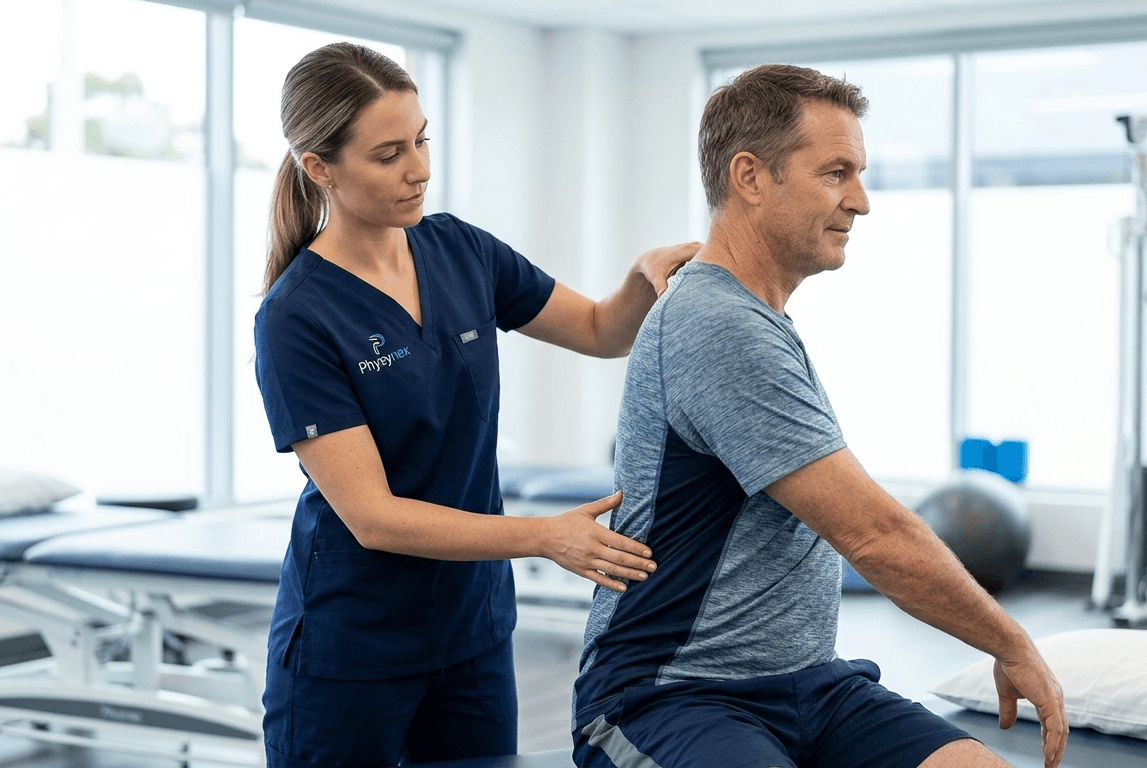
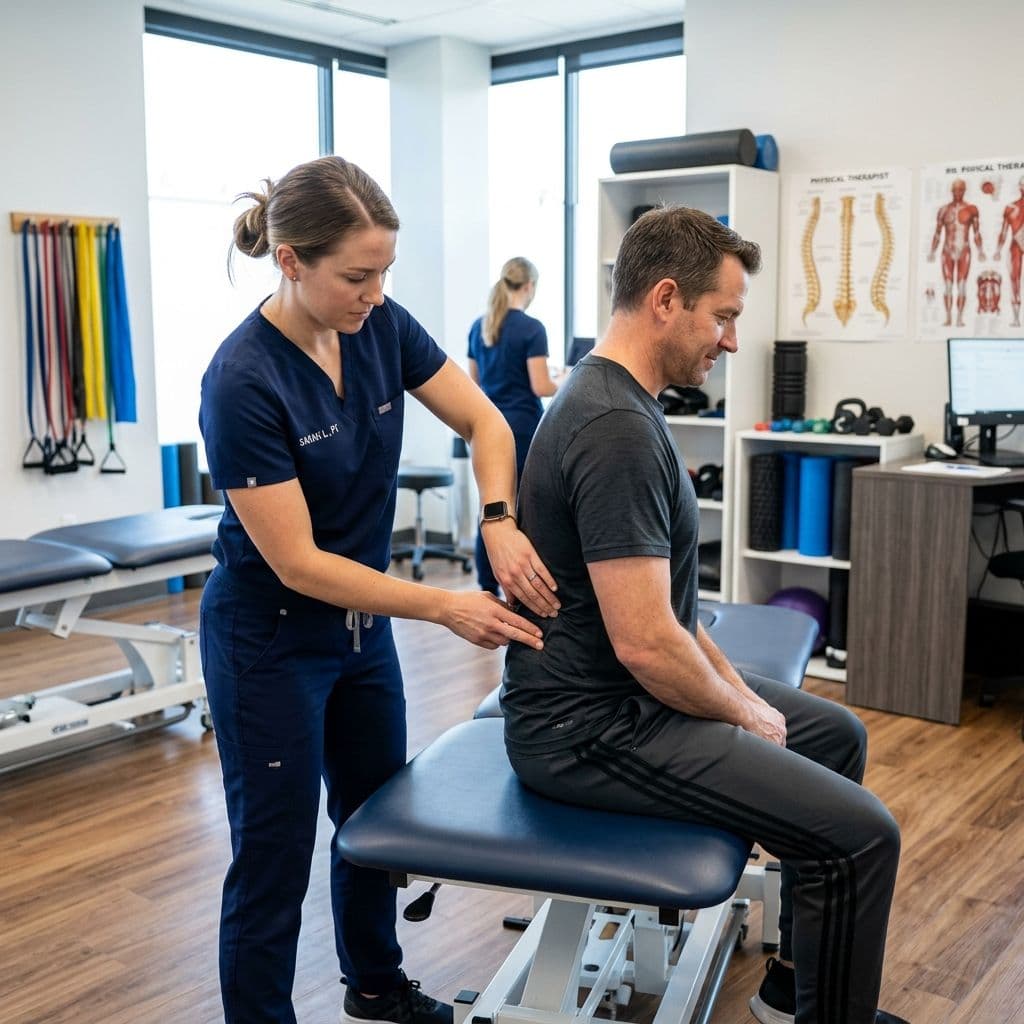
Physical testing may include neck movement, upper-back mobility, shoulder-blade control, arm strength, sensation, reflexes, grip, and tests that load or unload neural tissue. The goal is not to label every tight muscle as a cause. It is to identify modifiable factors and make sure the presentation is appropriate for physiotherapy.
- Neck and upper-back movement in several directions
- Shoulder and upper-limb strength and endurance
- Neurological screening when pain, numbness, or tingling travels
- Workstation dimensions and frequently repeated tasks
- Headache behaviour, vision demands, and recovery outside work
Fix the workstation without chasing perfect posture
A laptop is compact because the keyboard and screen are attached; that convenience creates a compromise. If the screen is at a comfortable viewing height, the keyboard may be too high. If the keyboard is comfortable, the screen is often too low. For prolonged work, an external keyboard and mouse allow the screen to be raised.
Chair height should let the feet feel supported and the forearms rest comfortably. The screen should be centred for the primary task, and frequently used items should not require repeated twisting or reaching. These changes reduce unnecessary load, but no setup removes the need to move.
- Raise the laptop on a stable stand or books when using external controls
- Keep the mouse close enough that the shoulder can remain relaxed
- Increase text size rather than leaning toward the screen
- Use headset audio for long calls instead of holding a phone at the neck
- Change position before discomfort becomes intense
Build neck and shoulder capacity progressively
Exercises should match the examination. Some people benefit from gentle neck movement and upper-back mobility. Others need more emphasis on shoulder, upper-back, and arm strength because their symptoms appear after sustained work rather than because movement is restricted.
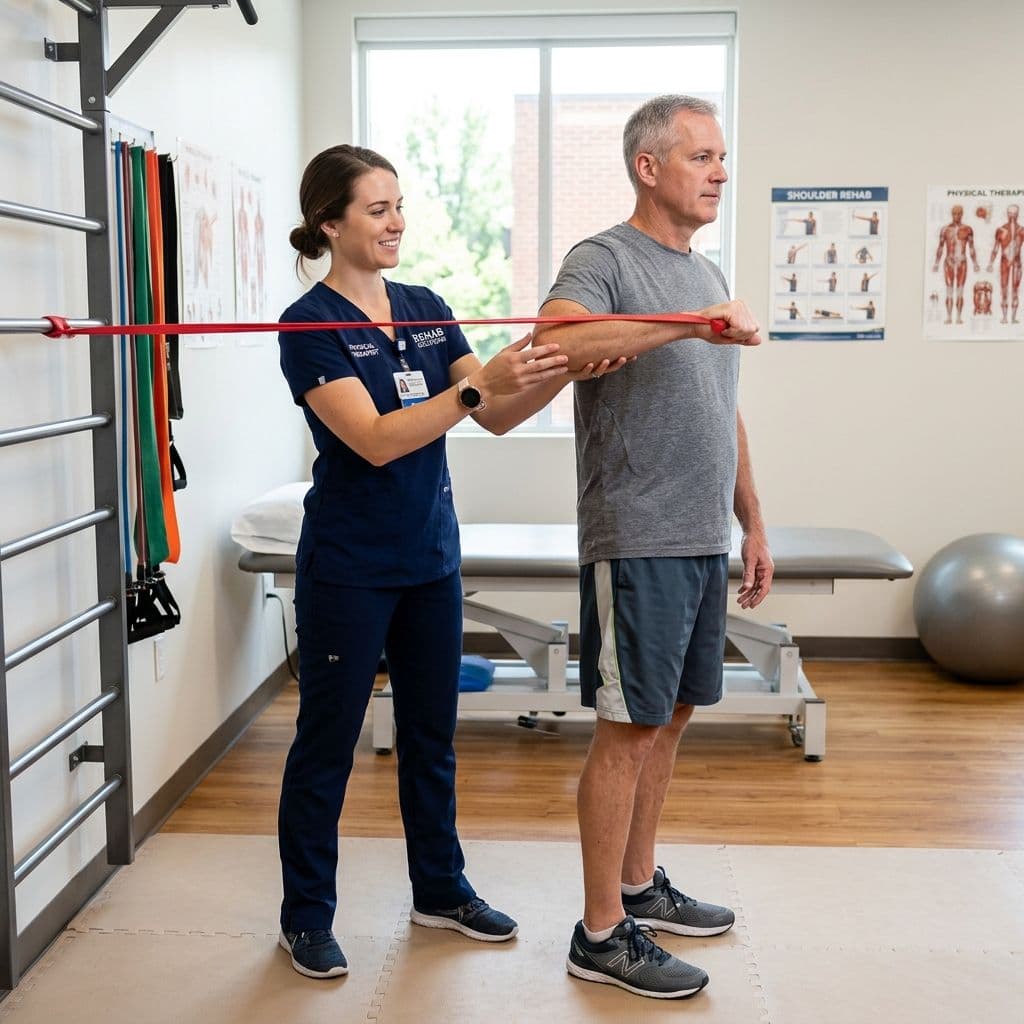
A useful program becomes progressively more functional. Early exercises might use low resistance and short holds. Later stages can include rows, presses, carries, shoulder raises, and endurance work. The neck is part of a larger system, so general physical activity and sleep are relevant to recovery.
- Comfortable neck rotation and nodding movements
- Upper-back extension and rotation breaks
- Rows or pulling exercises for upper-back endurance
- Shoulder and arm strengthening with gradual resistance
- Walking or another aerobic activity to reduce prolonged static time
How to judge whether an exercise dose is appropriate
An exercise does not have to be completely sensation-free, but symptoms should remain within an agreed range and settle predictably. Increasing pain down the arm, new numbness, loss of strength, dizziness, or a severe headache is not a normal training response.
Progress only one feature at a time: repetitions, resistance, range, hold time, or frequency. This makes it easier to identify what the neck tolerates and prevents an enthusiastic first week from becoming a prolonged flare.
A realistic plan for busy workdays
Movement breaks are most effective when linked to an existing cue. Stand during the first minute of a call, walk after completing a document, or perform two mobility movements whenever a meeting ends. The exact exercise matters less than interrupting the same sustained load.
When deadlines are intense, reduce the exercise dose rather than abandoning it. Five to ten minutes of consistent strength work several times per week can provide a foundation that is later progressed. Recovery plans need to survive busy weeks, not only ideal ones.
- Use short, regular movement breaks instead of one long stretch session
- Alternate tasks when possible to vary visual and physical demand
- Keep a tolerable baseline of strengthening during symptom flares
- Review sleep and stress when pain rises without a clear physical change
- Seek assessment if symptoms persist, spread, or reduce work capacity
How to separate a temporary flare from a changing neck problem
Desk-related symptoms often fluctuate with deadlines, travel, sleep, and unusually long meetings. A predictable flare may involve familiar stiffness or aching that improves when load is reduced and normal movement is resumed. The plan can temporarily shorten work blocks, reduce exercise resistance, and preserve comfortable activity rather than stopping everything.
A changing pattern deserves reassessment. Pain that begins travelling farther down the arm, numbness that becomes constant, dropping objects, reduced grip, or increasing difficulty with fine hand tasks is more important than a higher pain number alone. Keep a brief record of where symptoms travel and which movements or positions change them.
Progress should be measured against work and life, not a posture photograph. Useful outcomes include completing a meeting with fewer position changes, driving and turning the head more comfortably, finishing the day without a severe headache, lifting and carrying normally, and recovering faster after a demanding week. These measures help determine whether the current plan is building capacity or only providing short-lived relief.
- Record whether symptoms remain local or spread into the arm
- Note grip changes, hand clumsiness, or altered sensation
- Measure comfortable work duration and recovery after work
- Keep strengthening during mild flares at a reduced dose
- Arrange reassessment when the neurological pattern changes
Red flags: when symptoms need urgent medical review
Most desk-related neck pain is musculoskeletal, but new or unusual symptoms should not be managed as a simple posture problem. Urgent assessment is appropriate when neurological or systemic signs are present.
- Sudden severe headache, collapse, confusion, facial weakness, or speech changes
- New loss of balance, marked clumsiness, or difficulty walking
- Progressive arm or hand weakness, widespread numbness, or loss of dexterity
- Neck pain after significant trauma, especially with severe restriction
- Fever, unexplained weight loss, or feeling very unwell with neck pain
Questions patients commonly ask
These answers are general guidance. The right decision depends on your symptoms, medical history, examination findings, and the activities you need to return to.
Is forward-head posture the cause of my pain?
It may contribute to sustained load, but posture alone does not explain every case. Many people use similar positions without pain. Duration, movement variation, tissue capacity, stress, sleep, and previous symptoms all influence tolerance.
Should I buy a cervical pillow?
A pillow can improve comfort, but there is no single design that suits everyone. Choose a height that keeps the neck comfortable in your usual sleep position. Persistent night pain or neurological symptoms require assessment rather than repeated pillow changes.
Can neck exercises make headaches worse?
An unsuitable dose or an incorrect assumption about the headache can aggravate symptoms. Begin with an assessment when headaches are frequent, severe, new, or associated with other symptoms. Exercises should be selected and progressed according to the headache pattern.
How quickly should workstation changes help?
Some changes provide immediate comfort, but capacity takes time to build. If the neck has become sensitive over months, improvement usually depends on repeated movement, strengthening, and workload management rather than one ergonomic purchase.
The clinic takeaway for laptop-related neck pain
Do not reduce the problem to “sit straight.” A stronger plan combines symptom screening, a workable laptop setup, regular position changes, upper-body strengthening, and a strategy for high-workload days. The aim is not a frozen ideal posture; it is a neck that can tolerate the variety your work requires.
At Physynex, bring a photo of your workstation and note which tasks trigger symptoms fastest. That information helps the assessment move from generic advice to practical changes and a measurable rehabilitation plan.
Relevant Physynex care pathways
Use these pages to understand the related condition or service. An assessment is still the right starting point when the diagnosis is uncertain.