
Sciatica needs the right movement, not just any movement
Sciatica is the pain, tingling, numbness, or weakness that travels along the sciatic nerve, usually from the lower back down through the buttock and leg. It is caused by irritation or compression of the nerve, most often from a disc issue in the lower back, though tight muscles like the piriformis can also be involved. Because the pain runs down the leg, people often stretch the leg aggressively, which can sometimes make things worse rather than better. The right exercises depend on what is actually irritating the nerve.
Exercises that generally help
Nerve glides (sciatic nerve flossing). Gentle, controlled movements that slide the nerve through its surrounding tissue, rather than stretching it, can reduce irritation and improve tolerance to movement. These need to be done slowly and within a pain-free range, since aggressive nerve stretching can flare symptoms up.
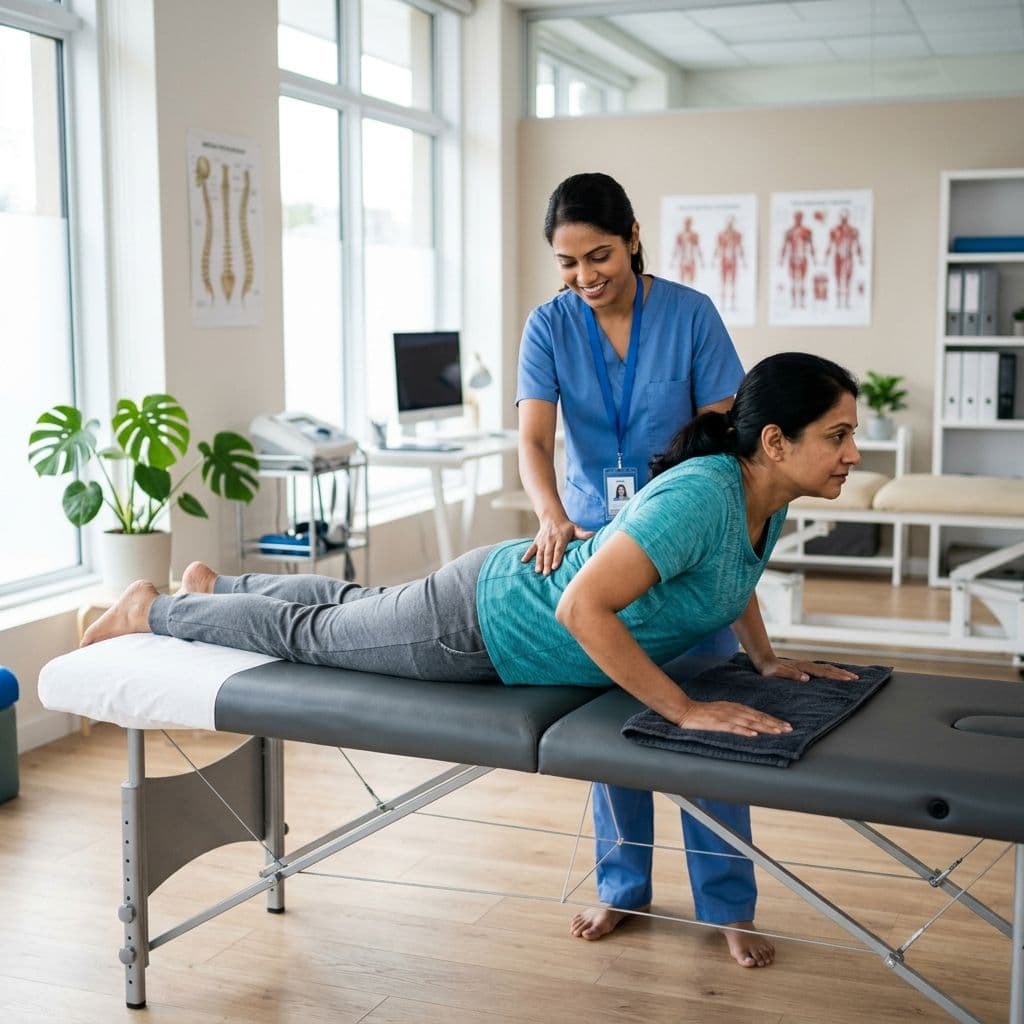
Prone press-ups or gentle extension exercises. For sciatica coming from a disc bulge, lying face down and gently pressing the upper body up while keeping the hips down can help reduce pressure on the nerve for many people. This should feel like relief, or at most mild discomfort, not sharp pain radiating down the leg.
Deep core and glute activation. Gentle bridges, bird-dogs, and controlled core bracing exercises build the support system around the lower spine, taking pressure off the structures irritating the nerve. These are usually introduced once the acute flare has calmed down somewhat.
Walking, within tolerance. Short, frequent walks often help more than complete rest, since sciatica tends to respond poorly to prolonged sitting or lying down. Walking should be paced to what feels manageable rather than pushed through pain.
What to avoid while sciatica is active
Heavy forward bending and toe-touching stretches often aggravate disc-related sciatica rather than helping it, especially early in a flare-up. Prolonged sitting, particularly in soft, low chairs, tends to increase pressure on the lower discs and worsen symptoms. Aggressive hamstring stretching, a very common instinctive response to leg pain, frequently irritates an already sensitised nerve further instead of releasing it. And heavy lifting or twisting movements should be avoided until symptoms have meaningfully settled.
Why a generic sciatica exercise list has limits
Sciatica exercises are not one-size-fits-all because what irritates the nerve differs from person to person. A movement that relieves disc-related sciatica may aggravate piriformis-related sciatica, and vice versa. This is exactly why an assessment matters before starting an exercise routine: it identifies which structure is actually involved and which direction of movement genuinely helps in your specific case, rather than guessing from a generic list online.
How sitting and desk setup feed into sciatica
For people with desk jobs, sciatica often flares predictably after long stretches of sitting, and the reason is mechanical: sitting increases disc pressure more than standing or walking does, and slouched sitting increases it further still. A chair that doesn't support the lower back's natural curve, a desk that pulls you forward, or simply sitting for ninety minutes without a break can be enough to keep a sensitised nerve irritated even while the exercise program itself is working. Addressing this usually means alternating sitting with short standing or walking breaks every 30-40 minutes, and setting up lumbar support that actually maintains the lower back's curve, rather than expecting the exercises alone to outpace hours of aggravating positioning.
Building a proper recovery plan
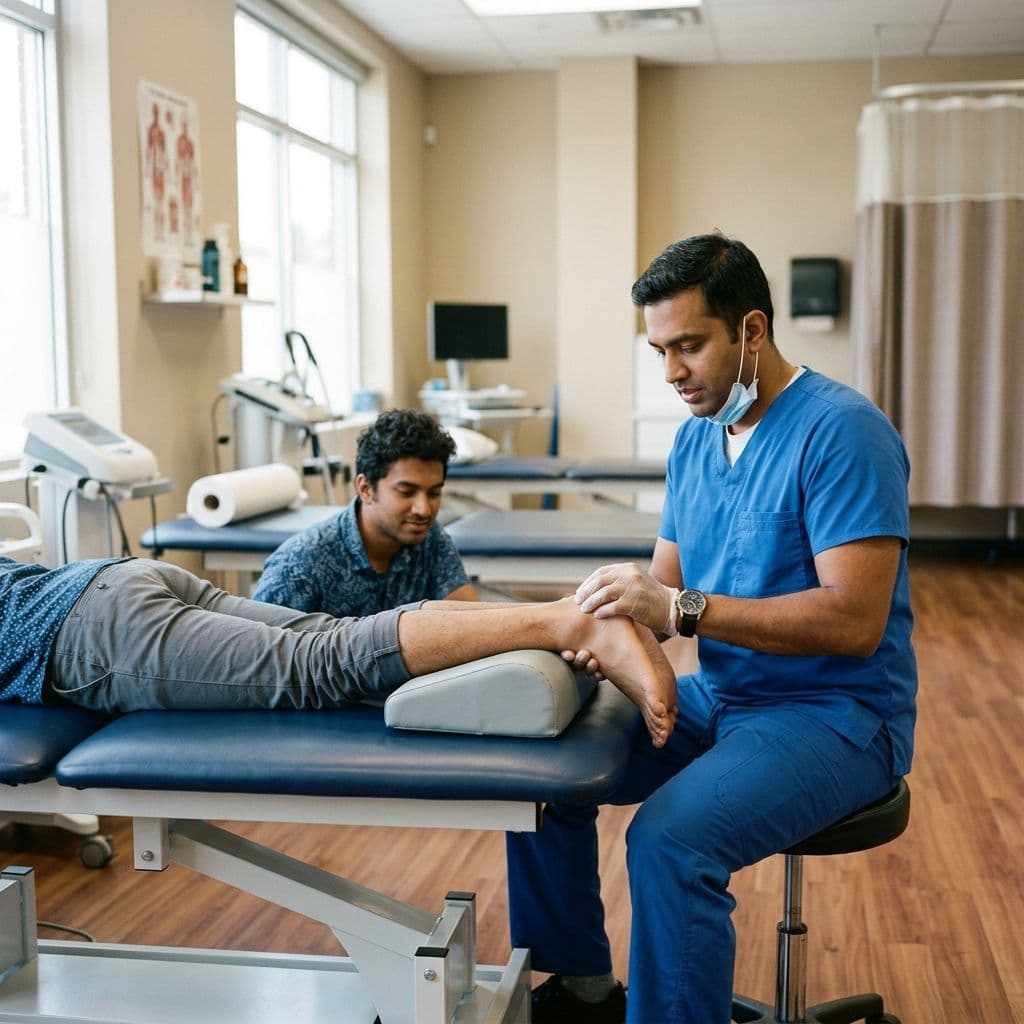
At Physynex, sciatica assessment and treatment includes specific tests to identify the likely source of irritation, followed by a staged exercise plan: first calming the nerve down, then restoring movement and strength, and finally addressing the postural or lifting habits that may have contributed in the first place.
If sciatica has been affecting your walking, sitting, or sleep, book an assessment at Physynex in Purasaiwakkam, Chennai, or call +91 92117 36580.