
Rest is useful after many sports injuries, but it is a phase, not a complete rehabilitation plan. Pain may settle while strength, tissue capacity, balance, speed, and confidence remain below the demands of training. Returning at that point can create a cycle of repeated flare-ups.
The right treatment depends on what happened. A sudden ankle twist, hamstring sprint injury, direct shoulder impact, gradual tendon pain, and recurrent knee swelling require different examination and loading decisions. The athlete’s sport, position, training schedule, age, and competition level also matter.
Sports rehabilitation should answer two questions: what can the athlete safely do now, and what must be rebuilt before full return? The plan should preserve fitness where possible rather than treating the athlete as completely inactive.
When a sports injury should be assessed
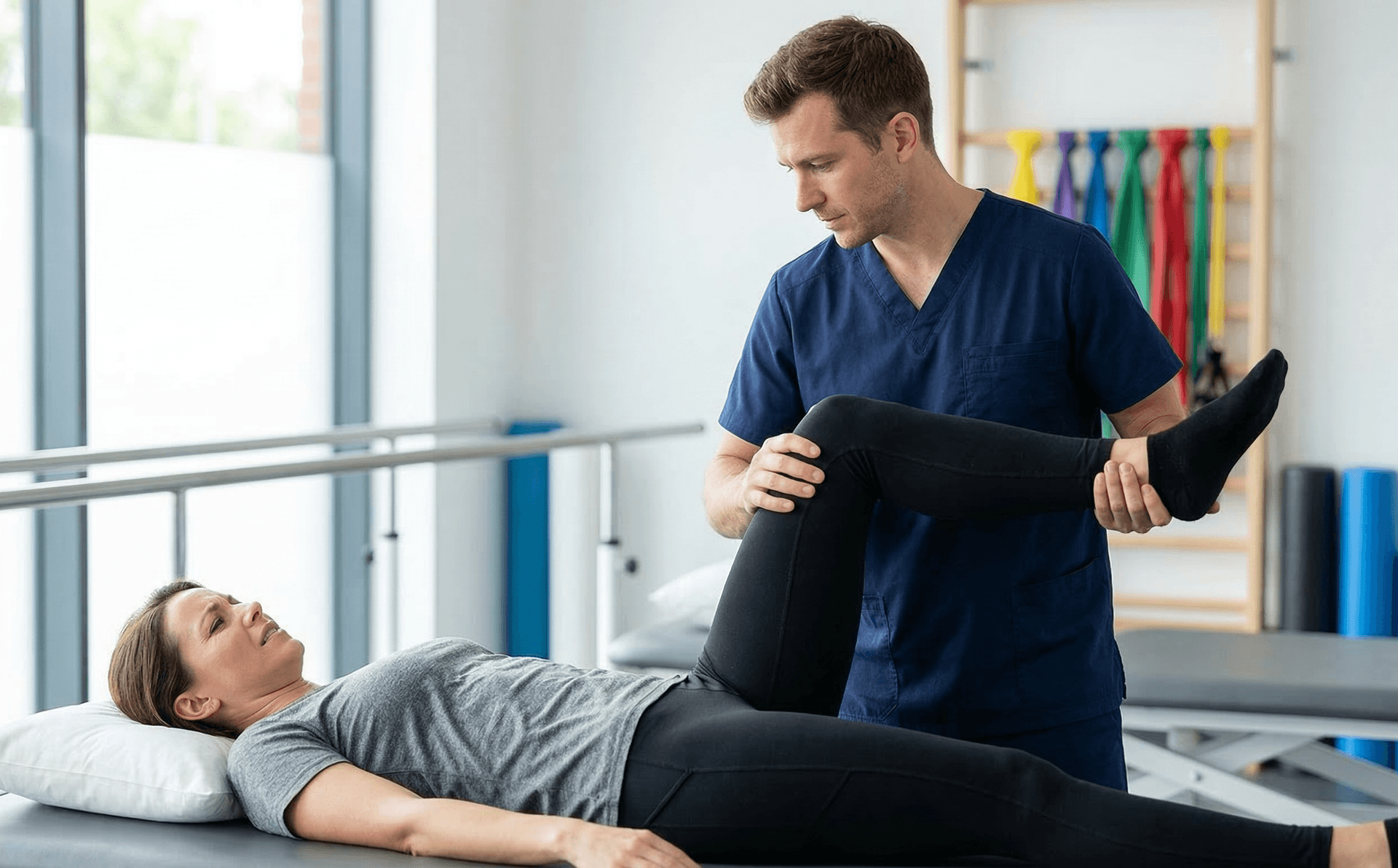
Assessment is important after significant trauma, inability to bear weight, rapid swelling, deformity, locking, repeated giving way, or a clear loss of strength. Gradual pain also deserves review when it persists, changes technique, or repeatedly returns as training volume rises.
Early diagnosis does not always require a scan. History and examination can often guide initial care, while imaging is used when fracture, major tissue injury, or another finding would change management.
- Pain that changes running, jumping, throwing, or lifting technique
- Swelling that appears quickly or repeatedly
- Loss of range, strength, speed, or confidence
- Symptoms that return at the same training threshold
- Inability to progress after a reasonable period of modified activity
The first phase: protect the injury without losing everything
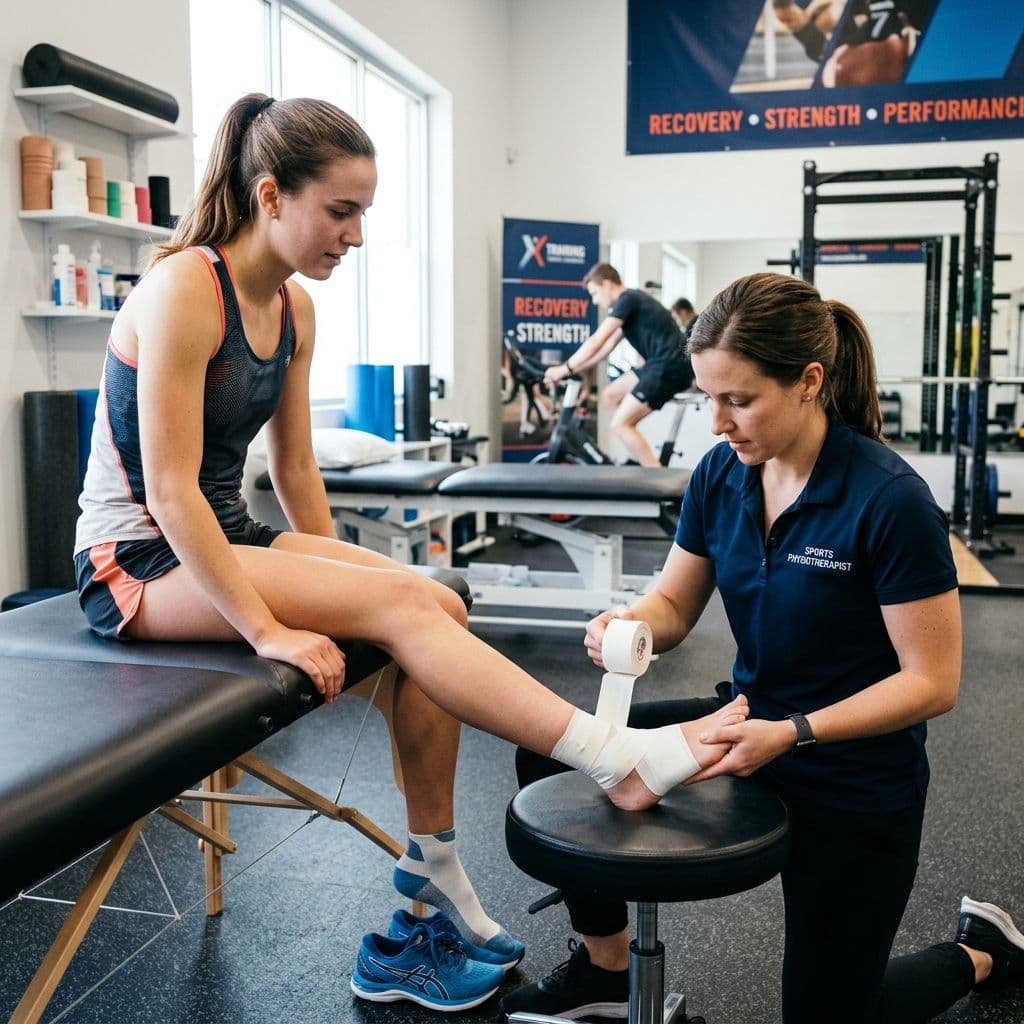
Early management reduces aggravating load and protects injured tissue while maintaining safe movement. The athlete may temporarily stop sprinting but continue cycling, train the upper body during a lower-limb injury, or practise technical elements that do not threaten healing.
Swelling, range, pain, and basic function guide the starting point. Complete rest is reserved for situations where medical or tissue protection requires it. Unnecessary inactivity can reduce conditioning and make the later return harder.
- Follow fracture, repair, or weight-bearing precautions
- Maintain comfortable range and muscle activation where appropriate
- Use alternative conditioning that does not aggravate the injury
- Protect sleep, nutrition, and recovery
- Set short-term criteria for the next phase
Progressive loading is the centre of rehabilitation
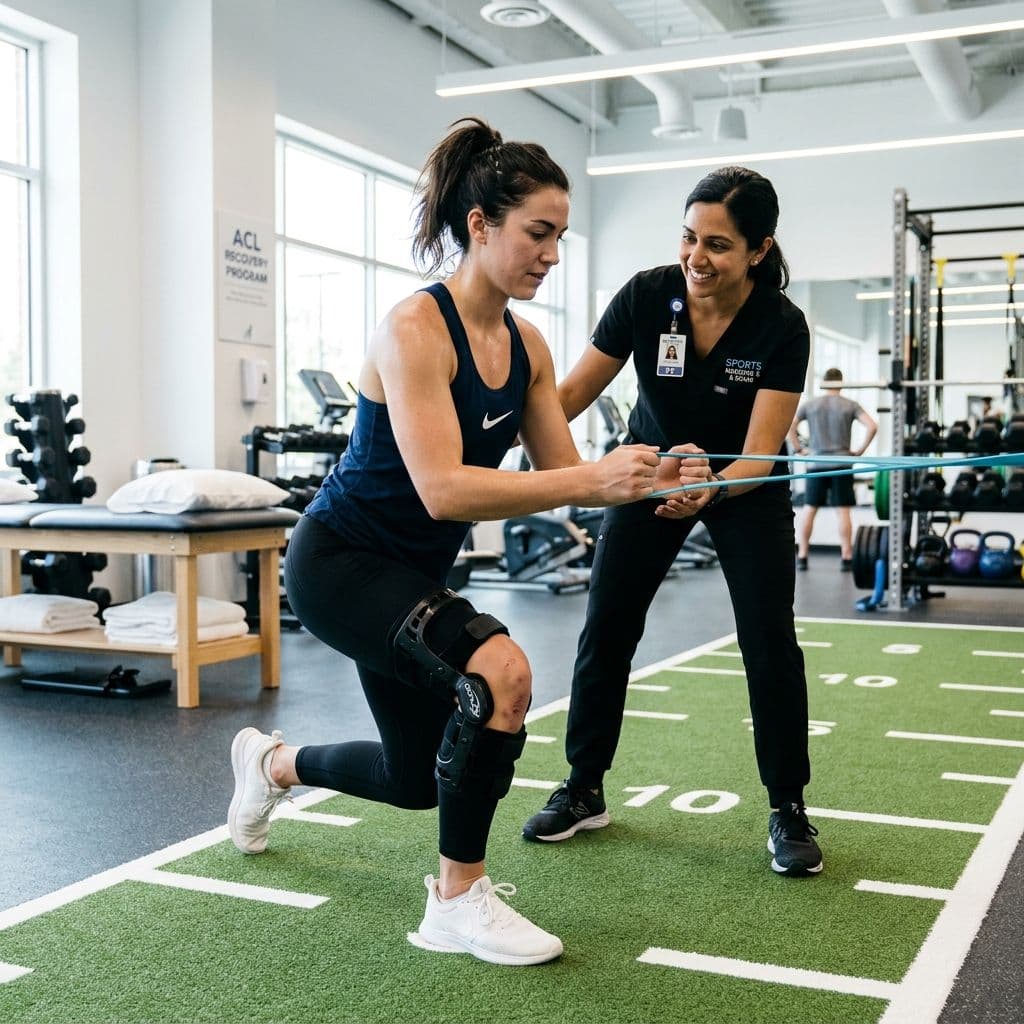
Tissues adapt when load is sufficient and recoverable. Strengthening begins at the level the injury can tolerate and progresses through resistance, range, speed, and complexity. Tendons may need sustained heavy loading; muscle injuries need lengthened strength and later sprint exposure; ligament injuries require stability and multidirectional control.
Pain can provide feedback but is not the only measure. Swelling, force, repetitions, range, movement quality, and next-day response help determine whether the load was appropriate.
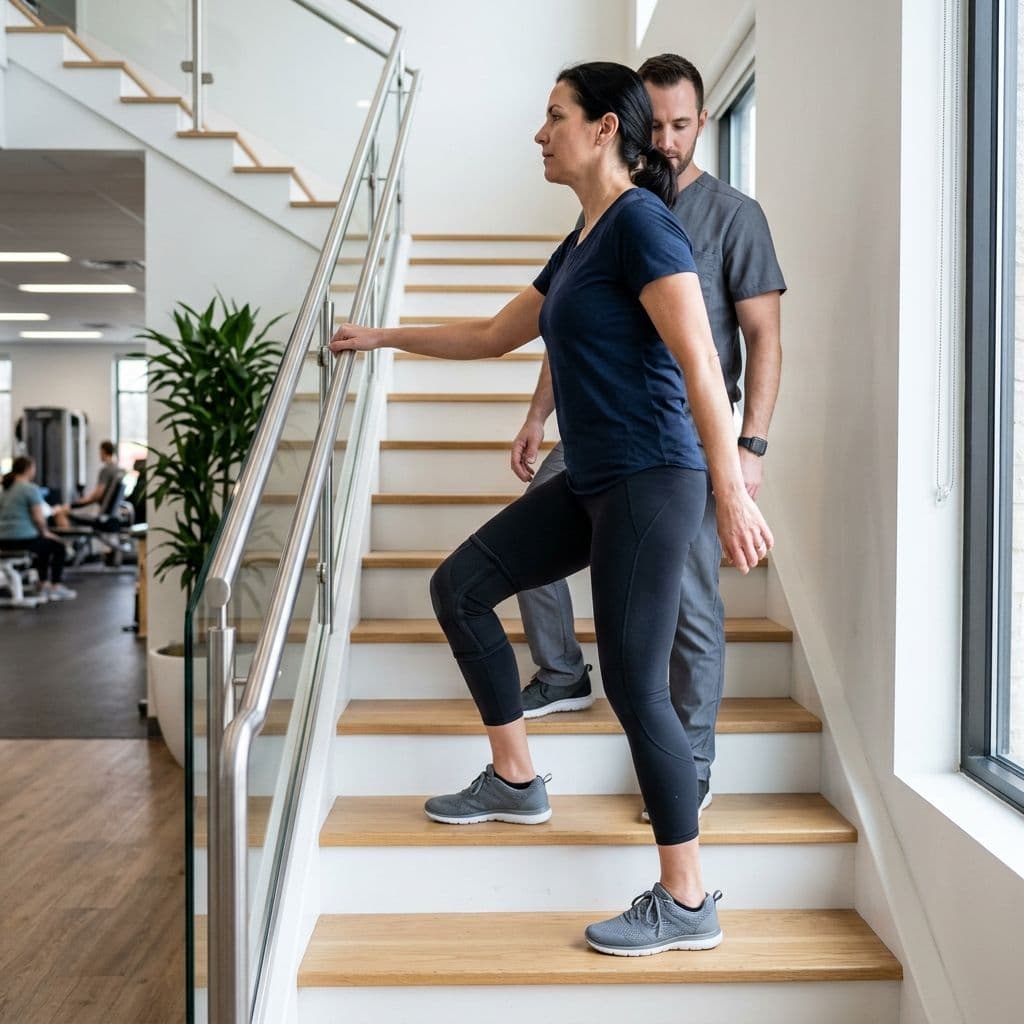
- Restore strength through the range used in sport
- Progress from controlled to faster contractions
- Add single-limb and multidirectional tasks
- Rebuild repeated-effort capacity, not only one maximum attempt
- Track workload to avoid sudden spikes
Why generic exercises eventually stop being enough
Basic bridges, band work, or balance drills may be useful early. Sport later demands sprinting, decelerating, changing direction, landing, throwing, contact, or repeated fatigue. Rehabilitation should bridge that gap before competition.
The final stages can include reaction, decision-making, opponents, equipment, and sport-specific fatigue. A gym test cannot fully replace field or court exposure.
Return-to-sport decisions should use criteria
Time remains relevant because healing cannot be accelerated indefinitely, but clearance should also consider strength, range, power, movement quality, symptoms, confidence, and training tolerance. Different injuries need different tests.
Return is a continuum. An athlete may first return to modified drills, then non-contact training, full training, limited competition, and finally normal participation. Each step creates information about readiness.
- Complete relevant strength and functional testing
- Tolerate sport-specific training without a problematic response
- Demonstrate confidence in the injured movement
- Meet medical or surgical timelines when applicable
- Plan workload for the first weeks back
Common reasons sports injuries keep returning
Athletes often stop rehabilitation when pain disappears, even though high-speed or high-force capacity has not returned. Another common pattern is doing excellent clinic exercises but making a sudden jump from individual rehab to a full match.
Training errors matter too. Rapid increases in distance, intensity, competition, or gym load can exceed capacity. The solution is not to avoid hard training; it is to prepare for it progressively.
- Returning when pain is low but strength remains reduced
- Skipping sprint, jump, or change-of-direction exposure
- Ignoring repeated swelling after training
- Increasing several workload variables at once
- Stopping prevention work immediately after clearance
Maintain the athlete while rehabilitating the injury
Injury rehabilitation should preserve what is safe to train. A runner with a calf injury may maintain upper-body strength and use an approved low-impact conditioning option. A shoulder injury may still allow lower-body training. This reduces the physical and psychological cost of complete withdrawal from sport.
The rehabilitation week should balance injury loading, general strength, conditioning, technical work, and recovery. Adding each component independently can create an excessive total workload. A shared schedule helps the physiotherapist, coach, and athlete avoid duplicate hard sessions.
Testing should reflect the sport. A field athlete may require repeated sprint and change-of-direction testing; a thrower needs progressive throwing volume; a lifter needs load and technique under fatigue. The final question is not whether the injured structure feels normal in the clinic, but whether the athlete can tolerate the demands that previously exposed it.
- Preserve non-aggravating strength and conditioning
- Combine clinic, gym, and team load in one weekly plan
- Use tests that match position and sport demands
- Repeat high-intensity efforts before clearance
- Coordinate progression with coaches and medical staff
Red flags: when symptoms need urgent medical review
Some sports injuries require urgent medical assessment rather than a routine rehabilitation appointment.
- Visible deformity, suspected fracture, or inability to bear weight
- Rapid large swelling after a twist or impact
- Loss of consciousness, confusion, vomiting, or worsening headache after impact
- Chest pain, severe breathlessness, collapse, or heat-illness symptoms
- A cold, numb, discoloured limb or rapidly progressive weakness
Questions patients commonly ask
These answers are general guidance. The right decision depends on your symptoms, medical history, examination findings, and the activities you need to return to.
Should I train through sports injury pain?
It depends on the injury, stage, and response. Some discomfort can be acceptable during graded rehabilitation, while fracture, acute instability, concussion, or worsening neurological symptoms require a different approach.
Do I need an MRI?
Not for every injury. Imaging is useful when the result is likely to change management or when the history and examination suggest a significant injury. Clinical assessment usually comes first unless emergency care is needed.
When can I return to a match?
After appropriate healing and when objective testing, sport-specific training, symptoms, confidence, and workload support it. Full training exposure should usually come before competition.
Can physiotherapy prevent every reinjury?
No program can eliminate risk, but restoring strength, skill, workload tolerance, and prevention habits can reduce avoidable risk and improve readiness.
The clinic takeaway for sports injury recovery
Rest can calm symptoms, but rehabilitation prepares the athlete for force, speed, fatigue, and uncertainty. A complete plan moves from protection to loading, conditioning, sport-specific exposure, testing, and managed return.
At Physynex, bring details of the injury mechanism, training schedule, competition calendar, and previous injuries. The goal is not merely to pass a clinic exercise; it is to return with a body and workload prepared for the sport.
Relevant Physynex care pathways
Use these pages to understand the related condition or service. An assessment is still the right starting point when the diagnosis is uncertain.