
After an ACL injury, the date on the calendar matters, but it cannot tell the whole recovery story. Two athletes at the same month after surgery may have very different swelling, strength, movement control, confidence, and sport exposure. Returning because a certain number of months has passed can miss deficits that remain visible under speed or fatigue.
ACL rehabilitation may follow reconstruction or non-operative management, depending on the injury, associated damage, knee stability, sport, age, and shared medical decision-making. The surgeon’s restrictions and graft type affect early care after reconstruction. The long-term goal is broader: restore a knee and athlete capable of tolerating training, competition, and unexpected movement.
This guide describes milestones, not a universal protocol. Surgical instructions, meniscal repair precautions, cartilage procedures, and individual complications always take priority.
Early priorities: protect healing and regain a quiet knee
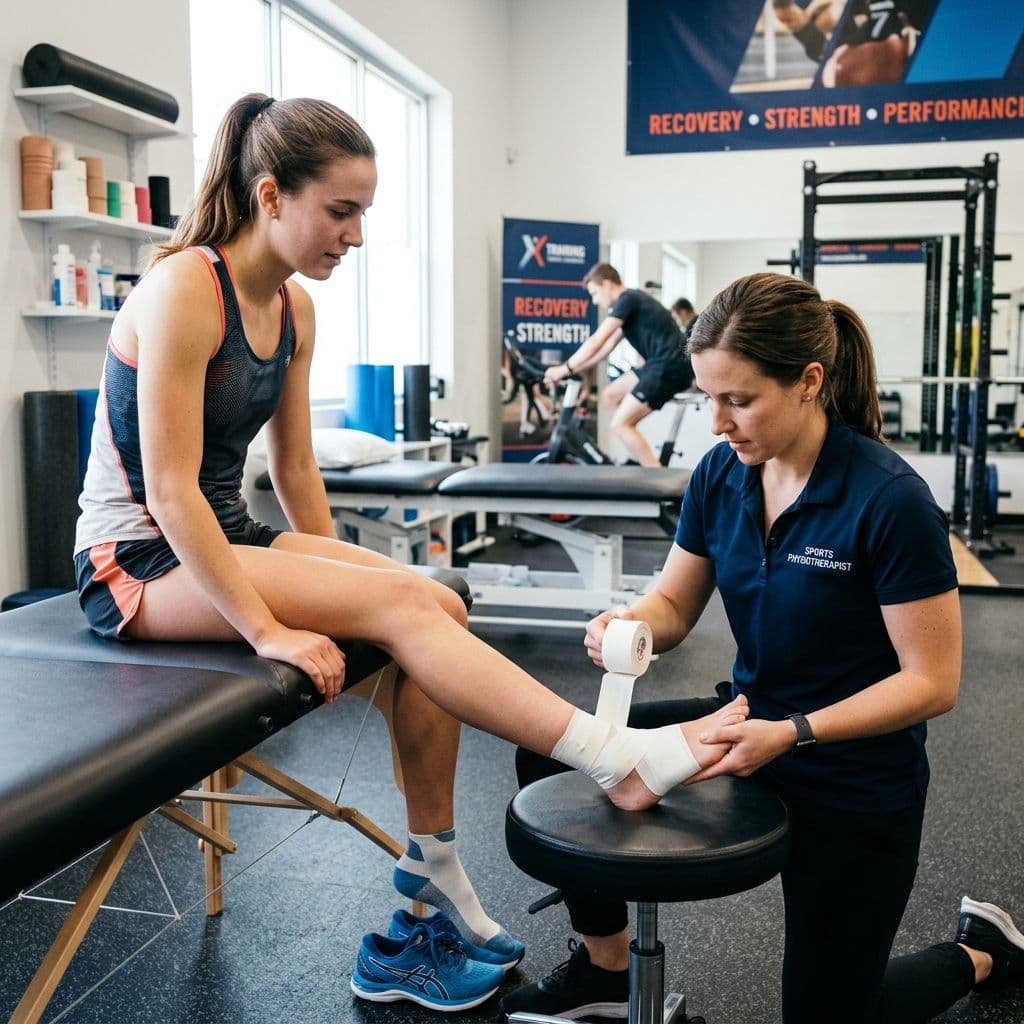
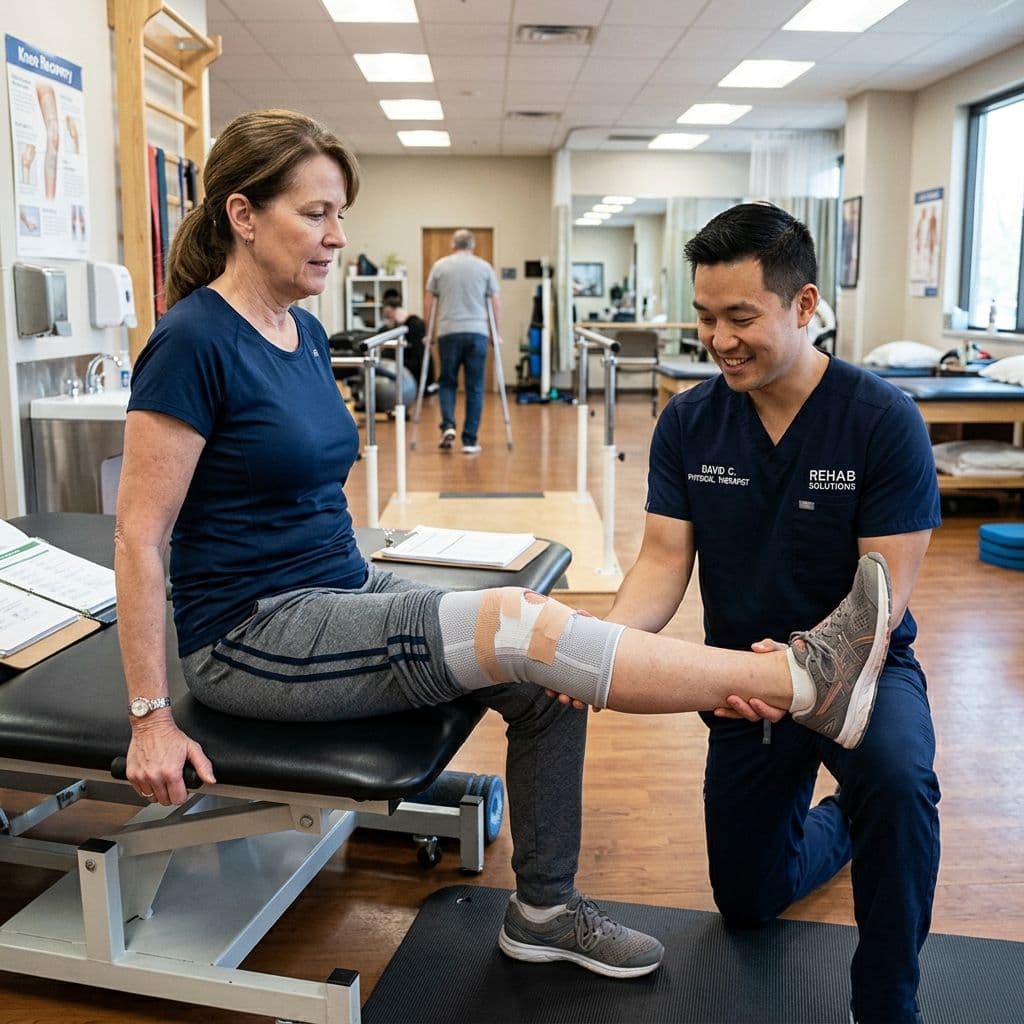
Early rehabilitation focuses on swelling control, knee straightening, progressive bending, quadriceps activation, safe walking, and adherence to surgical precautions. Full extension is particularly important because persistent loss can affect walking and quadriceps function.
More exercise is not automatically better. A knee that becomes increasingly swollen, hot, or unable to straighten after each session is not responding well to the current dose. The program should create adaptation while allowing the joint to settle.
- Follow weight-bearing and brace instructions exactly when prescribed
- Restore knee extension and progress flexion according to precautions
- Build quadriceps activation and straight-leg control
- Normalise walking without rushing to abandon support
- Monitor wounds, calf symptoms, swelling, and temperature
Build strength before chasing advanced drills
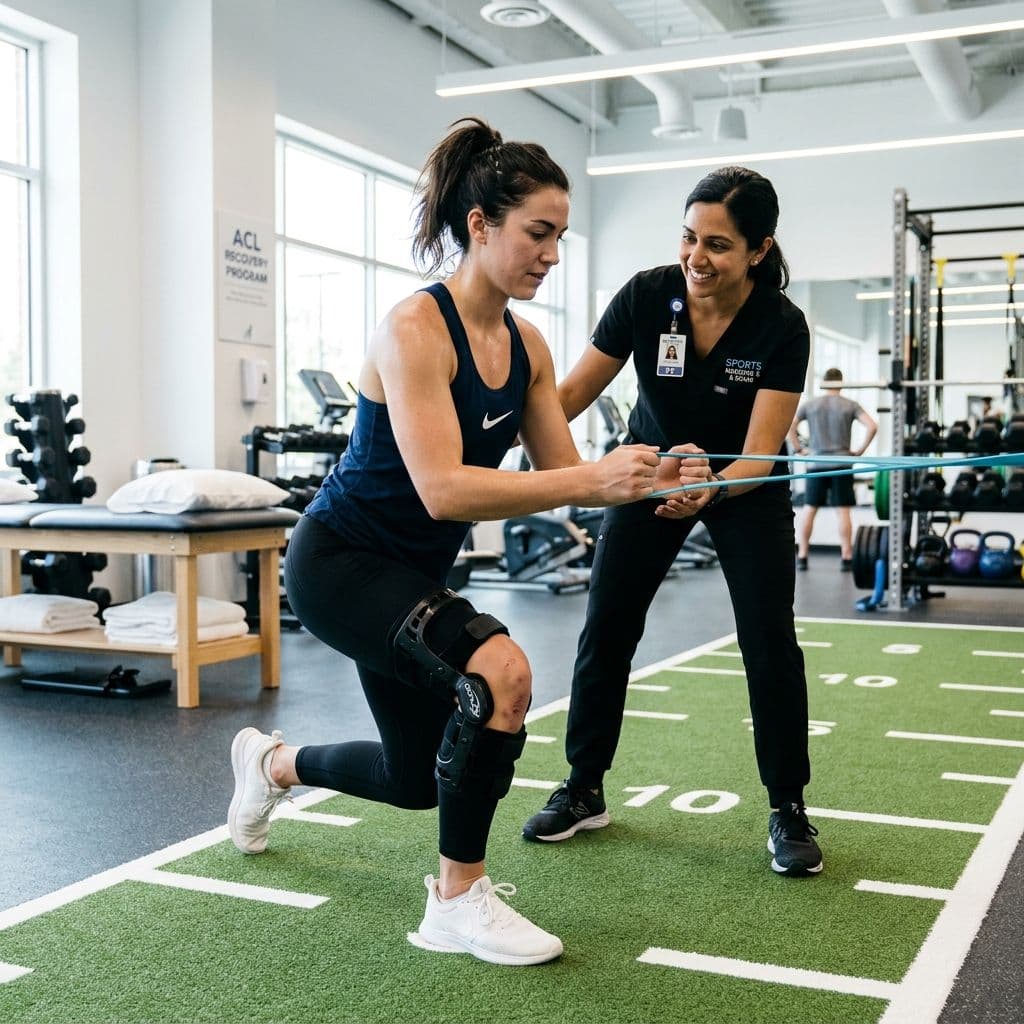
Once the knee is stable and movement is improving, rehabilitation should develop quadriceps, hamstring, hip, and calf strength. Body-weight exercises are useful early, but sport demands usually require progressive external resistance. Avoiding the gym because the knee once felt vulnerable can leave a major capacity gap.
Strength should be measured where possible. Visual symmetry is not enough; an athlete can perform a squat while shifting away from the operated side. Dynamometry, gym-load comparisons, and repeated functional tasks help quantify progress.
- Progress squats, split squats, step work, hinges, and calf raises
- Use appropriate open- and closed-chain knee strengthening
- Increase resistance through a planned weekly progression
- Measure side-to-side differences instead of relying on appearance
- Maintain upper-body and general conditioning where appropriate
Criteria before starting a running program
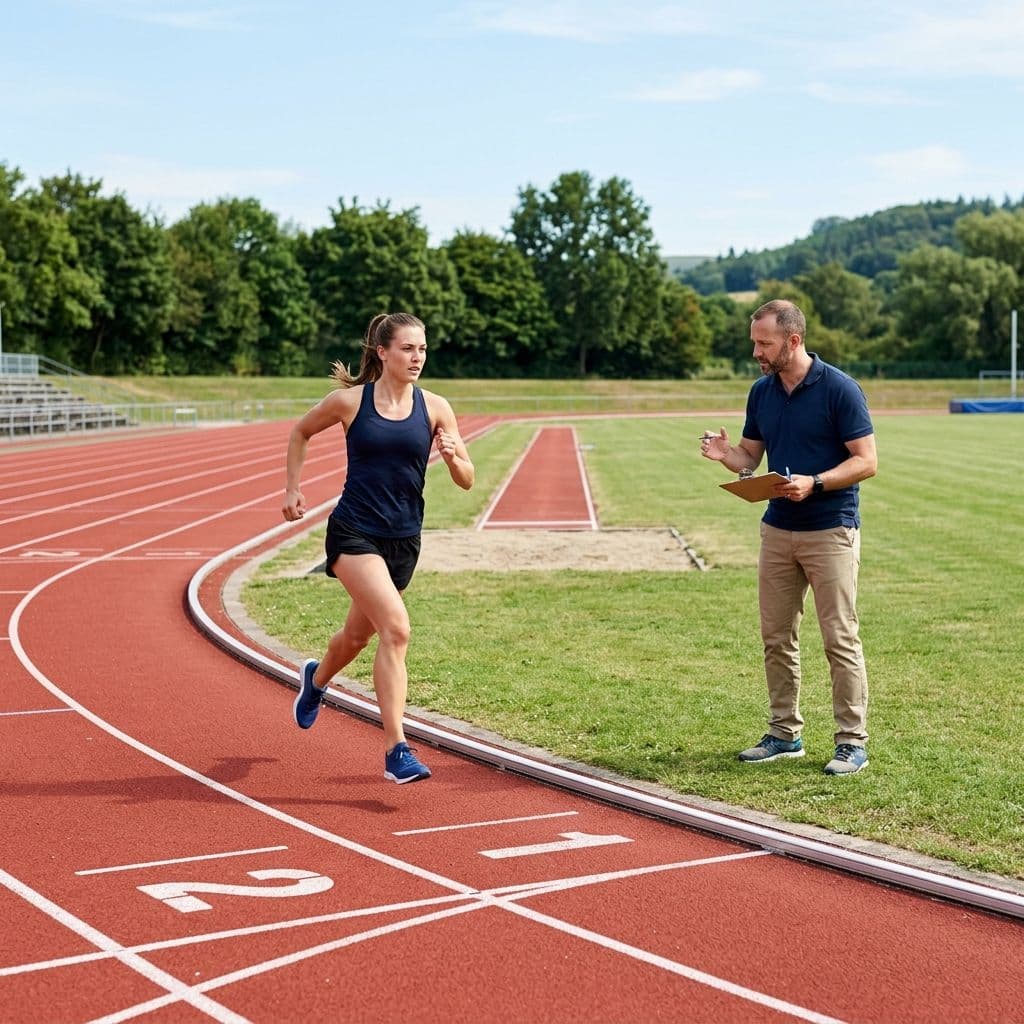
Running introduces repeated impact and should not begin simply because jogging feels possible for a few metres. The knee should have minimal reactive swelling, useful range, adequate single-leg control, and sufficient strength to absorb repeated load.
A run-walk program is usually safer than immediately returning to continuous running. Surface, speed, duration, and frequency are progressed separately. The next-day response helps determine whether the knee accepted the session.
- Minimal or no reactive swelling
- Near-normal walking and comfortable basic hopping preparation
- Adequate quadriceps and calf strength for repeated impact
- Controlled single-leg squat or step-down mechanics
- Clear approval within the surgeon and rehabilitation pathway
From jumping to cutting and sport-specific chaos
Jumping rehabilitation starts with landing control and predictable tasks, then develops height, distance, repeated contacts, and multidirectional work. Cutting and deceleration should be coached progressively because field and court sports require force absorption at speed.
Pre-planned drills are only an early stage. Sport includes reacting to an opponent, ball, or changing environment. Later rehabilitation should add decision-making, fatigue, contact where relevant, and exposure to full training before competition.
- Double-leg to single-leg landing progression
- Acceleration and controlled deceleration
- Planned changes of direction before reactive cutting
- Sport-specific drills at increasing speed and complexity
- Graduated non-contact and full-contact team training
What return-to-sport testing should include
Hop tests are useful but should not stand alone. An athlete can achieve a similar distance using a different strategy. Testing should combine strength, hop performance, movement quality, workload tolerance, knee symptoms, and psychological readiness.
Symmetry is important, yet both legs may be deconditioned after months away. Where possible, compare with pre-injury data, sport norms, body weight, and absolute strength—not only a percentage between sides.
Mistakes that create avoidable ACL rehab gaps
One mistake is treating the absence of pain as readiness. Another is spending months on low-load exercises without building the force required by sport. Athletes also sometimes return to matches after passing isolated tests but before tolerating repeated full training.
Rehabilitation should include a prevention strategy for both limbs. Strength, landing, cutting technique, fatigue management, and training exposure remain relevant after clearance.
- Using time alone as the clearance criterion
- Stopping strength work when jogging begins
- Ignoring swelling after advanced sessions
- Passing a hop test without assessing movement strategy
- Returning to competition before completing progressive training exposure
Psychological readiness and workload are part of clearance
An athlete can have good strength scores and still hesitate during cutting, contact, or an unexpected landing. Fear is not a character flaw; it is relevant return-to-sport information. Rehabilitation should expose the athlete to feared movements progressively and in a controlled environment before those situations appear in competition.
Confidence improves when the athlete experiences repeated success at increasing speed and complexity. Video feedback, clear coaching, and objective testing can show what has changed. If anxiety remains high despite physical progress, the team should address it directly rather than assuming competition will solve it.
Workload after clearance needs planning. The first week back should not combine full team training, extra conditioning, gym testing, and a complete match simply because each item is individually allowed. Track field or court exposure, high-speed work, gym load, and recovery. Returning to sport is successful when the athlete can sustain participation, not merely complete one session.
- Ask the athlete which movements still feel threatening
- Progress reactive and opponent-based tasks before competition
- Use full training as a required exposure, not an optional extra
- Plan the first four to six weeks of sport workload
- Continue strength and prevention work after return
Red flags: when symptoms need urgent medical review
Contact the surgical or medical team promptly when recovery changes unexpectedly. Some postoperative symptoms require urgent evaluation.
- Increasing wound redness, discharge, fever, or feeling unwell
- New calf swelling or pain, chest pain, or shortness of breath
- A sudden pop with rapid swelling or major loss of function
- Progressive loss of knee extension or worsening stiffness
- Repeated giving way, locking, or inability to bear weight
Questions patients commonly ask
These answers are general guidance. The right decision depends on your symptoms, medical history, examination findings, and the activities you need to return to.
When can I run after ACL reconstruction?
There is no single safe date. Running begins when healing, swelling, range, strength, control, and the surgeon’s pathway support it. A criteria-based decision is more useful than copying another athlete’s month.
Do I need to pass hop tests?
Hop tests can contribute useful information, but they should be interpreted with strength, symptoms, movement quality, training tolerance, and confidence. One test cannot provide complete clearance.
Can an ACL injury be treated without surgery?
Some people can return to desired activities with structured non-operative rehabilitation. Suitability depends on instability, associated injuries, sport, goals, and specialist assessment. Shared decision-making is essential.
Why does my knee swell after training?
Swelling can indicate that the joint load exceeded current tolerance or that another issue needs review. Record the session, reduce the next dose, and discuss repeated or increasing swelling with the rehabilitation team.
The clinic takeaway for ACL recovery
Successful ACL rehabilitation is a progression from healing to strength, running, jumping, cutting, reactive sport, and full training. Clearance should combine time with objective measures and the athlete’s ability to tolerate real sport exposure.
At Physynex, bring the surgical report and current protocol when applicable. The rehabilitation plan can then respect tissue precautions while building measurable milestones toward the exact sport and position you want to resume.
Relevant Physynex care pathways
Use these pages to understand the related condition or service. An assessment is still the right starting point when the diagnosis is uncertain.