
Hip pain is rarely solved by guessing. The hip can hurt in the groin, outer hip, buttock, front of the thigh, or around the lower back. Each pattern suggests a different source. A tendon problem on the outside of the hip needs a different plan from hip joint stiffness. A back-referred symptom needs a different plan from muscle overload after training. The right fix begins with the right pattern.
Many people try random stretches first. Sometimes that helps. Sometimes it irritates the area further. Hip pain needs a clearer question: what movement, position, load, or daily habit is repeatedly provoking the pain?
Common hip pain patterns
Outer hip pain: Pain on the side of the hip, especially when lying on that side, walking uphill, climbing stairs, or standing on one leg, can involve the gluteal tendons and surrounding tissues. It often worsens with compression, such as sitting cross-legged or sleeping directly on the painful side.
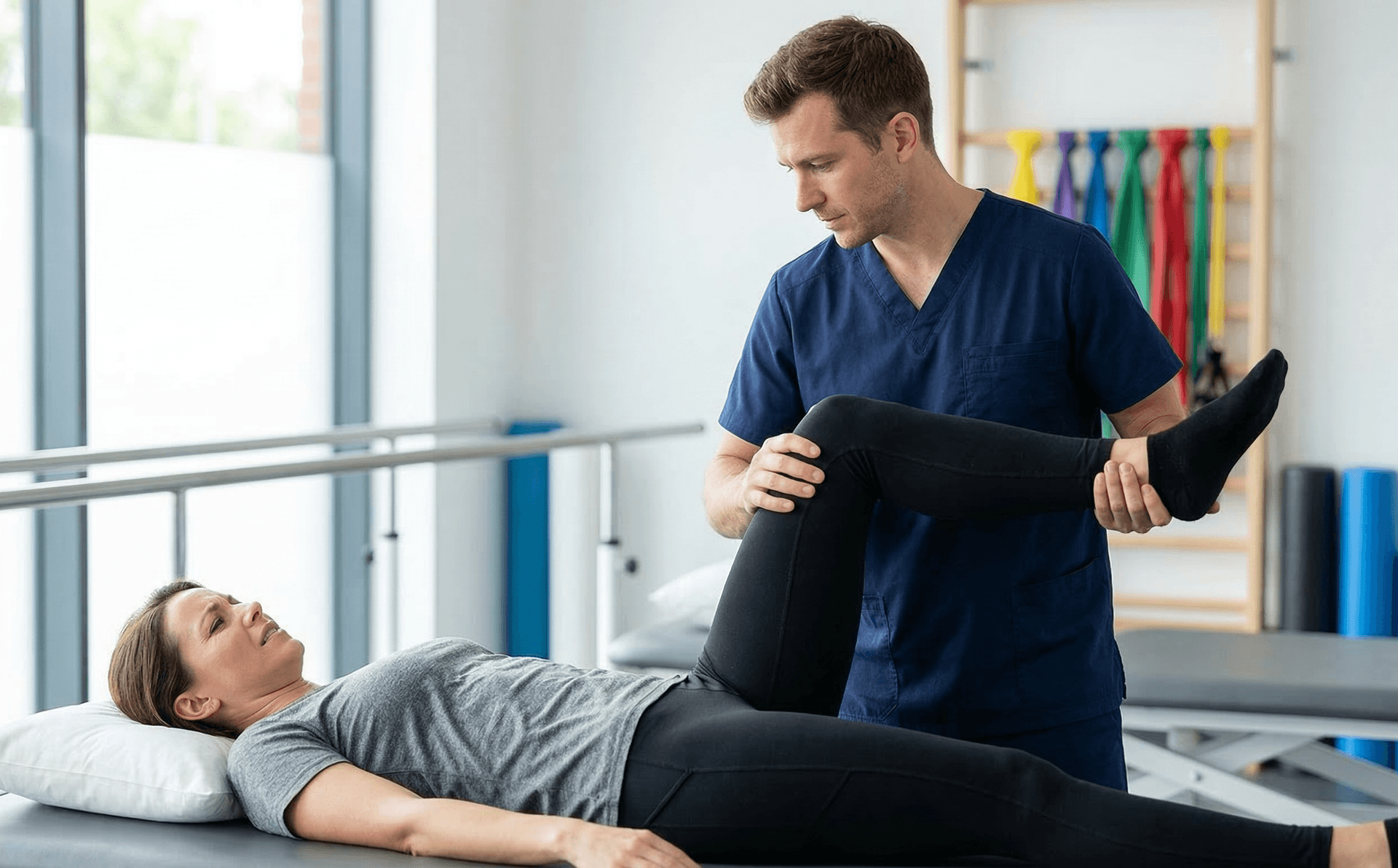
Groin or front hip pain: Groin pain may come from the hip joint, hip flexor region, adductors, or other structures. It may appear with deep squats, getting into a car, stairs, or long walking.
Buttock pain: Buttock pain may come from the hip, lower back, deep gluteal region, or nerve irritation. The pattern matters, especially if symptoms travel down the leg.
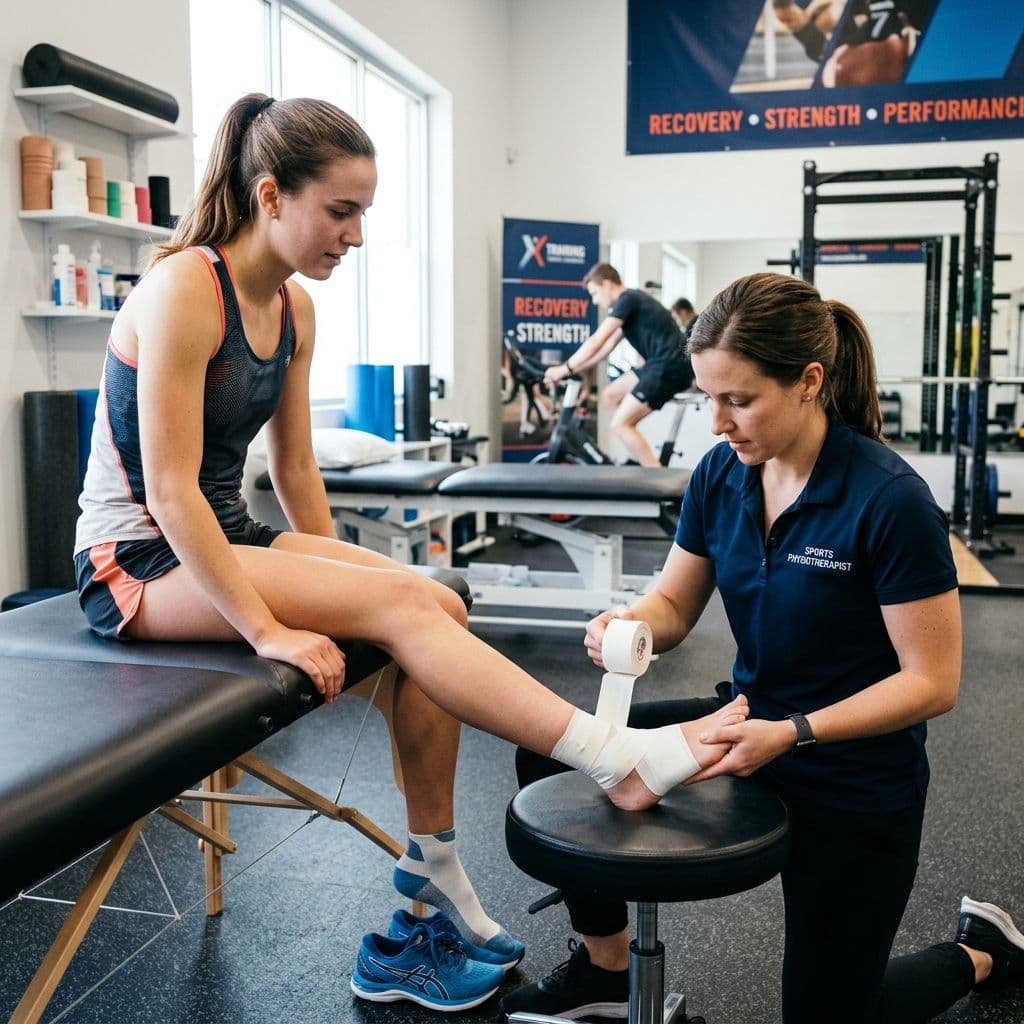
Pain after training spikes: Sudden increases in running, gym volume, squats, lunges, or sport can overload tissues that were not ready for that jump.
A quick self-check
Notice:
- Is the pain in the groin, side of the hip, buttock, or lower back?
- Does it hurt more with walking, stairs, sitting, or lying down?
- Is morning stiffness present?
- Did training volume change recently?
Also note: Does pain improve after warm-up or worsen with continued activity?; Does pain travel below the knee with numbness or tingling?.
These answers guide the plan.
What helps first
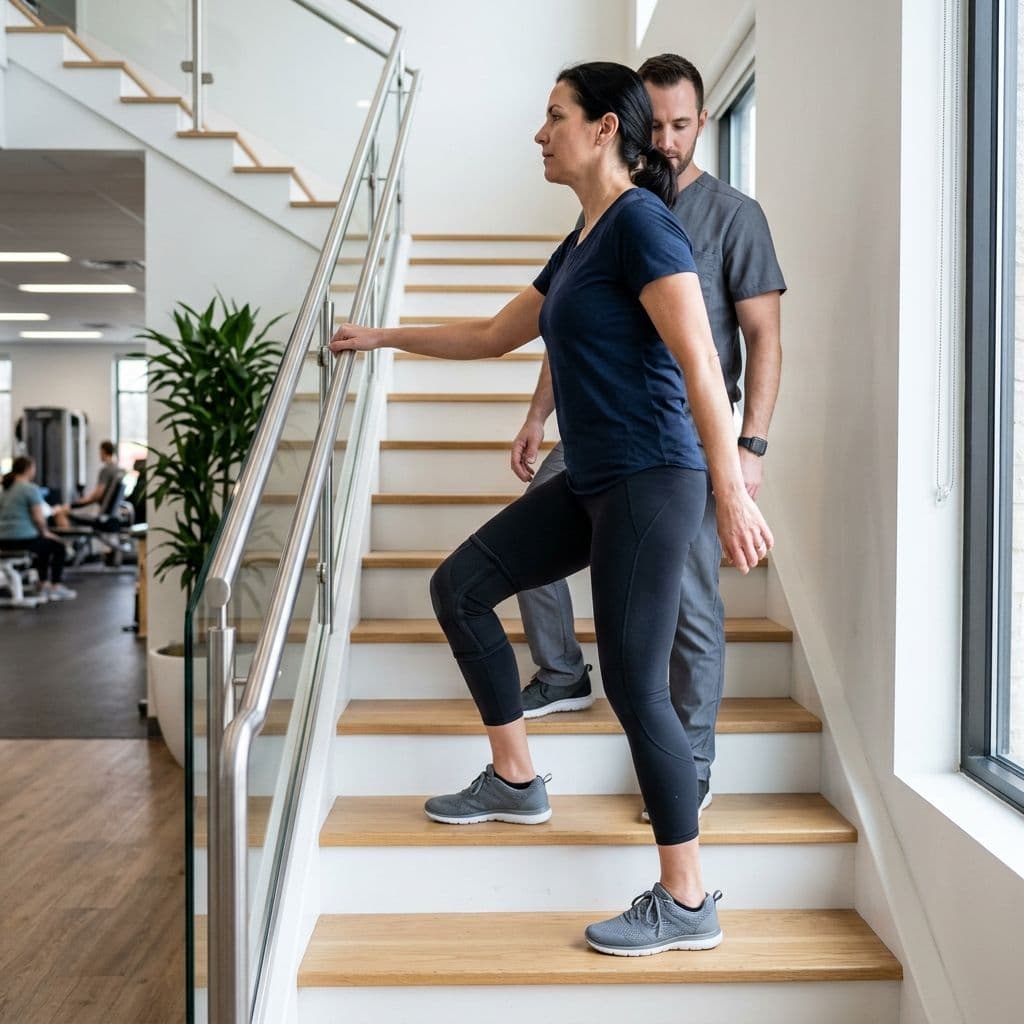
Adjust the aggravating load: If stairs, running, deep squats, or side sleeping are repeatedly flaring symptoms, reduce or modify them temporarily. This is not giving up. It is creating a window for recovery.
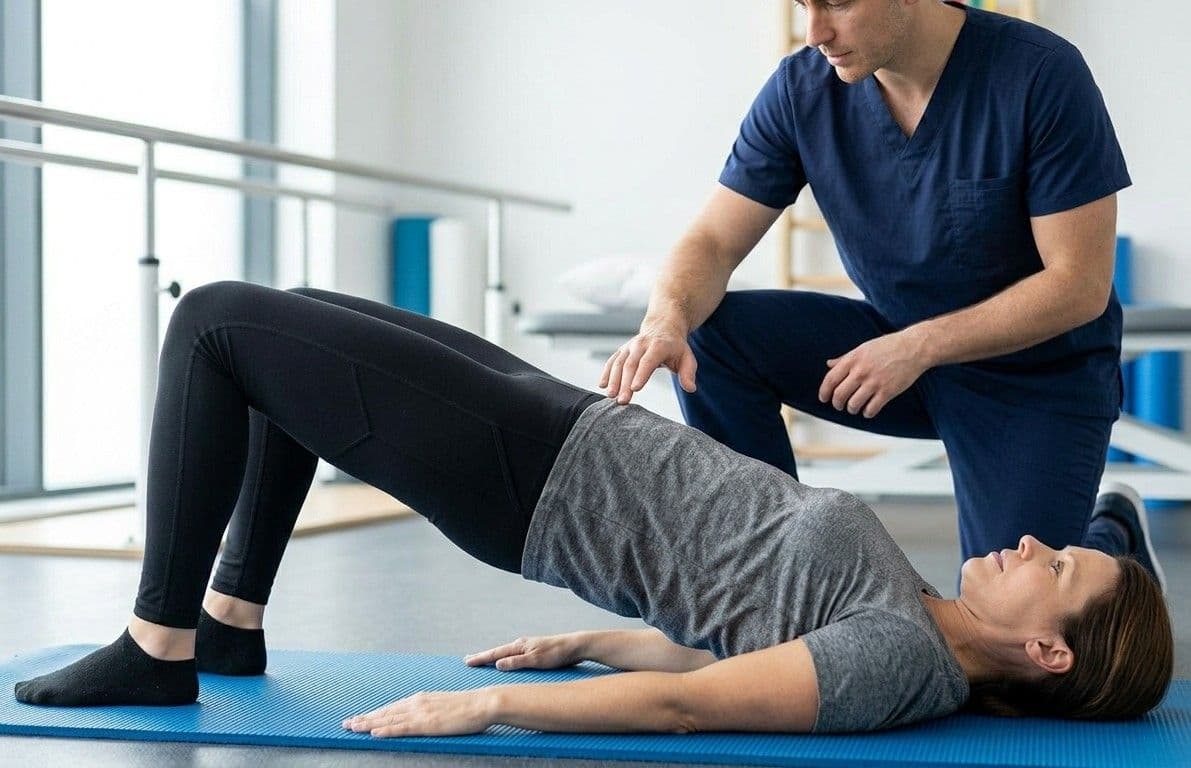
Build hip and trunk strength: The hip needs support from glutes, adductors, deep rotators, trunk muscles, and the calf. Strength work may include bridges, sit-to-stands, side steps, step-ups, supported single-leg balance, and progressive loading.
Restore useful mobility: Mobility should be specific. Some people need hip rotation work. Others need hip flexor mobility. Others do not need more stretching at all and need strength instead.
Improve movement strategy: How you climb stairs, stand from a chair, squat, or walk can change hip load. Small technique changes can reduce symptoms while strength catches up.
What not to do
Avoid these traps:
- Stretching hard into sharp groin pain
- Pushing through limping because you want to keep steps high
- Ignoring night pain that is worsening
- Doing only passive treatment with no strengthening plan
Also note: Returning to full running or gym volume too quickly; Treating every hip pain as arthritis.
A 2-week hip reset
Try this general framework:
- Identify the top two aggravating tasks.
- Reduce those tasks by 20 to 40 percent for two weeks.
- Add low-irritation strength work three times per week.
- Keep walking, but adjust distance and terrain.
- Track pain during activity and the next morning.
- Progress only when the next-day response is acceptable.
For example, if stairs and side lying are the main triggers, use rail support on stairs, reduce repeated stair trips, avoid sleeping directly on the painful side, and begin controlled hip strength work.
Matching the plan to the pain location
Hip rehab becomes more useful when the plan matches the location.
For outer hip pain, the early focus is often reducing compression and rebuilding glute strength. That may mean avoiding direct side-lying on the painful side, reducing repeated hip dropping during standing, and progressing side-step or abduction work carefully.
For groin-dominant pain, the plan may focus more on hip joint range, squat depth, step tolerance, and adductor or hip flexor loading. Pushing deep stretches into sharp groin pain is often not the best first move.
For buttock-dominant pain, the lower back and nerve system should be screened. If symptoms travel, burn, tingle, or change with spinal movement, the hip may not be the only driver.
How to know if exercise is the right dose
Use a next-day rule. During an exercise, mild discomfort may be acceptable. The next morning, symptoms should not be clearly worse. If you limp more, sleep worse, or feel sharper pain the next day, reduce the dose.
Ways to adjust dose include:
- Reduce range of motion.
- Reduce repetitions.
- Use support from a wall or chair.
- Change from single-leg to double-leg work.
Also note: Reduce walking distance temporarily.; Space strength sessions further apart..
This keeps you training without repeatedly irritating the hip.
What a complete hip plan includes
A full plan usually has more than one ingredient:
- Pain pattern assessment
- Hip and lower-back screening
- Strength testing
- Walking and stair observation
Also note: Load management; Progressive strengthening; Mobility only where needed; Return-to-gym or return-to-sport planning.
The goal is not just less pain. The goal is a hip that can tolerate your actual life.
How to return to walking, gym, or sport
Return should be staged. For walking, begin with a distance that does not change your gait. Limping through pain usually teaches the body a poorer pattern. Add time or distance only when the next-day response is acceptable.
For gym training, reduce depth, load, or speed before removing the exercise completely. A box squat may work better than a deep squat at first. A supported step-up may work better than a lunge. A bridge may work better than heavy hip thrusts early on.
For running or sport, test capacity before intensity. Can you walk briskly? Can you climb stairs? Can you do single-leg control work? Can you tolerate hopping or faster direction changes if your sport requires them? The hip should earn each layer before the next is added.
When hip pain needs a broader look
Hip pain often overlaps with the lower back, knee, and foot. If the ankle is stiff, the hip may work harder. If the knee is painful, the hip may compensate. If the lower back is sensitive, hip pain may not be a pure hip problem. A good assessment watches the whole chain instead of treating the painful spot in isolation.
Exercises that may be used
These are examples, not a prescription:
- Sit-to-stand from a chair
- Glute bridge
- Supported step-up
- Side-lying or standing hip abduction
Also note: Calf raise; Short walking intervals; Hip mobility drills matched to your restriction.
The correct exercise is the one that targets the limitation without creating a flare-up that lasts.
Red flags
Seek medical review if:
- Pain started after a fall or trauma
- You cannot bear weight
- The hip is hot, swollen, or associated with fever
- Pain is severe at rest or worsening at night
- There is unexplained weight loss
- There is numbness, progressive weakness, or bowel/bladder change
Common questions about hip pain
Is hip pain always arthritis?
No. Arthritis is one possible cause, but tendons, muscles, the lower back, and training load can all contribute.
Should I stop walking?
Usually not completely. Walking dose, speed, terrain, and footwear may need adjustment.
Is stretching enough?
Often no. Many hip pain problems need strength and load management more than stretching.
When should I see a physiotherapist?
If pain changes your walking, sleep, stairs, training, or confidence for more than a short period, assessment is worthwhile.
When hip pain needs physiotherapy assessment
Book an assessment if hip pain is making you limp, avoid stairs, stop walking, change sleep position every night, or reduce gym and sport without a clear plan. Also get assessed if the pain location is unclear. Groin pain, outer hip pain, buttock pain, and back-related pain can overlap, and each needs a different starting point.
The assessment should look beyond the painful spot. Hip range, glute strength, single-leg control, spine contribution, foot and ankle mechanics, and training history all matter. A good plan should tell you which movements to keep, which to modify, and how to build back without repeatedly flaring the hip.
Bring details about walking distance, stair tolerance, gym exercises, sleep positions, and any recent training changes. Hip pain is easier to solve when the clinician can connect symptoms to the exact load that keeps provoking them.
Explore related hip care
Clinic takeaway for hip pain
If hip pain keeps changing how you walk, sit, sleep, or train, the answer is not random exercise. At Physynex, we assess the hip, lower back, strength, mobility, and loading pattern so the plan matches the real driver.