
Total knee replacement recovery is often described with simple weekly targets, but real recovery is less tidy. Pain, swelling, sleep, confidence, preoperative strength, other health conditions, and the exact surgical pathway influence progress. Comparing one knee with a neighbour’s recovery can create unnecessary worry.
A week-by-week guide is best used as orientation, not a deadline. The surgical team’s instructions take priority, and complications or additional procedures can change the plan. The goal is steady improvement in safety, movement, strength, and independence while monitoring how the joint responds.
The replaced knee needs movement, but it also needs recovery. Pushing through severe pain to chase a bend number can increase swelling and make movement harder. Avoiding the knee completely can create the opposite problem. Rehabilitation finds the useful middle ground.
Days 0 to 7: establish safety and basic movement
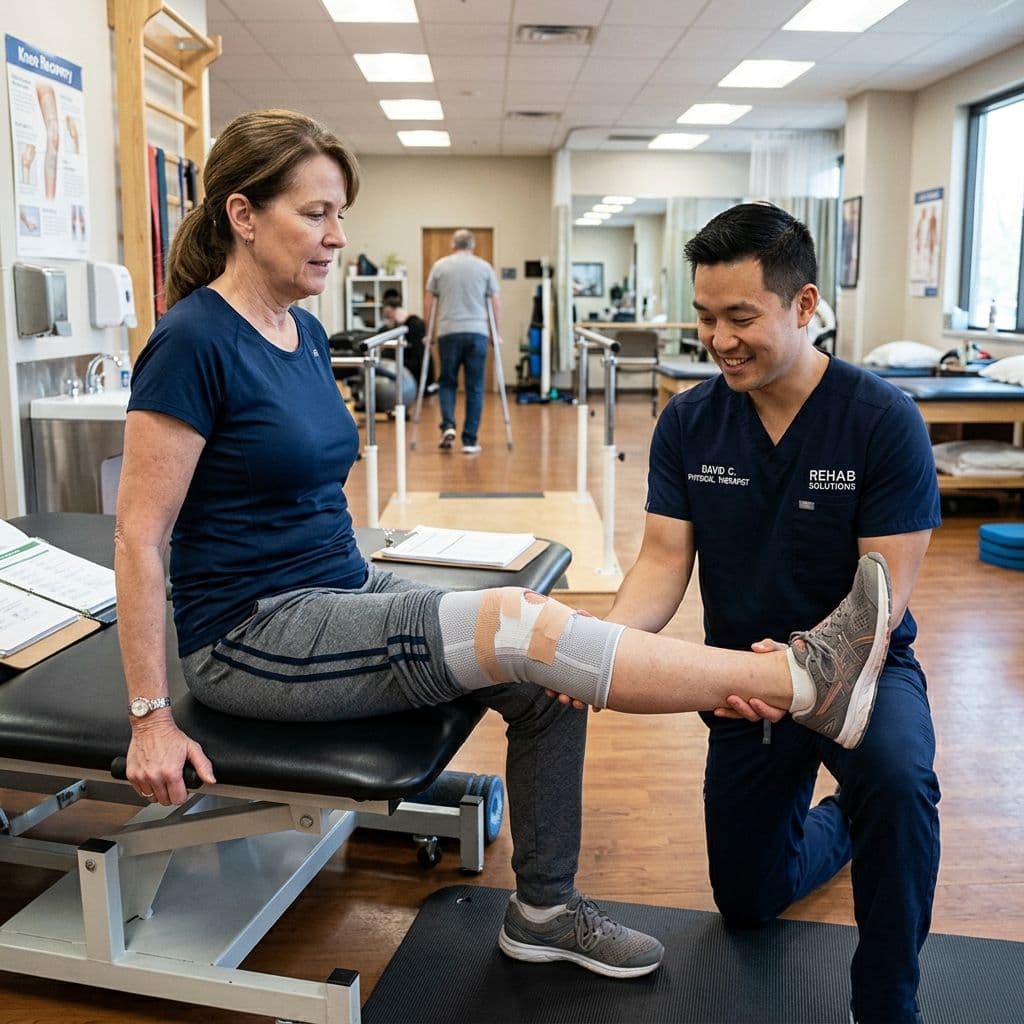
Hospital or immediate home goals commonly include standing, short walks with the recommended aid, transfers, knee movement, quadriceps activation, circulation exercises, and a safe plan for stairs if required. Medication, wound care, and clot-prevention instructions come from the medical team.
Swelling and bruising are common. The knee may feel heavy, and sleep can be disrupted. Short, repeated bouts of movement are often better tolerated than one exhausting session.
- Use the walker or crutches as instructed
- Practise knee straightening and permitted bending regularly
- Activate the quadriceps and ankle muscles
- Elevate and use other swelling strategies as advised
- Monitor the wound and systemic symptoms
Weeks 2 to 4: improve walking and daily independence
During this phase, walking distance and confidence usually increase, but swelling can still fluctuate. The walking aid should be reduced according to safety and gait quality, not because a certain day has arrived. Limping without support is not necessarily progress.
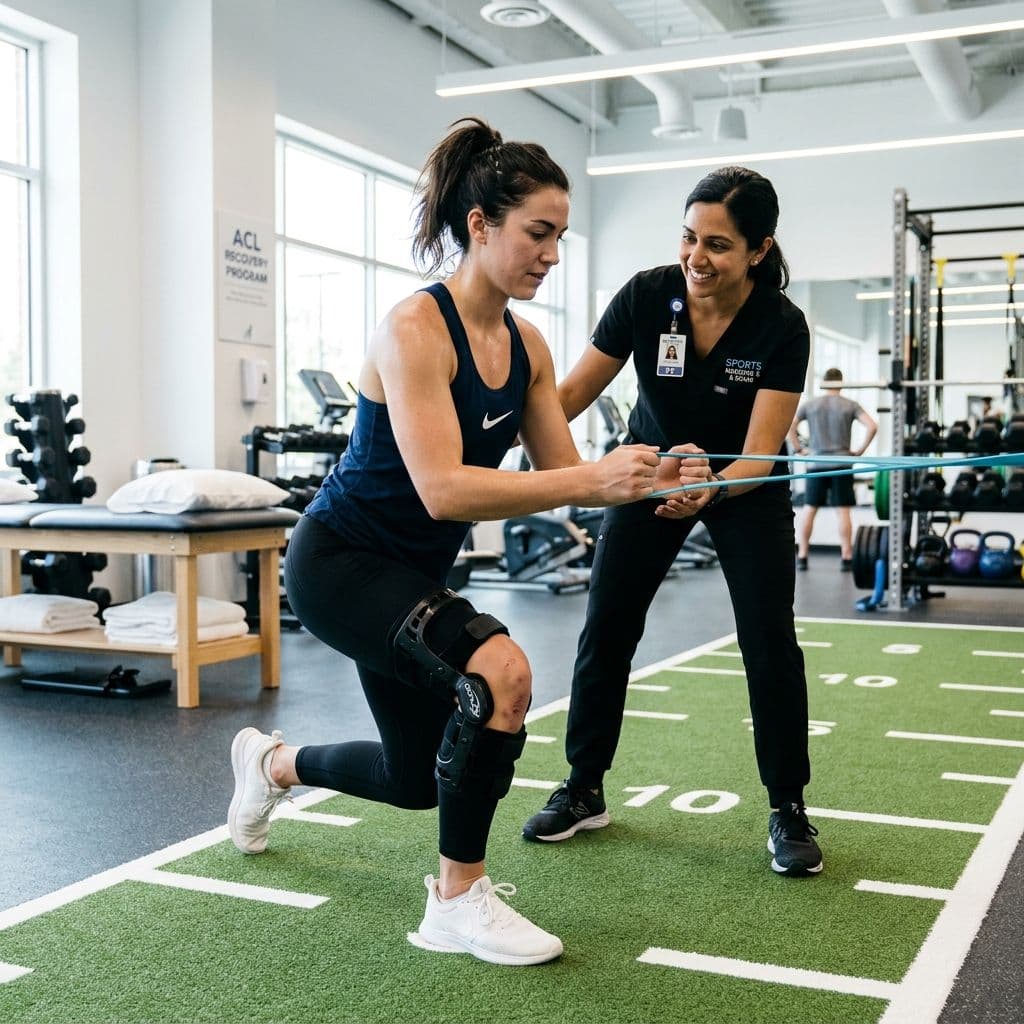
Exercises may include sit-to-stand, supported squats, step preparation, heel raises, and progressive knee range. The therapist also addresses home tasks, car transfers, and the ability to complete a basic daily routine.
- Build a smoother walking pattern
- Increase household and short community walking gradually
- Progress thigh, hip, and calf activation
- Work on knee extension and functional bend
- Use pain and swelling response to adjust volume
Weeks 4 to 8: build strength and community mobility
Basic movement can improve faster than strength. The quadriceps may remain substantially weaker even when the patient can walk without an aid. Rehabilitation should progress resistance rather than repeating only easy early exercises.
Stairs, longer walks, standing tolerance, and balance become more important. Stationary cycling may be introduced when range and wound status allow. The exact timing depends on the surgeon and clinical presentation.
- Progress sit-to-stand height and resistance
- Add step-ups and controlled step-down preparation
- Increase walking distance before speed
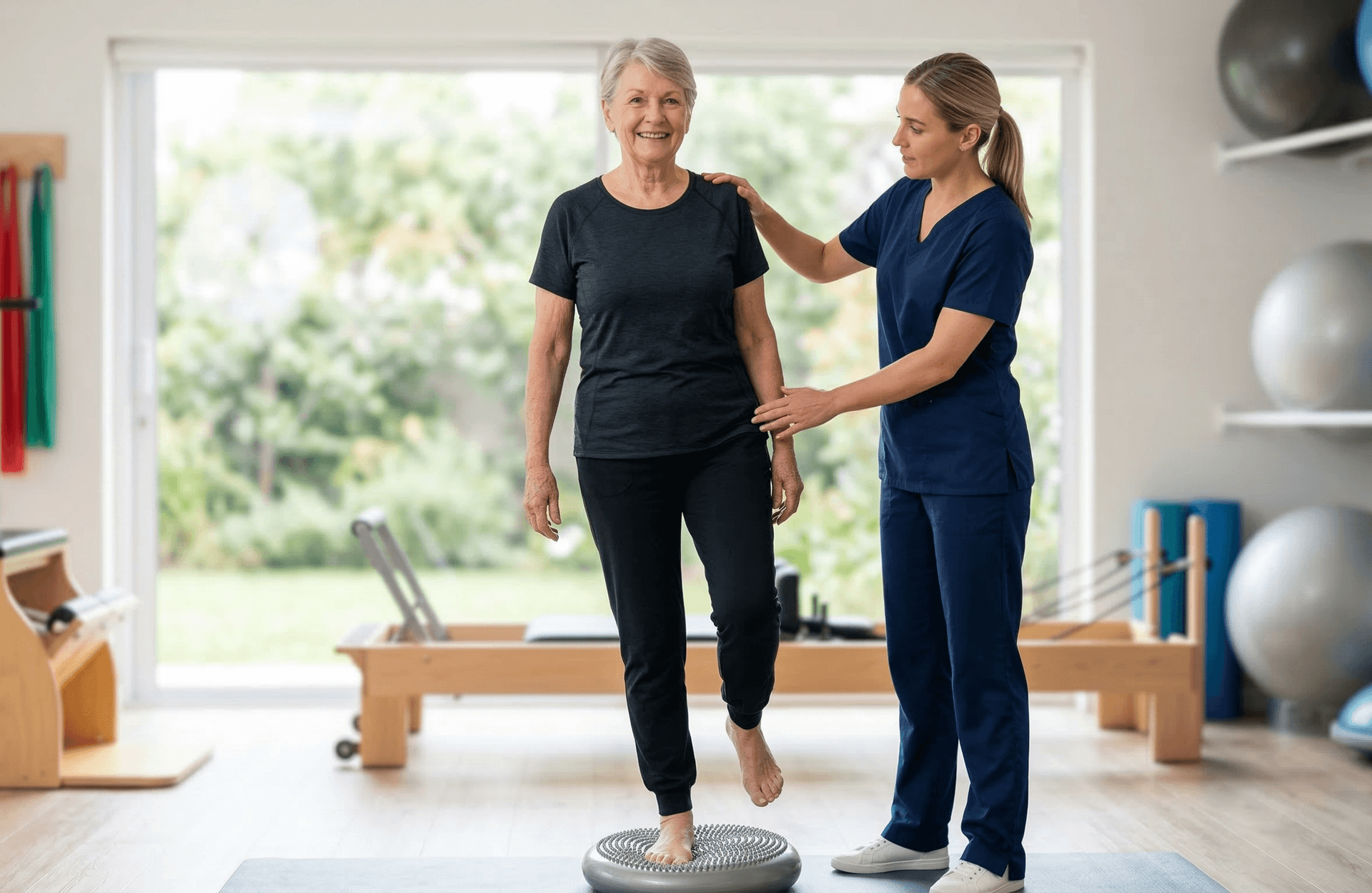
- Build balance near a safe support
- Use measurable strength progression
How much knee bend is enough?
Different daily tasks require different ranges, and people begin with different anatomy and preoperative stiffness. A single bend target should not overshadow knee straightening, swelling, walking, strength, and function.
If motion is unexpectedly limited or worsening, the surgical and rehabilitation teams should review it. More force is not always the answer, particularly when swelling is high.
Weeks 8 to 12 and beyond: return to fuller participation
Later rehabilitation focuses on the activities that matter to the patient: longer community walks, stairs, travel, household work, employment, and appropriate recreation. Strength may continue improving for many months, so discharge from frequent appointments does not mean exercise should stop.
Low-impact exercise such as walking, cycling, or swimming may be suitable when wounds are healed and the medical team approves. Higher-impact activity should be discussed individually because implant, health, experience, and surgical guidance matter.
- Increase strength toward the demands of daily life
- Practise stairs using a normal pattern when safe
- Build endurance for shopping, travel, and work
- Continue independent exercise after formal sessions reduce
- Review persistent pain, swelling, or functional plateaus
Common knee replacement recovery mistakes
One mistake is allowing the knee to dictate the entire day: either doing almost nothing or performing excessive exercise because stiffness feels urgent. The better plan distributes movement through the day and includes recovery.
Another mistake is comparing range numbers without context. A patient may gain bend but still lack strength for stairs, or walk farther while swelling steadily increases. The full pattern determines progression.
- Stopping the walking aid before gait is safe
- Placing a pillow only under the knee for prolonged periods without guidance
- Forcing range through severe pain and increasing swelling
- Neglecting hip, calf, balance, and general fitness
- Ending strength training when basic walking returns
Manage swelling, sleep, and energy—not only exercise
Recovery uses more energy than many patients expect. Poor sleep, medication effects, reduced appetite, and the effort of basic tasks can make exercise feel harder. Plan demanding exercises at the time of day when pain control and energy are best, and separate them from long walks or multiple appointments when possible.
Swelling is a load signal. Measure it consistently through appearance, comfort, range, or a method advised by the therapist. If every exercise session leaves the knee progressively larger and harder to bend, adding more repetitions is unlikely to solve the problem. Review activity across the whole day, including household walking and visitors, not only the formal exercises.
Sleep positions should prioritise comfort while respecting postoperative advice. A pillow supporting the lower leg may help elevation, but prolonged support only behind a bent knee can work against extension in some pathways. Clarify positioning with the surgical or rehabilitation team rather than relying on generic online instructions.
- Schedule harder exercises when energy and pain control are better
- Count household activity as part of the daily load
- Use swelling and next-day range to adjust exercise volume
- Protect knee extension according to the rehabilitation plan
- Discuss persistent sleep disruption and medication concerns medically
Red flags: when symptoms need urgent medical review
Follow the hospital’s postoperative contact instructions. Possible infection, clot, or sudden mechanical problems require urgent medical review.
- Increasing wound redness, drainage, opening, fever, or chills
- New calf swelling or pain, chest pain, or shortness of breath
- Rapidly worsening pain or swelling not settling with the advised plan
- A fall with deformity, inability to bear weight, or sudden major loss of movement
- A cold, pale, numb, or markedly weak foot
Questions patients commonly ask
These answers are general guidance. The right decision depends on your symptoms, medical history, examination findings, and the activities you need to return to.
When can I walk without a stick after knee replacement?
When walking is safe and reasonably symmetrical, and the surgical or rehabilitation team agrees. The aid should support good movement rather than be removed to meet a calendar target.
Is swelling normal several weeks after surgery?
Some swelling can persist and fluctuate with activity. It should be monitored. Increasing heat, redness, wound change, fever, calf symptoms, or a sudden major increase needs medical review.
Should I force the knee to bend?
Regular movement is important, but severe force can increase pain and guarding. Use the prescribed exercises and an appropriate dose. Unexpected restriction should be reviewed rather than repeatedly forced.
When can I climb stairs normally?
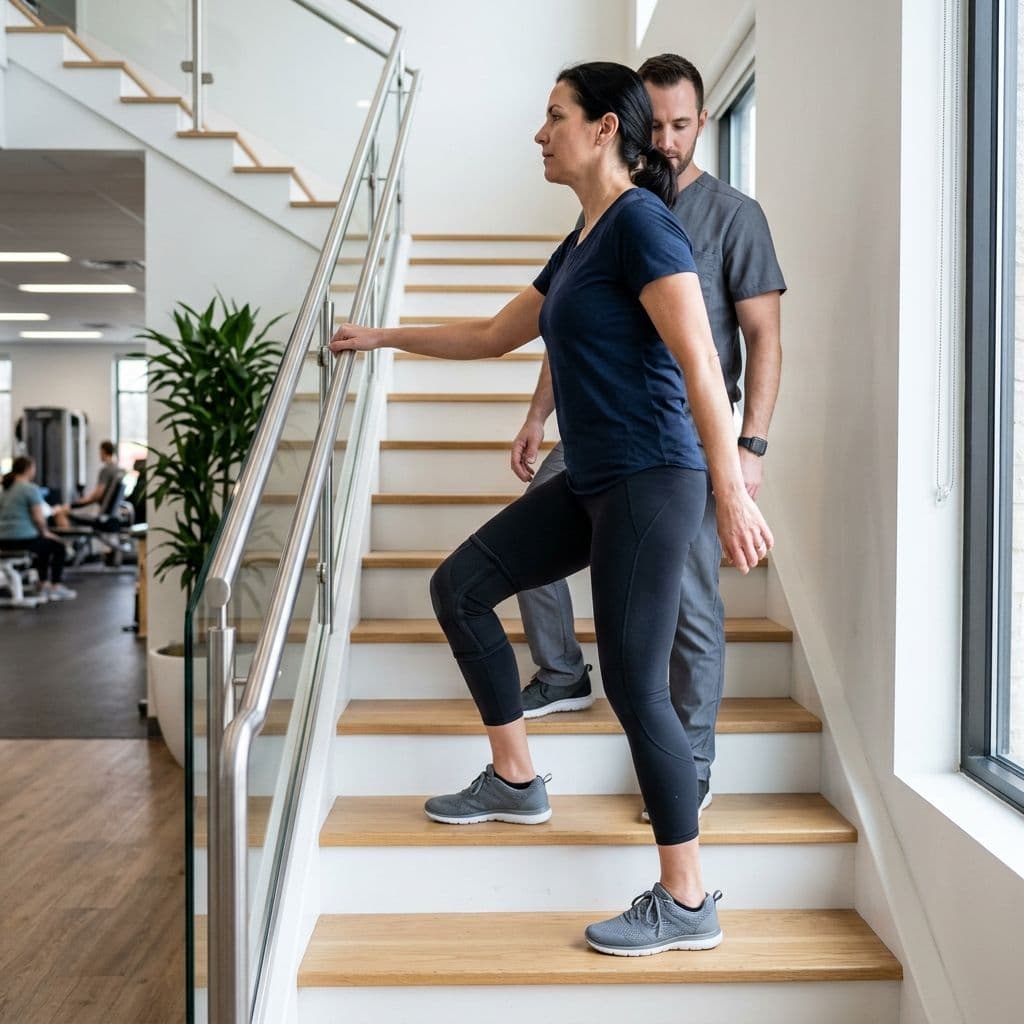
This depends on strength, balance, range, pain, and home setup. Many patients use a step-to pattern early and progress to alternating stairs when control is sufficient. The handrail remains useful for safety.
The clinic takeaway after knee replacement
Recovery is a sequence of priorities: protect health and the wound, restore safe movement, improve range, rebuild strength, normalise walking, and return to meaningful daily activity. Weeks provide context, while symptoms and measurable function determine progression.
At Physynex, bring the discharge plan and surgeon’s instructions. The team can then track swelling, movement, strength, walking, and stair milestones while identifying any reason recovery needs medical reassessment.
Relevant Physynex care pathways
Use these pages to understand the related condition or service. An assessment is still the right starting point when the diagnosis is uncertain.