
Section Guide
6 Sections

Structured rehabilitation after total knee replacement with staged mobility, strength, and function goals.
Section Guide
6 Sections
This section explains how symptoms typically behave, what often keeps them going, and which physical capacities usually need to improve for recovery to hold up in daily life.
After total knee replacement, early priorities often include pain management, swelling control, knee extension, walking quality, and confidence with basic daily movement.
As recovery progresses, the focus shifts toward strengthening, gait efficiency, stairs, transfers, and rebuilding the endurance needed for normal daily life.

Clinical Snapshot
Structured rehabilitation after total knee replacement with staged mobility, strength, and function goals.
Typical Symptom Pattern
What We Clarify During Assessment
Related Guides
If your symptoms feel more specific or overlap with another pattern, these guides can help you understand the closest condition pathways.
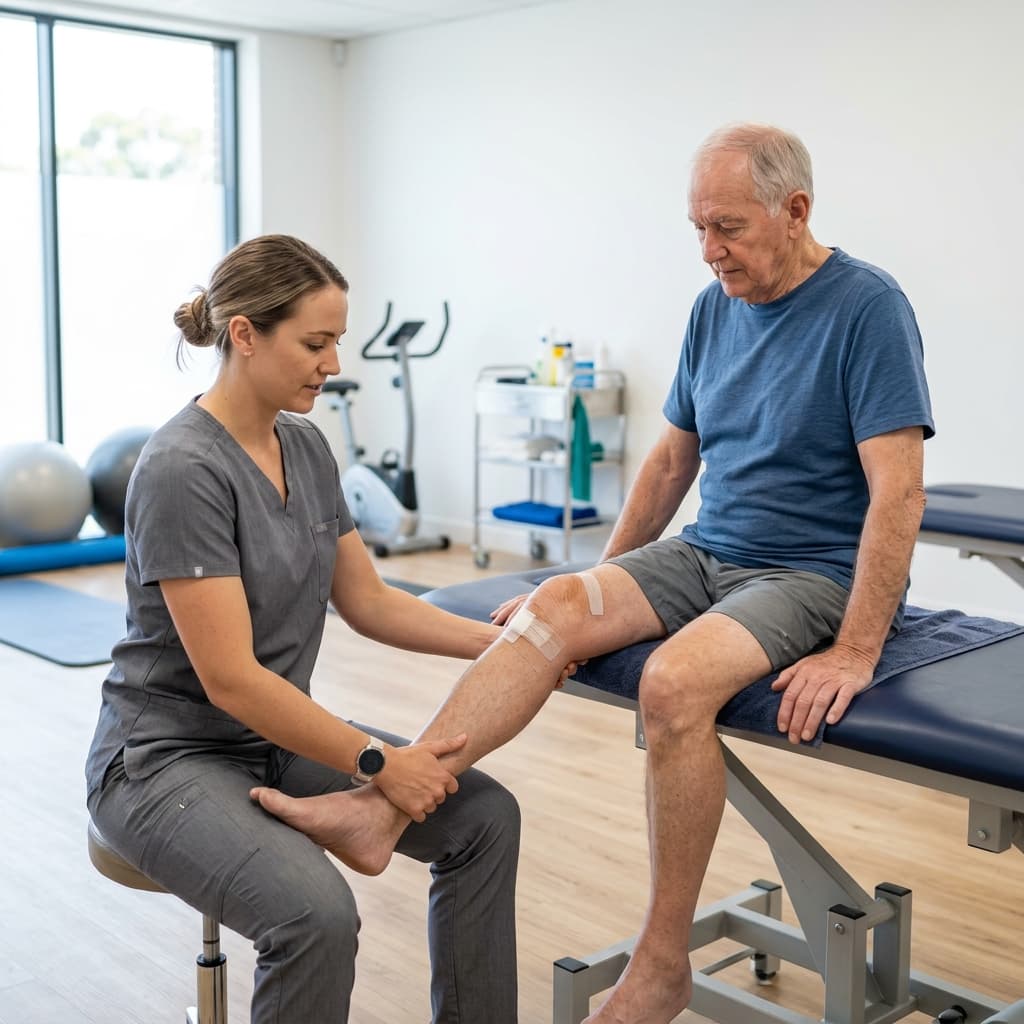
We match knee replacement rehab to your current phase, focusing first on pain, swelling, walking quality, and knee motion before progressing strength, stairs, and confidence.
As recovery improves, the plan becomes more functional so walking, transfers, endurance, and daily independence continue to build in a measurable way.
Your Plan May Include
It usually begins early, according to your surgical guidance and current presentation, with priorities around mobility, walking, and swelling control.
Some stiffness is common early on, which is why structured mobility and functional progression are important parts of rehab.
Yes. Stair confidence often improves as strength, control, knee extension, and functional tolerance improve.
That depends on your starting point, goals, and progress, but staged follow-up is often useful while gait, strength, and endurance continue to improve.