Back to Directory

Physiotherapy for Leg, Ankle, and Foot Pain

Condition-focused care for ankle sprains, plantar heel pain, Achilles issues, calf overload, and lower-limb movement dysfunction.

Clinical Analysis

Pathology Overview: Leg, Ankle, and Foot Pain

This section explains how symptoms typically behave, what often keeps them going, and which physical capacities usually need to improve for recovery to hold up in daily life.

Leg, ankle, and foot pain can significantly affect walking, standing, and running tolerance. Common problems include recurrent ankle sprains, Achilles overload, calf strain, plantar heel pain, and movement compensation after prior injury.

Without structured rehabilitation, symptoms often recur because strength, balance, and impact tolerance are not fully restored. Physiotherapy focuses on both symptom relief and long-term resilience.

A phase-based plan helps you progress safely from pain management to full functional loading and return to activity.

Clinical Snapshot

Condition-focused care for ankle sprains, plantar heel pain, Achilles issues, calf overload, and lower-limb movement dysfunction.

Typical Symptom Pattern

  • Pain during walking, running, or prolonged standing
  • Ankle instability or recurrent sprains
  • Heel pain during first steps in the morning
  • Calf and Achilles tightness with loading

What We Clarify During Assessment

Lower-limb mechanics and gait assessment
Pain reduction and mobility restoration
Tendon and calf strength progression
Return-to-walk and return-to-run planning

Common Presentations

  • Pain during walking, running, or prolonged standing
  • Ankle instability or recurrent sprains
  • Heel pain during first steps in the morning
  • Calf and Achilles tightness with loading

Modalities Offered

  • Biomechanical and gait assessment
  • Ankle and foot mobility restoration where needed
  • Calf-Achilles and foot intrinsic strength progression
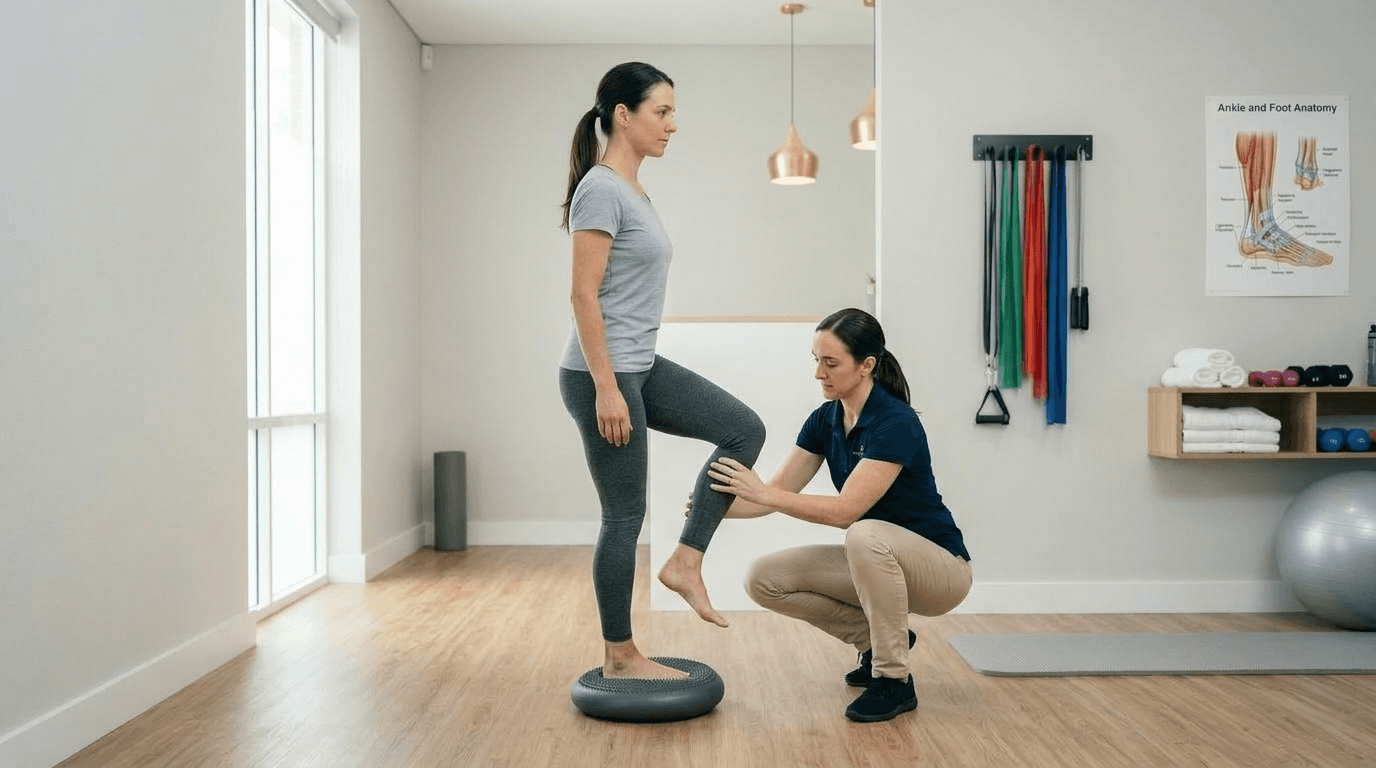
  • Balance and proprioception retraining
  • Progressive loading for walking and running tolerance
  • Return-to-run criteria and impact management

Clinical Approach

How Treatment Progresses

3 Rehab Stages

We identify the specific structure and loading pattern driving symptoms, then match exercise dosage to your current tolerance. This keeps progress steady while reducing flare-up frequency.

Later stages focus on force absorption, push-off strength, and impact readiness so you can return to normal walking and running loads with better confidence.

Your Plan May Include

Lower-limb mechanics and gait assessment
Pain reduction and mobility restoration
Tendon and calf strength progression
Return-to-walk and return-to-run planning
1

Assess and calm symptoms

  • Lower-limb mechanics and gait assessment
  • Biomechanical and gait assessment
  • Ankle and foot mobility restoration where needed
2

Restore movement and capacity

  • Pain reduction and mobility restoration
  • Calf-Achilles and foot intrinsic strength progression
  • Balance and proprioception retraining
3

Return to daily activity and sport

  • Return-to-walk and return-to-run planning
  • Progressive loading for walking and running tolerance
  • Return-to-run criteria and impact management
Patient Recovery Protocol

Active Management Guidance

Do not skip calf strengthening during pain reduction phases
Progress walking and running in planned increments
Address ankle balance deficits early after sprain
Use footwear strategically but prioritize capacity building

Clinical Q&A

Do ankle sprains always heal on their own?

Many improve, but incomplete rehab often leads to chronic instability. Structured rehab improves long-term ankle control.

Can plantar heel pain be treated without injections?

In many cases yes. Progressive loading, calf and foot capacity work, and activity modification are effective first-line options.

When can I return to running after ankle or foot pain?

Return to running follows staged criteria based on pain response, strength, and movement tolerance.