
Back to Directory

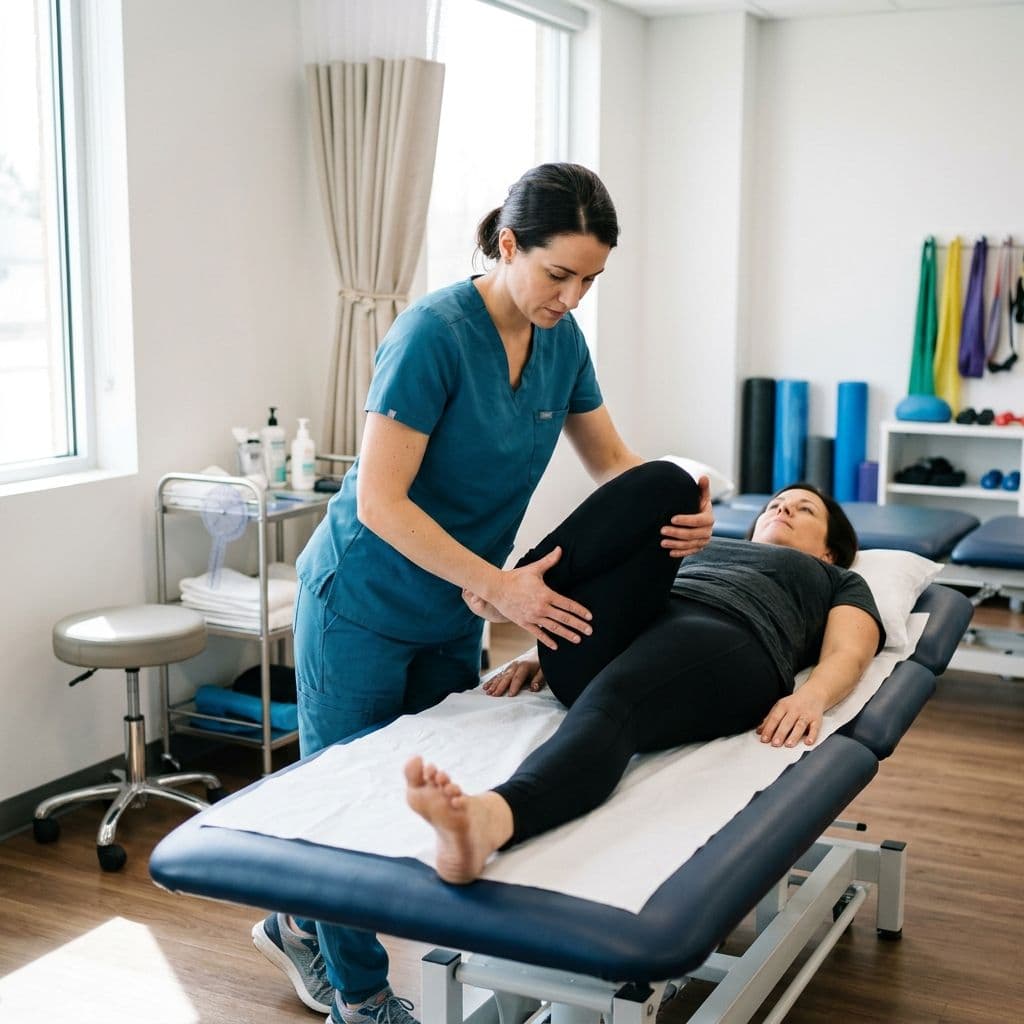
Physiotherapy for Hip Pain

Structured treatment for gluteal tendinopathy, groin strain, hip stiffness, and load-related lateral or anterior hip pain.

Clinical Analysis

Pathology Overview: Hip Pain

This section explains how symptoms typically behave, what often keeps them going, and which physical capacities usually need to improve for recovery to hold up in daily life.

Hip pain commonly affects walking, stairs, side-lying sleep, and gym training. It may present as groin pain, lateral hip pain, or deep stiffness that worsens with prolonged sitting or repeated loading.

Frequent contributors include tendon overload, reduced hip strength, training spikes, and movement patterns that increase compressive stress. Physiotherapy aims to calm symptoms while rebuilding capacity.

Well-structured hip rehab improves not only pain but also gait quality, single-leg control, and long-term tolerance to active lifestyles.

Clinical Snapshot

Structured treatment for gluteal tendinopathy, groin strain, hip stiffness, and load-related lateral or anterior hip pain.

Typical Symptom Pattern

  • Pain with walking, stairs, or prolonged standing
  • Groin or lateral hip pain during training
  • Stiffness while getting up from sitting
  • Sleep disturbance when lying on one side

What We Clarify During Assessment

Hip and pelvis movement assessment
Pain and irritability management in early phase
Progressive strength and tendon loading
Activity and gait adjustments to reduce flare-ups

Common Presentations

  • Pain with walking, stairs, or prolonged standing
  • Groin or lateral hip pain during training
  • Stiffness while getting up from sitting
  • Sleep disturbance when lying on one side

Modalities Offered

  • Hip and pelvic movement assessment with load profiling
  • Pain-management strategies during high-irritability phases
  • Progressive tendon and glute strength loading
  • Gait and activity modifications for symptom control
  • Mobility restoration where motion loss drives pain
  • Return-to-exercise progression for durable recovery

Clinical Approach

How Treatment Progresses

3 Rehab Stages

Your plan starts with identifying whether symptoms are tendon-dominant, mobility-dominant, or mixed. This lets us dose treatment and exercise progression more accurately.

As pain behavior improves, we scale strength and function toward your real activity goals, including walking tolerance, gym work, and impact preparation where needed.

Your Plan May Include

Hip and pelvis movement assessment
Pain and irritability management in early phase
Progressive strength and tendon loading
Activity and gait adjustments to reduce flare-ups
1

Assess and calm symptoms

  • Hip and pelvis movement assessment
  • Hip and pelvic movement assessment with load profiling
  • Pain-management strategies during high-irritability phases
2

Restore movement and capacity

  • Pain and irritability management in early phase
  • Progressive tendon and glute strength loading
  • Gait and activity modifications for symptom control
3

Return to daily activity and sport

  • Activity and gait adjustments to reduce flare-ups
  • Mobility restoration where motion loss drives pain
  • Return-to-exercise progression for durable recovery
Patient Recovery Protocol

Active Management Guidance

Avoid sudden jumps in walking or running volume
Use side-lying support if night pain is present
Prioritize progressive glute and hip abductor strength
Reassess activity tolerance weekly and progress gradually

Clinical Q&A

Can hip pain come from weak glutes?

Weakness and load intolerance can contribute, but not all hip pain is a simple weakness problem. Assessment is needed to guide the right plan.

Should I stop walking when hip pain starts?

Usually not completely. We typically adjust volume and intensity so you stay active without worsening symptoms.

How long does recovery usually take?

Recovery timelines vary by diagnosis and chronicity, but consistent loading and progression are key to durable results.