
Section Guide
6 Sections

Rehab for repetitive strain, tendon pain, nerve irritation, and grip-related symptoms affecting work and sport function.
Section Guide
6 Sections
This section explains how symptoms typically behave, what often keeps them going, and which physical capacities usually need to improve for recovery to hold up in daily life.
Upper-limb pain can disrupt typing, lifting, gripping, and precision tasks. It often develops from repetitive loading, forceful gripping, poor workload progression, or unresolved previous injury.
Pain around the elbow, wrist, or hand may involve tendon overload, nerve sensitivity, or movement compensation. Effective rehabilitation requires differentiating these contributors early.
With targeted physiotherapy, most people can restore function and return to work or sport without relying on prolonged complete rest.

Clinical Snapshot
Rehab for repetitive strain, tendon pain, nerve irritation, and grip-related symptoms affecting work and sport function.
Typical Symptom Pattern
What We Clarify During Assessment
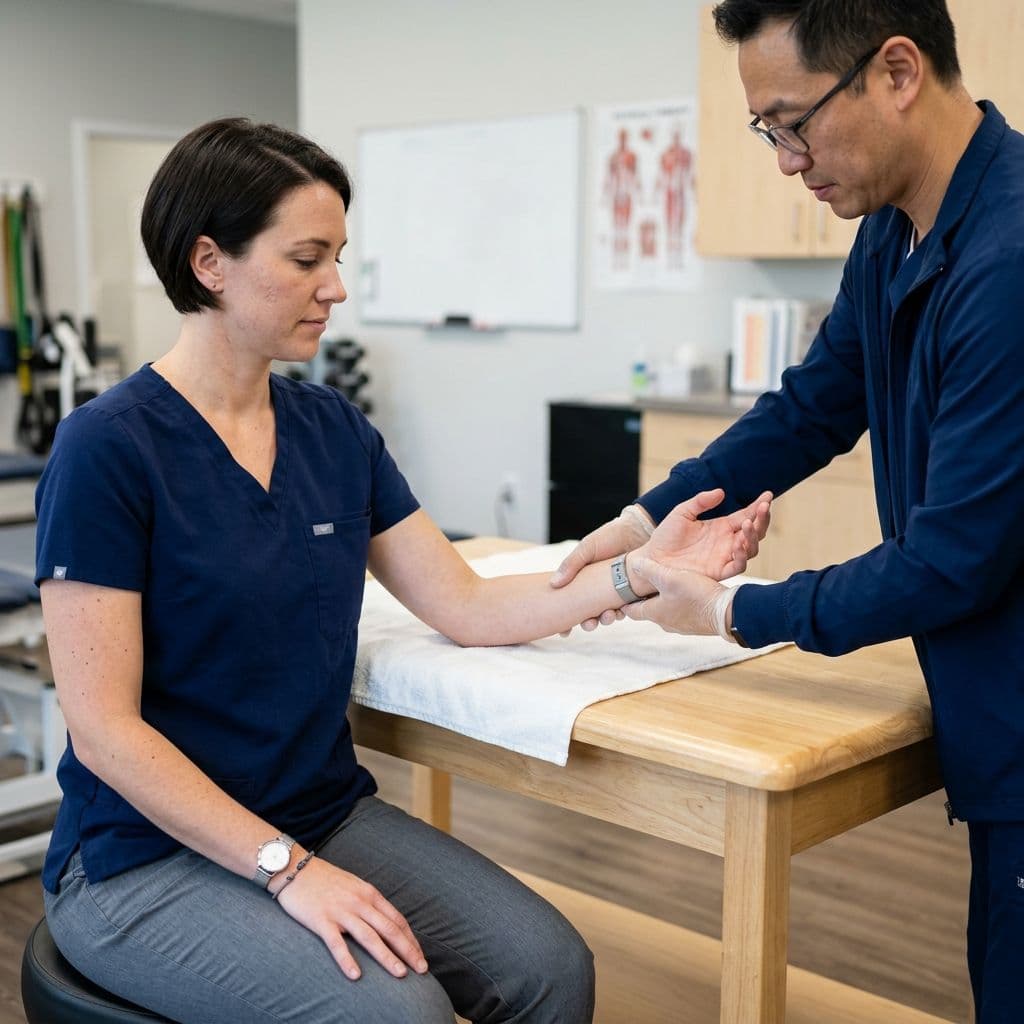
Treatment begins with identifying whether the primary driver is tendon load, nerve irritation, or a mixed presentation. This avoids overloading sensitive tissue with generic protocols.
We then progress from symptom modulation to graded strength and functional exposure, so you can return to keyboard work, manual work, lifting, and sport with better tolerance.
Your Plan May Include
Yes. Structured tendon loading, movement correction, and work or sport load management are core components of recovery.
Usually no. Relative load modification is preferred over complete rest so tissue capacity improves while daily function is maintained.
Nerve-related symptoms are assessed specifically, and treatment is adjusted to reduce irritation while restoring movement and strength.