Back to Directory

Physiotherapy for Shoulder Pain

Targeted rehab for rotator cuff pain, impingement-type symptoms, stiffness, and overhead movement limitations.

Clinical Analysis

Pathology Overview: Shoulder Pain

This section explains how symptoms typically behave, what often keeps them going, and which physical capacities usually need to improve for recovery to hold up in daily life.

Shoulder pain can affect daily tasks like dressing, lifting, sleeping, and gym training. Common drivers include rotator cuff overload, movement compensation, reduced thoracic mobility, and training progression errors.

Symptoms often feel worse during overhead activities, reaching behind the back, and side-lying sleep positions. Early management can prevent long-term weakness and persistent pain behavior.

Effective shoulder rehab is not only about pain relief. It must restore strength, range, and control across the whole shoulder complex for durable return to activity.

Clinical Snapshot

Targeted rehab for rotator cuff pain, impingement-type symptoms, stiffness, and overhead movement limitations.

Typical Symptom Pattern

  • Pain while lifting the arm or reaching overhead
  • Night pain while lying on the affected side
  • Weakness during pressing, pulling, or throwing tasks
  • Restricted range and guarded shoulder movement

What We Clarify During Assessment

Differential assessment of shoulder structures and movement
Pain reduction and mobility restoration strategies
Scapular and rotator cuff strengthening progressions
Return-to-gym and return-to-sport planning

Common Presentations

  • Pain while lifting the arm or reaching overhead
  • Night pain while lying on the affected side
  • Weakness during pressing, pulling, or throwing tasks
  • Restricted range and guarded shoulder movement

Modalities Offered

  • Movement assessment of shoulder, scapula, and thoracic spine
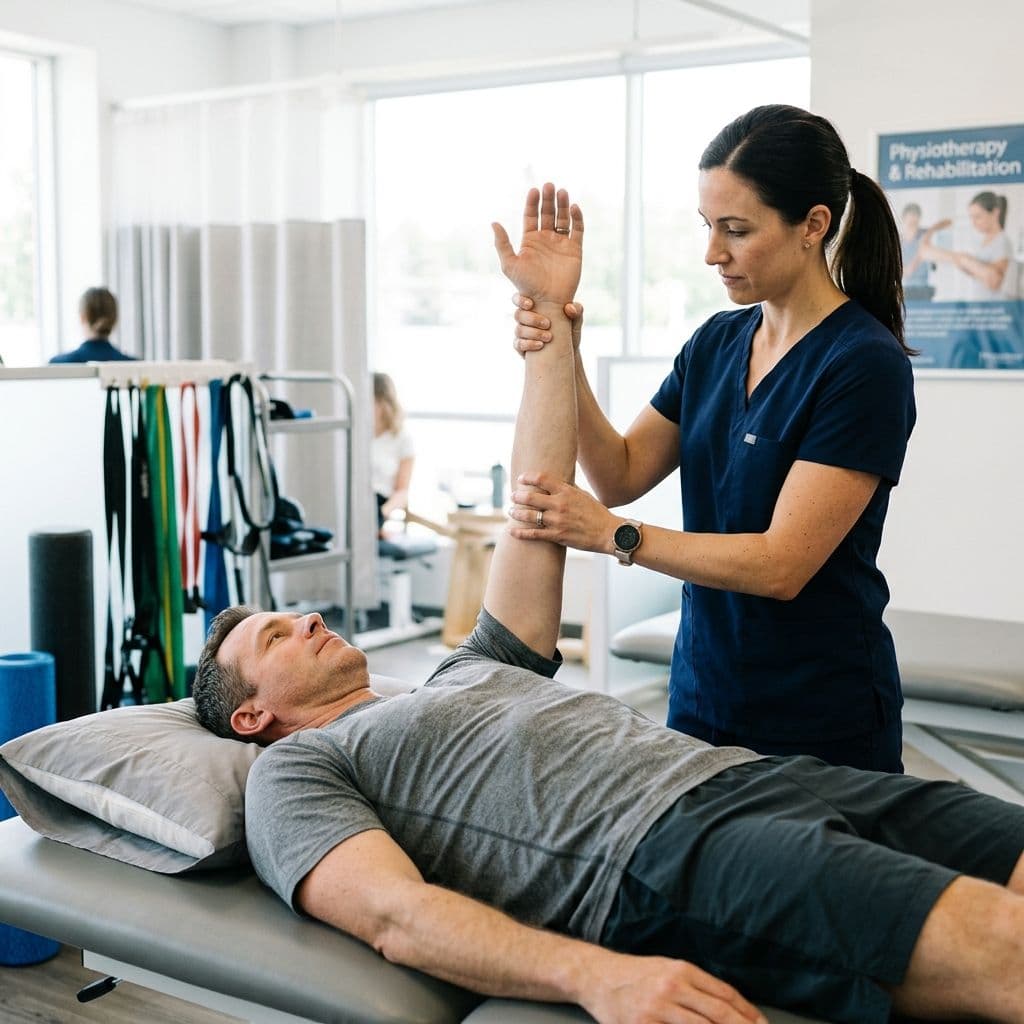
  • Manual therapy for stiffness and symptom modulation
  • Rotator cuff and scapular strength progressions
  • Overhead load tolerance retraining
  • Sport and gym-specific return-to-training programming
  • Self-management plan for flare-up prevention

Clinical Approach

How Treatment Progresses

3 Rehab Stages

We identify the exact movement patterns that reproduce your symptoms and classify where control, mobility, or loading tolerance is breaking down. This avoids generic exercises and improves decision quality from session one.

Treatment progresses from pain and mobility work into capacity building. Once baseline control improves, we add overhead strength and speed demands so you can return to real-life and sport-specific tasks confidently.

Your Plan May Include

Differential assessment of shoulder structures and movement
Pain reduction and mobility restoration strategies
Scapular and rotator cuff strengthening progressions
Return-to-gym and return-to-sport planning
1

Assess and calm symptoms

  • Differential assessment of shoulder structures and movement
  • Movement assessment of shoulder, scapula, and thoracic spine
  • Manual therapy for stiffness and symptom modulation
2

Restore movement and capacity

  • Pain reduction and mobility restoration strategies
  • Rotator cuff and scapular strength progressions
  • Overhead load tolerance retraining
3

Return to daily activity and sport

  • Return-to-gym and return-to-sport planning
  • Sport and gym-specific return-to-training programming
  • Self-management plan for flare-up prevention
Patient Recovery Protocol

Active Management Guidance

Do not avoid all shoulder movement; graded exposure improves outcomes
Respect sleep positioning and pillow support during painful phases
Progress pressing and overhead volume gradually week-to-week
Prioritize consistency over high-intensity bursts

Clinical Q&A

Is shoulder pain always a rotator cuff tear?

No. Shoulder pain can come from several movement and load-related causes. A structured assessment is needed before labeling it as a tear.

Can frozen shoulder be managed with physiotherapy?

Yes. Physiotherapy can support pain control, improve function, and guide stage-based movement progression throughout recovery.

When can I return to overhead training?

Overhead loading is reintroduced progressively once pain behavior, movement quality, and strength improve to a safe level.