Back to Directory

Physiotherapy for Knee Pain

Evidence-based rehabilitation for patellofemoral pain, meniscal irritation, ligament recovery, and load-related knee pain.

Clinical Analysis

Pathology Overview: Knee Pain

This section explains how symptoms typically behave, what often keeps them going, and which physical capacities usually need to improve for recovery to hold up in daily life.

Knee pain can limit walking, stairs, squatting, running, and sport. Common causes include patellofemoral overload, ligament injury history, meniscal irritation, tendon issues, and deconditioning after periods of inactivity.

Pain is often influenced by load progression errors, reduced hip-ankle contribution, and inadequate strength for activity demands. Treatment must address these root contributors, not just temporary pain control.

A structured knee rehab plan helps reduce flare-ups, improve confidence in single-leg tasks, and support return to work, training, or sport.

Clinical Snapshot

Evidence-based rehabilitation for patellofemoral pain, meniscal irritation, ligament recovery, and load-related knee pain.

Typical Symptom Pattern

  • Pain during stairs, squats, lunges, or running
  • Swelling after activity or prolonged standing
  • Instability or reduced confidence in single-leg tasks
  • Morning stiffness or pain after inactivity

What We Clarify During Assessment

Knee-specific load and movement assessment
Symptom-modulated strengthening progression
Hip, ankle, and trunk control integration
Return-to-running and return-to-sport criteria

Common Presentations

  • Pain during stairs, squats, lunges, or running
  • Swelling after activity or prolonged standing
  • Instability or reduced confidence in single-leg tasks
  • Morning stiffness or pain after inactivity

Modalities Offered

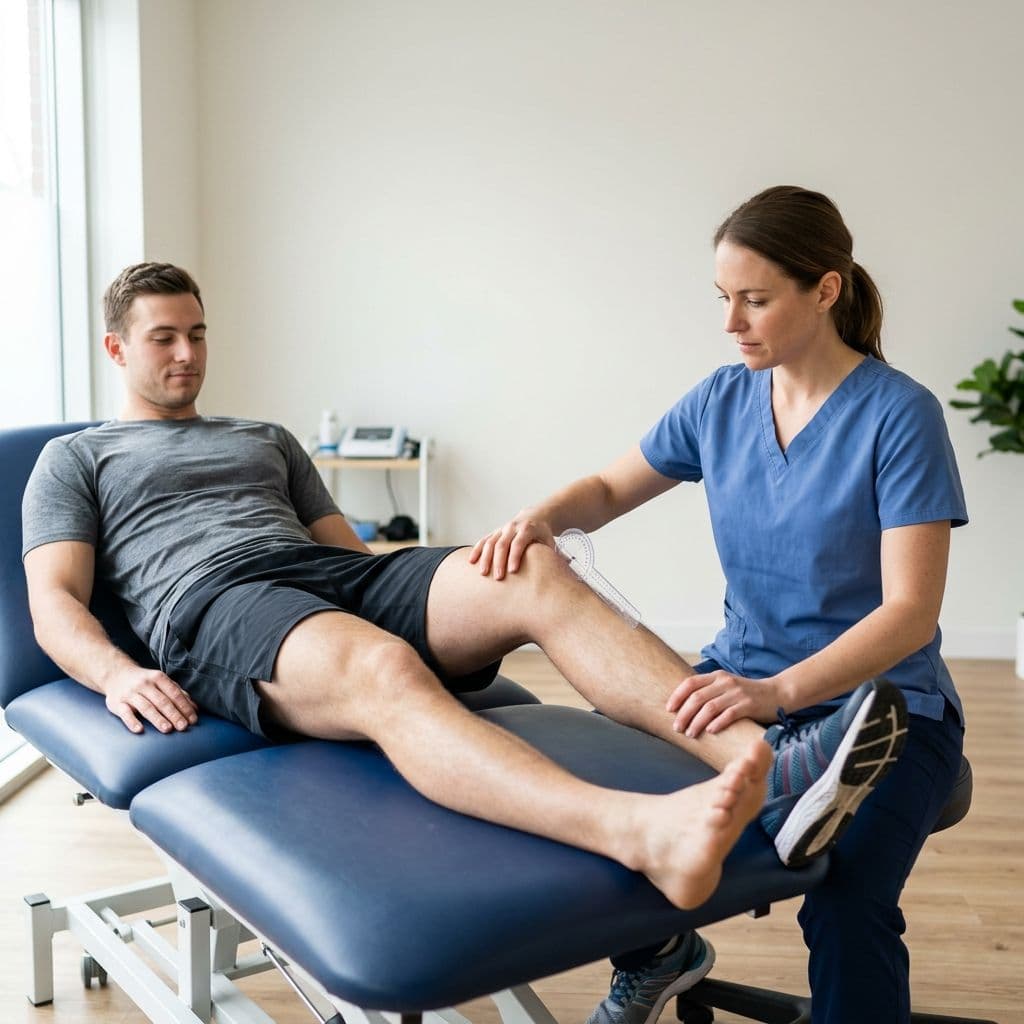
  • Objective knee, hip, and ankle movement assessment
  • Pain-modulated early-stage strengthening
  • Progressive loading for quadriceps, hamstrings, and calf
  • Single-leg control and landing mechanics retraining
  • Return-to-running or return-to-sport progression
  • Criteria-based milestone tracking

Clinical Approach

How Treatment Progresses

3 Rehab Stages

We first identify tissue irritability and movement deficits, then match exercise dosage to your current tolerance so progress happens without repeated setbacks.

As symptoms settle, progression shifts toward strength quality, single-leg control, and impact readiness. This stage is critical for restoring confidence and reducing recurrence risk during real-world activity.

Your Plan May Include

Knee-specific load and movement assessment
Symptom-modulated strengthening progression
Hip, ankle, and trunk control integration
Return-to-running and return-to-sport criteria
1

Assess and calm symptoms

  • Knee-specific load and movement assessment
  • Objective knee, hip, and ankle movement assessment
  • Pain-modulated early-stage strengthening
2

Restore movement and capacity

  • Symptom-modulated strengthening progression
  • Progressive loading for quadriceps, hamstrings, and calf
  • Single-leg control and landing mechanics retraining
3

Return to daily activity and sport

  • Return-to-running and return-to-sport criteria
  • Return-to-running or return-to-sport progression
  • Criteria-based milestone tracking
Patient Recovery Protocol

Active Management Guidance

Use pain-guided loading instead of complete activity shutdown
Build lower-limb strength two to three times per week
Track swelling and morning stiffness as progression markers
Reintroduce running with staged walk-jog intervals

Clinical Q&A

Is exercise safe when my knee hurts?

Yes, when dosed correctly. The right exercise intensity often helps reduce symptoms and improve long-term function.

Can physiotherapy help avoid surgery?

In many cases, yes. A focused rehab plan can significantly improve pain and function before surgical pathways are considered.

How do I know if I can start running again?

Return to running is based on symptom response, strength, control, and tolerance to staged loading rather than time alone.