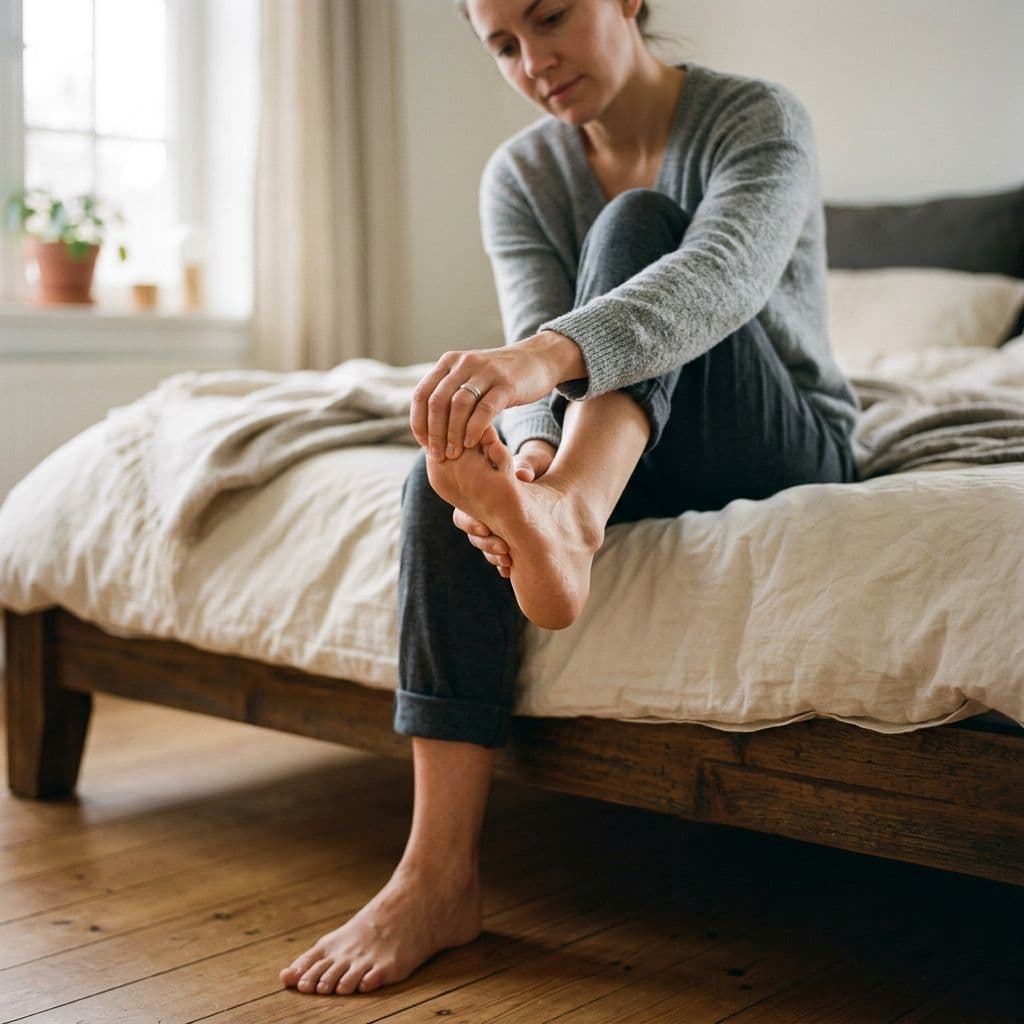


Hip pain while walking can be felt in the groin, outer hip, buttock, or upper thigh. Those locations suggest different possibilities but do not confirm a diagnosis. Hip-joint arthritis often produces groin pain and stiffness; gluteal tendon pain is commonly felt on the outer hip; back-related symptoms can refer into the hip region.
Walking is repetitive, so small capacity gaps become visible over distance. The first few minutes may feel acceptable before pain builds, a limp appears, or the person begins shortening the step. Simply resting can settle symptoms, but it does not explain why the hip is struggling at a particular distance.
Assessment should identify the likely source, screen for serious or non-musculoskeletal causes, and measure the strength and movement needed for the patient’s normal walking environment.
What the location and pattern of hip pain may suggest
Groin pain with stiffness, difficulty putting on socks, and reduced hip rotation may fit a hip-joint pattern such as osteoarthritis. Outer-hip pain that is sensitive when lying on that side or climbing stairs may involve the gluteal tendons and surrounding tissues.
Buttock pain can arise from the hip, lower back, or other structures. Pain travelling down the leg with numbness or tingling increases the need for spinal and neurological screening. Sudden severe groin pain after a fall creates concern for fracture.
- Groin pain and stiffness with shoes, socks, or low chairs
- Outer-hip pain with side-lying, stairs, or prolonged walking
- Buttock or leg symptoms influenced by spinal movement
- A limp or reduced step length as distance increases
- Pain after a rapid change in walking, running, or gym load
What a hip assessment should examine
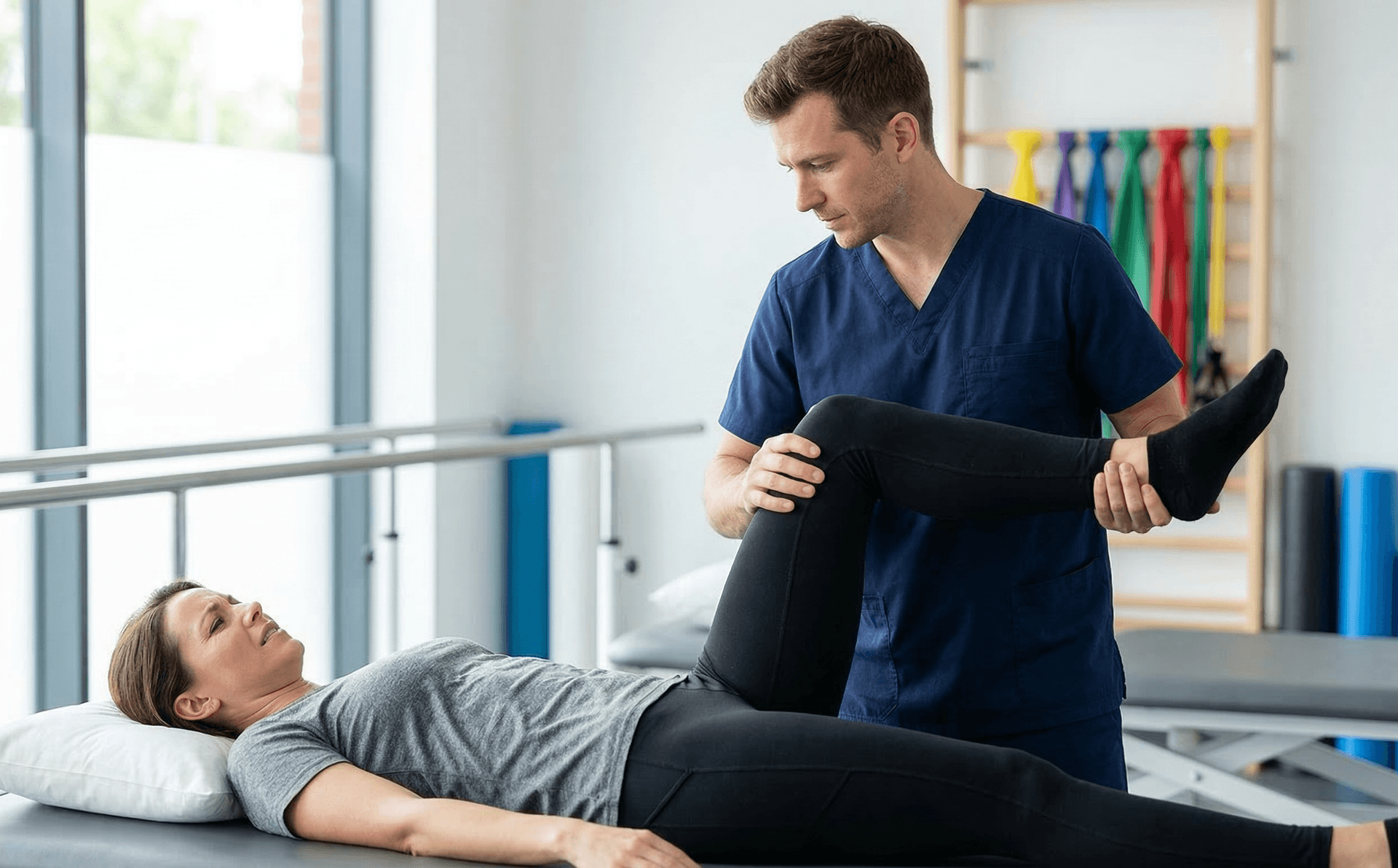
The clinician asks about onset, trauma, exact location, night symptoms, walking distance, stairs, footwear, medical conditions, and previous back or hip problems. The examination compares hip movement, strength, tenderness, balance, walking, and functional tasks.
The knee and lower back should not be ignored because they can alter gait or refer symptoms. When arthritis is suspected, imaging may support decisions, but treatment should still reflect pain, function, health, and goals rather than the X-ray alone.
- Hip rotation, flexion, and extension
- Gluteal, thigh, and calf strength
- Single-leg balance and pelvic control
- Walking speed, step length, and limp
- Back, knee, and neurological screening when indicated
How physiotherapy changes walking tolerance
The first step is finding a walking dose the hip can recover from. This may mean shorter walks more often, a temporary reduction in hills, or using an appropriate aid. The goal is not permanent restriction; it is to create enough symptom control to build capacity.
Strengthening may target the gluteal muscles, thighs, calves, and trunk. Exercise selection depends on diagnosis and irritability. A painful outer hip may not tolerate repeated compression from certain side-lying exercises early, while an arthritic hip may benefit from movement and strength across a comfortable range.
- Establish a repeatable walking baseline
- Build hip and leg strength with progressive resistance
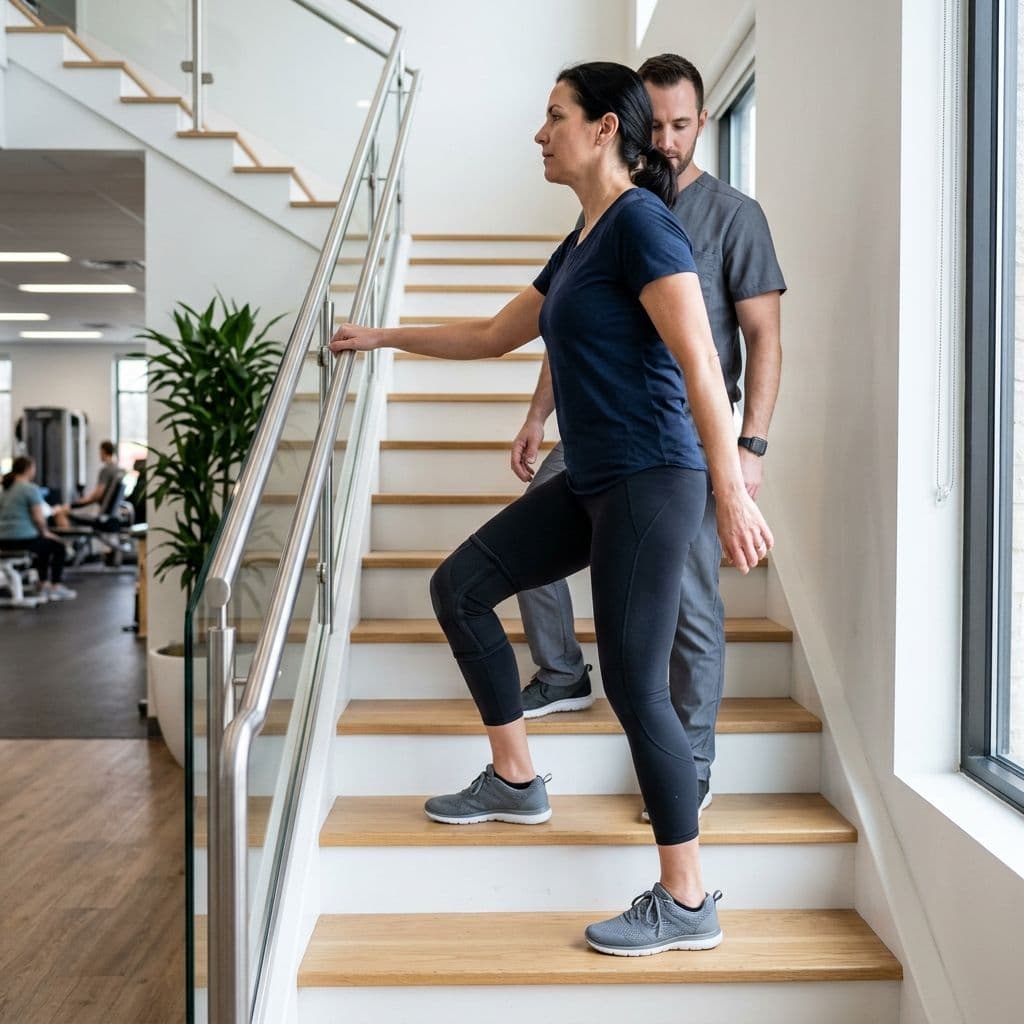
- Practise step-ups, sit-to-stand, and balance
- Modify hills, speed, and distance separately
- Use a stick correctly when it improves safety or load tolerance
Should you walk through hip pain?
A mild, stable discomfort may be acceptable when gait remains controlled and symptoms settle predictably. Continuing through an increasing limp or a prolonged flare is less useful. The appropriate threshold depends on diagnosis and health.
Track distance and next-day response. Progress is visible when the same walk causes less discomfort, a longer distance is tolerated, or recovery is faster.
Everyday changes that support recovery
For outer-hip pain, avoiding prolonged compression may help: do not stand with the hip pushed outward, and use pillow support when side-lying if comfortable. For joint stiffness, regular position changes and movement can be more useful than remaining seated for long periods.
Footwear and walking surfaces can alter symptoms, but they are rarely the only cause. Choose stable, comfortable footwear and introduce surface or hill changes gradually rather than searching for one perfect shoe.
- Break long walks into manageable bouts
- Avoid repeatedly hanging on one hip while standing
- Use sleep support when side-lying is painful
- Keep strength work during walking progression
- Plan recovery after unusually demanding days
Common mistakes with walking-related hip pain
One mistake is stretching every painful hip aggressively. Some presentations are sensitive to compression or end-range positions, and the correct exercise may be strength rather than more stretching. Another is assuming a limp will disappear without retraining strength and walking exposure.
People may also avoid all walking for weeks, then test the hip with a long outing. A stable baseline followed by smaller increases provides better information and usually fewer setbacks.
- Forcing stretches without knowing the pain pattern
- Ignoring a steadily increasing limp
- Doing only low-load activation without progressing resistance
- Jumping from rest to a long walk
- Assuming every hip pain is arthritis
Choose progress measures that reflect real walking
A clinic strength test is useful, but walking recovery should also be measured in distance, pace, surfaces, hills, and recovery. Choose a repeatable route or time-based walk and record when discomfort begins, whether a limp appears, and how the hip feels later and the next morning.
If arthritis is the main pattern, progress may include easier shoes and socks, improved chair transfers, and greater community walking even when stiffness remains. If gluteal tendon pain is dominant, reduced side-lying pain and better tolerance of stairs or single-leg loading may matter. Different diagnoses need different outcome emphasis.
Walking aids can be part of progression rather than a sign of failure. A correctly used stick may reduce pain enough to preserve activity while strength improves. The aid can be reviewed and reduced when walking quality and tolerance justify it, instead of being removed because of embarrassment or retained without reassessment.
- Use a repeatable route or timed walk
- Record the point at which limping begins
- Track next-day response as distance increases
- Match outcomes to the likely joint or tendon pattern
- Review walking-aid need as strength changes
Red flags: when symptoms need urgent medical review
Hip pain can occasionally signal fracture, infection, clot, or another medical condition. Seek urgent review when symptoms are severe or accompanied by systemic signs.
- Inability to bear weight after a fall or sudden injury
- A shortened, rotated, or visibly deformed leg
- A hot, swollen joint with fever or feeling very unwell
- New calf swelling, chest pain, or shortness of breath
- Unexplained weight loss, constant night pain, or rapidly worsening weakness
Questions patients commonly ask
These answers are general guidance. The right decision depends on your symptoms, medical history, examination findings, and the activities you need to return to.
Does groin pain always come from the hip joint?
No. The hip joint is one possibility, but muscles, tendons, hernia, and other medical causes can produce groin pain. Examination is important when symptoms persist or are unusual.
Should I use a walking stick?
A stick can reduce load and improve confidence for some people. It is usually held on the opposite side, but individual instruction helps ensure the height and technique are correct.
Can hip arthritis improve without surgery?
Many people improve pain and function through exercise, activity planning, health management, and medical care. Surgery may be considered when symptoms remain severe and limiting despite appropriate non-operative treatment.
Are side-lying leg raises good for outer-hip pain?
They can help some people but may increase compression in an irritable outer hip. Other positions can strengthen the same muscles with less irritation. Exercise choice should reflect the response.
The clinic takeaway when hip pain limits walking
Walking-related hip pain needs more than a location label. The assessment should distinguish joint, tendon, muscle, spinal, and medical patterns, then rebuild the exact strength and load tolerance that walking requires.
At Physynex, note the distance at which pain starts, whether the pain is in the groin or outer hip, and what happens the next day. Those details help set a safe baseline and meaningful progression.
Relevant Physynex care pathways
Use these pages to understand the related condition or service. An assessment is still the right starting point when the diagnosis is uncertain.