
Tennis elbow can affect people who never play tennis. Pain on the outer elbow may appear during gripping, lifting a kettle, carrying a bag, using tools, typing with a tense wrist, or performing repeated racquet strokes. Rest often helps, but the pain returns when normal load resumes.
The condition is commonly related to the wrist-extensor tendon near the outer elbow. The tendon may become sensitive when repeated gripping and wrist load exceed current capacity. This is not simply an inflammation that must be rested indefinitely, and it is not always the only possible diagnosis.
Neck-related nerve symptoms, radial nerve irritation, joint problems, and other elbow conditions can mimic or accompany tennis elbow. Assessment is particularly important when numbness, marked weakness, trauma, locking, or widespread arm pain is present.
Why tennis elbow becomes persistent
Many cases begin after a load change: more tool use, a new gym routine, gardening, moving house, increased racquet volume, or returning to work after a break. The person may continue through pain until ordinary gripping becomes sensitive.
Complete rest reduces demand but also fails to build capacity. When the same workload returns suddenly, symptoms return. Effective treatment creates a graded path from the current tolerable load to the real demands of work, sport, and daily life.
- A sudden increase in gripping or wrist work
- Repeated lifting with the wrist held extended
- Insufficient recovery between high-load days
- Reduced shoulder or forearm capacity
- Repeated rest followed by immediate full return
What the assessment should examine
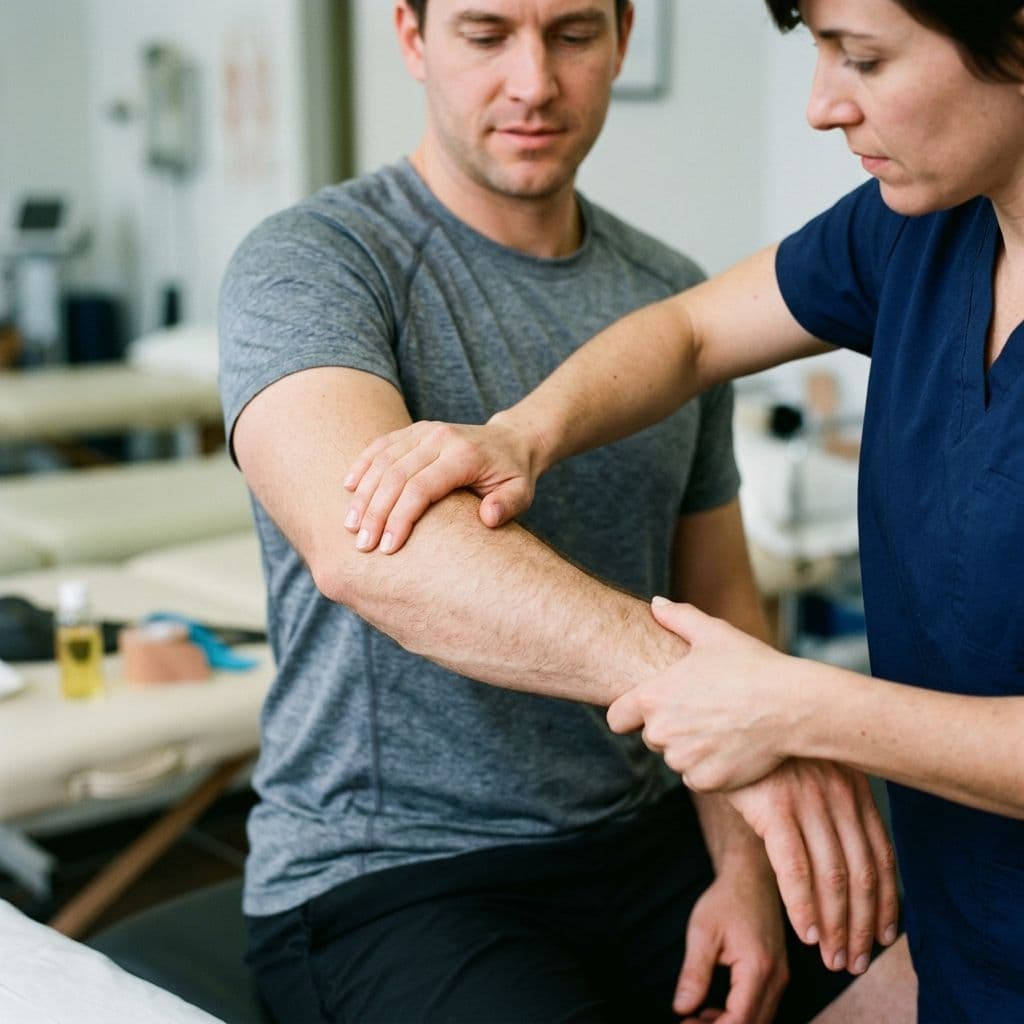
The clinician should identify the exact pain location and the tasks that reproduce it. Resisted wrist or finger movement, grip testing, palpation, and functional lifting can support the diagnosis. Grip can be tested in different elbow positions to understand load sensitivity.
The neck, shoulder, nerves, and elbow joint may also need screening. Burning, tingling, altered sensation, or pain spreading widely is not a classic isolated tendon presentation. A clear mechanism of injury raises concern for other tissue damage.
- Pain location and response to gripping
- Wrist-extensor and finger-extension loading
- Grip strength and pain-limited force
- Neck movement and neurological symptoms
- Work, sport, gym, and household load patterns
Use load modification instead of permanent avoidance
Early changes should reduce the most provocative dose without removing all arm use. A worker may vary tools, reduce sustained gripping, use two hands for heavy objects, or change wrist position. A player may reduce racquet volume while maintaining lower-body conditioning and technical work.
Braces or straps can help some people temporarily, but they do not replace rehabilitation. The aim is to make daily activity tolerable enough that progressive exercise can be completed consistently.
- Reduce repeated high-force gripping for a short period
- Use two hands for heavier household objects
- Keep the wrist closer to neutral during lifting
- Break long tool or keyboard sessions into smaller blocks
- Maintain non-aggravating fitness and upper-body movement
Progressive tendon and upper-limb strengthening
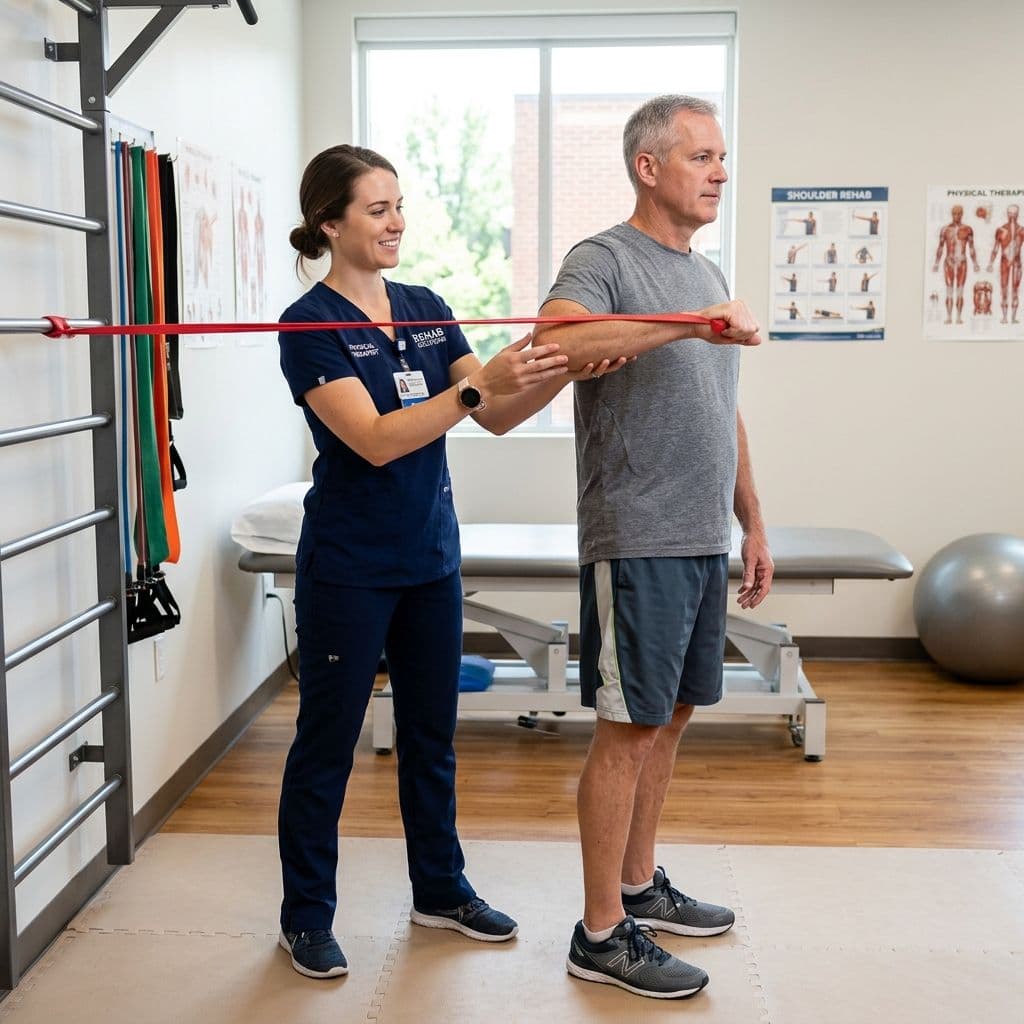
Exercise may begin with isometric wrist-extension holds when movement is highly sensitive, then progress to slow wrist extension through range. Resistance should eventually become meaningful. Light bands used forever may not prepare a manual worker or racquet athlete.
The shoulder, upper back, grip, and forearm rotation can also be trained. Later stages should reproduce the speed, endurance, and positions required by the person’s activity.
- Begin with a tolerable wrist-extensor loading level
- Progress weight, repetitions, range, or speed systematically
- Train grip without repeatedly provoking a prolonged flare
- Add shoulder and pulling strength
- Reintroduce task-specific lifting, tools, or racquet work
How to use pain during tendon exercise
A small, stable discomfort may be acceptable if it settles and does not reduce function the next day. Escalating pain, falling grip strength, or a response that lasts several days indicates excessive load or an incorrect diagnosis.
The goal is not to test the elbow to failure at every session. Consistent recoverable loading produces better information and allows gradual progression.
Why quick fixes often disappoint
Massage, dry needling, heat, or other modalities may provide symptom relief, but they do not automatically restore tendon capacity. Injections require careful medical discussion because short-term pain change and long-term outcomes are not the same question.
Technique changes can reduce unnecessary load, but no ergonomic adjustment can prepare the tendon for high demand without training. The most durable plan combines symptom management with progressive exercise and staged return.
- Relying on passive treatment without strengthening
- Stopping exercise as soon as pain improves
- Using very light resistance despite high work demands
- Returning to full gripping volume in one step
- Ignoring neck or nerve-related symptoms
Match rehabilitation to work, gym, or racquet demands
A manual worker may need sustained grip, awkward wrist positions, vibration, and repeated lifting. A racquet athlete needs rapid force transfer and tolerance for many impacts. A gym participant may be limited by pull-ups, rows, curls, or heavy carries. The final rehabilitation stage should reproduce the relevant demand progressively.
Technique and equipment can modify load. Tool-handle size, grip pressure, racquet string tension, keyboard position, and lifting strategy may matter, but changes should be tested rather than assumed. An equipment adjustment that reduces symptoms can create space for strengthening; it does not remove the need to rebuild capacity.
Use a graded exposure schedule. Begin with a manageable duration or number of strokes, sets, or work cycles. Increase only when the elbow recovers predictably. Keep at least one strength session during the return phase so task volume does not become the only tendon stimulus.
- Define the highest-force task the elbow must tolerate
- Reduce unnecessary grip pressure where technique allows
- Trial equipment changes one at a time
- Progress work cycles, strokes, or gym sets gradually
- Retain strength work during full return
Red flags: when symptoms need urgent medical review
Outer-elbow pain is usually not urgent, but trauma, neurological changes, infection signs, or major mechanical symptoms need medical assessment.
- Deformity, severe swelling, or inability to move after trauma
- A hot, red, swollen elbow with fever
- Progressive hand weakness, numbness, or widespread neurological symptoms
- True locking or repeated loss of elbow movement
- Unexplained night pain or rapidly worsening symptoms
Questions patients commonly ask
These answers are general guidance. The right decision depends on your symptoms, medical history, examination findings, and the activities you need to return to.
Should I wear a tennis-elbow strap all day?
A strap may reduce symptoms during selected tasks, but all-day use is not automatically necessary. It should support activity while rehabilitation rebuilds capacity, not become the only treatment.
Are wrist curls enough?
They can be part of the plan, but resistance, grip, shoulder strength, forearm rotation, and task-specific exposure may also be needed. The program should match actual demand.
Can I keep playing tennis?
Often at a modified volume if symptoms remain manageable and technique or equipment issues are addressed. Severe or worsening pain may require a temporary reduction before graded return.
How long does tennis elbow take to recover?
Persistent tendon pain can take several months to rebuild. Progress should appear in grip, daily tasks, exercise load, and recovery time even if complete pain relief is slower.
The clinic takeaway for recurring tennis elbow
Recurring elbow pain usually needs more than another rest period. Identify the load that exceeds capacity, modify it temporarily, and build the forearm and upper limb toward the demands that keep triggering symptoms.
At Physynex, bring details of your tools, gym exercises, racquet schedule, or repeated work tasks. That allows rehabilitation to progress beyond generic wrist movements toward the activity you actually need.
Relevant Physynex care pathways
Use these pages to understand the related condition or service. An assessment is still the right starting point when the diagnosis is uncertain.