
Section Guide
6 Sections

Targeted physiotherapy for outer elbow pain linked to gripping, lifting, racket sports, gym work, and repetitive hand use.
Section Guide
6 Sections
This section explains how symptoms typically behave, what often keeps them going, and which physical capacities usually need to improve for recovery to hold up in daily life.
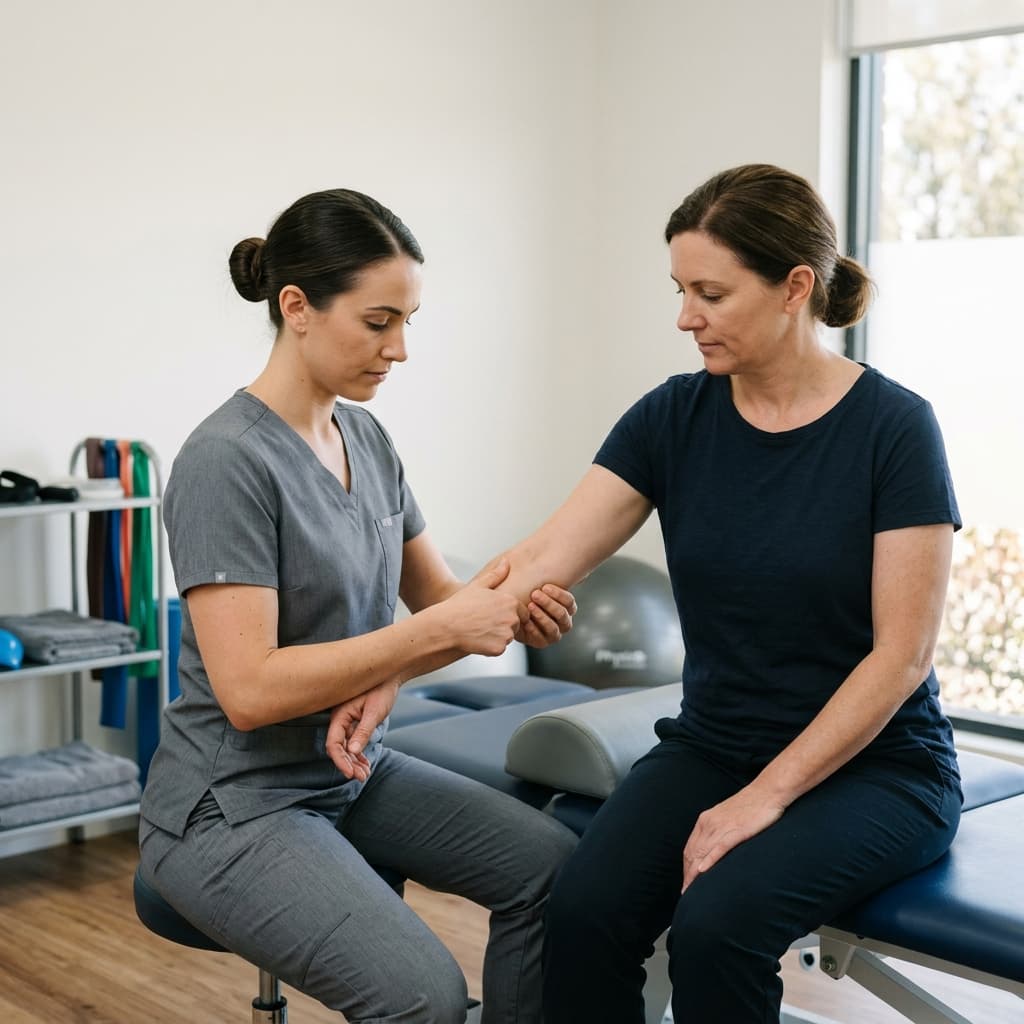
Tennis elbow usually builds from repeated forearm loading that has exceeded tendon tolerance over time. It often affects gripping, carrying, keyboard or mouse use, racket sports, and pulling or lifting tasks.
Recovery depends on calming the most provocative loads, then rebuilding tendon capacity steadily so daily activity and training become more predictable.
Clinical Snapshot
Targeted physiotherapy for outer elbow pain linked to gripping, lifting, racket sports, gym work, and repetitive hand use.
Typical Symptom Pattern
What We Clarify During Assessment
Related Guides
If your symptoms feel more specific or overlap with another pattern, these guides can help you understand the closest condition pathways.
Golfer's Elbow
Rehabilitation for inner elbow pain linked to gripping, wrist flexion, pulling work, gym loading, and repetitive upper-limb strain.
Arm, Elbow, Wrist, and Hand Pain
Rehab for repetitive strain, tendon pain, nerve irritation, and grip-related symptoms affecting work and sport function.
Overuse Injuries
Assessment-led rehab for repeated load-related injuries in runners, athletes, gym-goers, and active adults.
We identify which loads are currently exceeding tendon capacity and which ones can stay in the plan with modification. That helps us avoid both over-resting and repeated aggravation.
As pain settles, treatment shifts toward heavier strength work and better tolerance to gripping, lifting, sport, and work-specific tasks.
Your Plan May Include
Usually no. We normally modify exercise selection, volume, and grip demand so you can keep training while the tendon recovers.
Recurrence is common when the tendon is not progressively reloaded enough or when high-demand tasks return faster than capacity improves.
Yes. Longer-standing tendon pain often still responds well when loading, strength work, and aggravating patterns are managed properly.