
Back to Directory

Physiotherapy for Rotator Cuff Repair Recovery

Phase-based rehabilitation after rotator cuff repair or shoulder surgery with guided mobility, strength rebuilding, and overhead recovery.

Clinical Analysis

Pathology Overview: Rotator Cuff Repair Recovery

This section explains how symptoms typically behave, what often keeps them going, and which physical capacities usually need to improve for recovery to hold up in daily life.

Rotator cuff repair recovery needs the right balance between protecting healing tissue and restoring shoulder movement early enough to prevent long-term stiffness.

Recovery is usually phased. Early stages focus on pain, swelling, sleep, sling-related movement limitations, and safe range progression. Later stages rebuild strength, control, and overhead confidence for day-to-day tasks, work, and training.

A structured rehabilitation plan helps you avoid both extremes: doing too little for too long or progressing faster than the repair is ready for.

Clinical Snapshot

Phase-based rehabilitation after rotator cuff repair or shoulder surgery with guided mobility, strength rebuilding, and overhead recovery.

Typical Symptom Pattern

  • Pain, sleep disturbance, and stiffness after shoulder surgery
  • Difficulty lifting the arm or reaching overhead
  • Weakness with dressing, carrying, or daily shoulder tasks
  • Uncertainty about safe movement and strength milestones

What We Clarify During Assessment

Shoulder surgery-specific rehab planning
Mobility and pain management in early stages
Strength and function progression by phase
Return-to-activity checkpoints and guidance

Common Presentations

  • Pain, sleep disturbance, and stiffness after shoulder surgery
  • Difficulty lifting the arm or reaching overhead
  • Weakness with dressing, carrying, or daily shoulder tasks
  • Uncertainty about safe movement and strength milestones

Modalities Offered

  • Shoulder surgery-specific assessment and phase planning
  • Pain, stiffness, and scar-related mobility management
  • Range-of-motion restoration matched to healing stage
  • Scapular control and shoulder strength progression
  • Functional retraining for reaching, lifting, and work tasks
  • Return-to-gym and return-to-sport guidance where appropriate

Clinical Approach

How Treatment Progresses

3 Rehab Stages

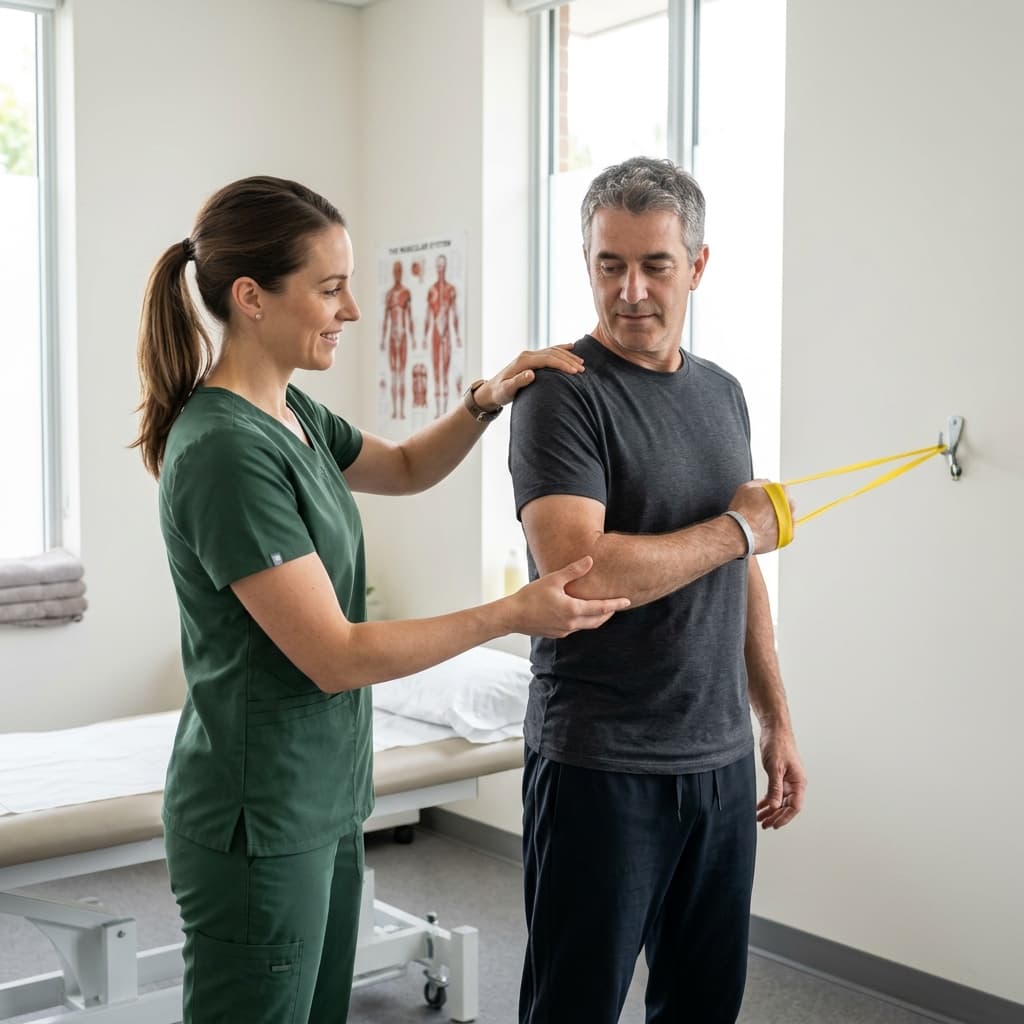
We align rehabilitation to your surgeon protocol, tissue healing timeline, and current shoulder irritability. This helps protect the repair while still making steady progress in motion and control.

As recovery improves, the focus shifts toward useful shoulder strength, overhead confidence, and the demands that matter most to you, whether that is daily activity, work, or a return to training.

Your Plan May Include

Shoulder surgery-specific rehab planning
Mobility and pain management in early stages
Strength and function progression by phase
Return-to-activity checkpoints and guidance
1

Assess and calm symptoms

  • Shoulder surgery-specific rehab planning
  • Shoulder surgery-specific assessment and phase planning
  • Pain, stiffness, and scar-related mobility management
2

Restore movement and capacity

  • Mobility and pain management in early stages
  • Range-of-motion restoration matched to healing stage
  • Scapular control and shoulder strength progression
3

Return to daily activity and sport

  • Return-to-activity checkpoints and guidance
  • Functional retraining for reaching, lifting, and work tasks
  • Return-to-gym and return-to-sport guidance where appropriate
Patient Recovery Protocol

Active Management Guidance

Follow sling, sleep, and early movement guidance consistently
Respect healing timelines while staying active within limits
Track range, pain behavior, and functional milestones weekly
Progress shoulder loading only after meeting phase criteria

Clinical Q&A

When should physiotherapy start after rotator cuff repair?

It depends on the exact procedure and your surgeon protocol, but rehabilitation usually starts early with protected movement, pain management, and staged progression.

Do you follow my surgeon protocol during rehab?

Yes. Treatment is progressed within your surgeon protocol while adapting to your pain, stiffness, and objective shoulder function.

How do I know my shoulder is progressing well after surgery?

Progress is tracked through pain response, range of motion, strength, and functional milestones at each phase of recovery.