
Back to Directory

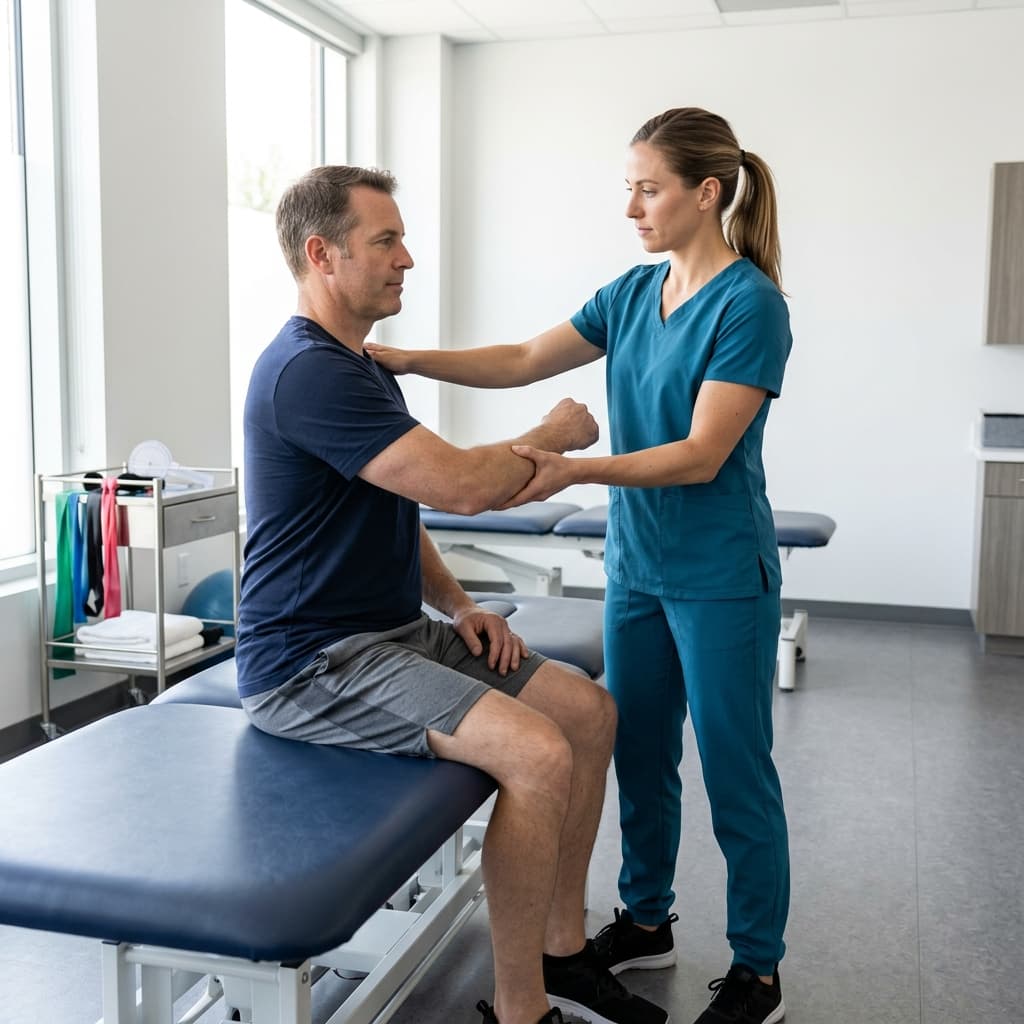
Physiotherapy for Rotator Cuff Tear

Structured shoulder rehabilitation for rotator cuff tears with pain, weakness, overhead limitation, and function loss.

Clinical Analysis

Pathology Overview: Rotator Cuff Tear

This section explains how symptoms typically behave, what often keeps them going, and which physical capacities usually need to improve for recovery to hold up in daily life.

Rotator cuff tears can affect pain, strength, overhead tolerance, and confidence with daily tasks such as dressing, lifting, reaching, and sleep. Symptoms vary widely, so treatment decisions need to match age, goals, load tolerance, and whether the tear is being managed conservatively or after surgery.

The focus is to improve useful movement, rebuild shoulder control, and strengthen the wider shoulder system rather than relying only on rest or passive treatment.

Clinical Snapshot

Structured shoulder rehabilitation for rotator cuff tears with pain, weakness, overhead limitation, and function loss.

Typical Symptom Pattern

  • Pain when lifting the arm or reaching overhead
  • Shoulder weakness during pressing, lifting, or carrying
  • Night pain or difficulty lying on the affected side
  • Loss of confidence with gym, work, or overhead tasks

What We Clarify During Assessment

Clinical assessment to differentiate tear-related weakness from other shoulder drivers
Movement plan matched to pain, range, and strength deficits
Structured exercise progression for cuff and scapular support
Return-to-work, gym, or surgery-recovery guidance

Common Presentations

  • Pain when lifting the arm or reaching overhead
  • Shoulder weakness during pressing, lifting, or carrying
  • Night pain or difficulty lying on the affected side
  • Loss of confidence with gym, work, or overhead tasks

Modalities Offered

  • Assessment of cuff loading tolerance and shoulder mechanics
  • Pain and mobility strategies for irritable phases
  • Rotator cuff and scapular strength progression
  • Overhead loading and return-to-function rehabilitation
  • Post-surgical progression where relevant

Clinical Approach

How Treatment Progresses

3 Rehab Stages

We assess how much the shoulder is limited by pain, weakness, stiffness, and compensation. That helps decide whether the early priority is symptom control, restoring motion, or starting strength work right away.

Later stages focus on building confidence under load so overhead reach, lifting, training, and daily function improve in a measurable way.

Your Plan May Include

Clinical assessment to differentiate tear-related weakness from other shoulder drivers
Movement plan matched to pain, range, and strength deficits
Structured exercise progression for cuff and scapular support
Return-to-work, gym, or surgery-recovery guidance
1

Assess and calm symptoms

  • Clinical assessment to differentiate tear-related weakness from other shoulder drivers
  • Assessment of cuff loading tolerance and shoulder mechanics
  • Pain and mobility strategies for irritable phases
2

Restore movement and capacity

  • Movement plan matched to pain, range, and strength deficits
  • Rotator cuff and scapular strength progression
  • Overhead loading and return-to-function rehabilitation
3

Return to daily activity and sport

  • Return-to-work, gym, or surgery-recovery guidance
  • Overhead loading and return-to-function rehabilitation
  • Post-surgical progression where relevant
Patient Recovery Protocol

Active Management Guidance

Do not stop all shoulder movement unless you have been told to protect a surgical repair
Build cuff loading gradually instead of jumping between rest and overload
Improve thoracic and scapular control alongside shoulder strength
Use function markers like sleep, reach, and lifting tolerance to track progress

Clinical Q&A

Does every rotator cuff tear need surgery?

No. Many rotator cuff tears can be managed well with structured rehabilitation, depending on the tear, symptoms, age, goals, and functional demands.

Can I strengthen the shoulder if it is painful?

Usually yes, but the load and exercise choice need to match irritability and current capacity. The goal is progressive strengthening, not repeated flare-ups.

How long does recovery usually take?

Recovery time varies a lot depending on whether the tear is partial or full thickness, conservative or post-operative, and how much strength and overhead function need to be rebuilt.