Back to Directory

Physiotherapy for Meniscus Injury

Knee rehabilitation for twisting injuries, joint-line pain, swelling, locking-like symptoms, and staged return to activity.

Clinical Analysis

Pathology Overview: Meniscus Injury

This section explains how symptoms typically behave, what often keeps them going, and which physical capacities usually need to improve for recovery to hold up in daily life.

Meniscus injuries can affect pain, swelling, knee confidence, twisting tolerance, and the ability to squat, pivot, run, or play sport. Symptoms vary from relatively calm mechanical pain to highly irritable knees that react to stairs, walking, and impact.

Physiotherapy is built around what the knee currently tolerates, whether the injury is managed conservatively or after surgery, and how much movement confidence needs to be rebuilt.

Clinical Snapshot

Knee rehabilitation for twisting injuries, joint-line pain, swelling, locking-like symptoms, and staged return to activity.

Typical Symptom Pattern

  • Knee pain after twisting, pivoting, or squatting
  • Swelling or stiffness after activity
  • Pain around the joint line or during deep bend
  • Reduced confidence with stairs, sport, or directional change

What We Clarify During Assessment

Clinical assessment to guide conservative or post-operative rehab decisions
Progressive knee-strength and movement-control plan
Activity modifications for walking, stairs, and gym work
Structured return-to-function and return-to-sport strategy

Common Presentations

  • Knee pain after twisting, pivoting, or squatting
  • Swelling or stiffness after activity
  • Pain around the joint line or during deep bend
  • Reduced confidence with stairs, sport, or directional change

Modalities Offered

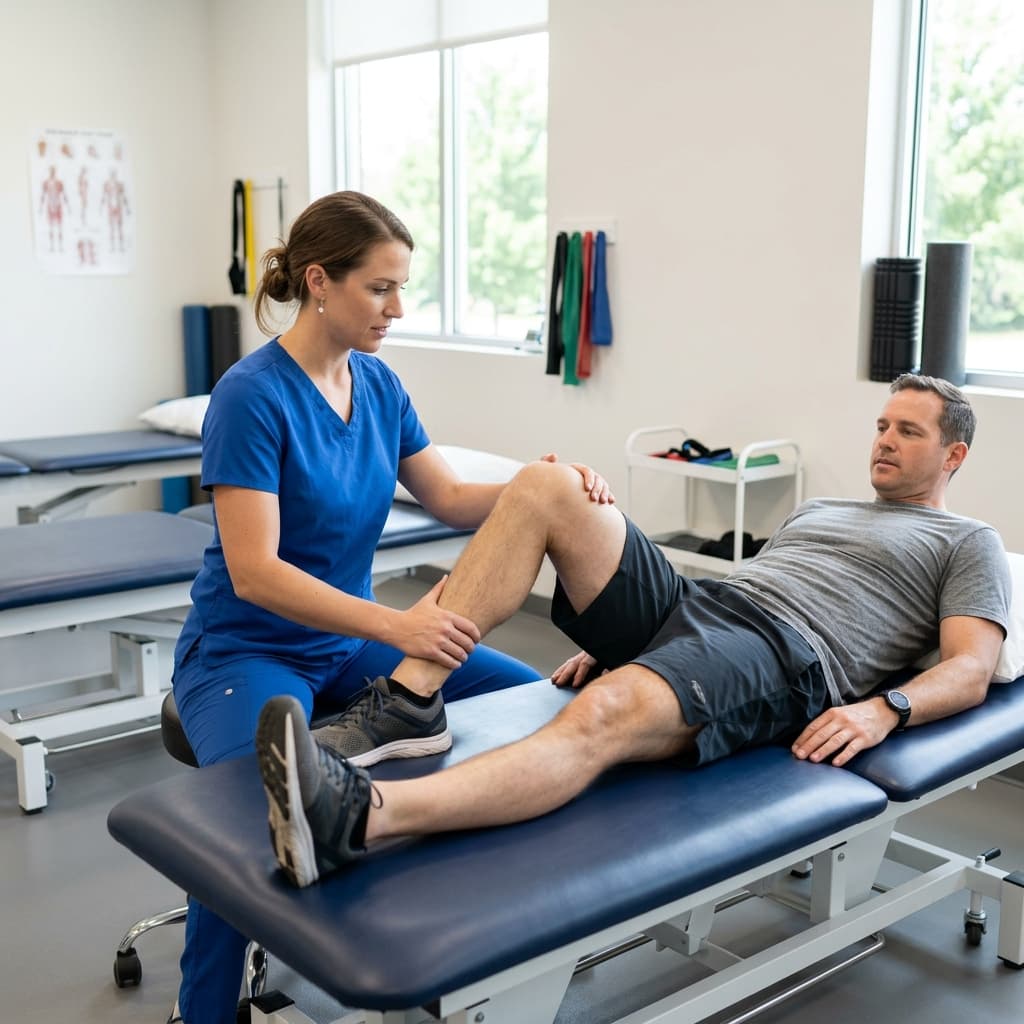
  • Assessment of knee irritability, range, and loading tolerance
  • Swelling and pain-management strategies in early stages
  • Strength progression for quadriceps, hamstrings, and control
  • Squat, lunge, and single-leg retraining
  • Return-to-running and return-to-sport planning

Clinical Approach

How Treatment Progresses

3 Rehab Stages

We start by understanding how reactive the knee is, whether swelling is ongoing, and which movements are most limited. That guides whether the first priority is symptom control, range, walking confidence, or strength.

As the knee settles, treatment progresses into deeper strength work, single-leg control, and return-to-activity drills so the knee becomes more reliable under load.

Your Plan May Include

Clinical assessment to guide conservative or post-operative rehab decisions
Progressive knee-strength and movement-control plan
Activity modifications for walking, stairs, and gym work
Structured return-to-function and return-to-sport strategy
1

Assess and calm symptoms

  • Clinical assessment to guide conservative or post-operative rehab decisions
  • Assessment of knee irritability, range, and loading tolerance
  • Swelling and pain-management strategies in early stages
2

Restore movement and capacity

  • Progressive knee-strength and movement-control plan
  • Strength progression for quadriceps, hamstrings, and control
  • Squat, lunge, and single-leg retraining
3

Return to daily activity and sport

  • Structured return-to-function and return-to-sport strategy
  • Squat, lunge, and single-leg retraining
  • Return-to-running and return-to-sport planning
Patient Recovery Protocol

Active Management Guidance

Respect swelling as a sign the knee may still need load adjustment
Build quadriceps and single-leg strength early and consistently
Progress twisting and deeper knee bend in stages
Use walking, stairs, and squatting as practical progress markers

Clinical Q&A

Does every meniscus injury need surgery?

No. Many meniscus injuries can be managed conservatively with rehabilitation, depending on symptoms, function, and how the knee is responding over time.

Can I still strengthen the knee if it hurts?

Usually yes, but the exercises and depth need to match your current irritability so the knee is challenged without repeated flare-ups.

When can I return to running or sport?

That depends on swelling, strength, control, and symptom response rather than time alone. A staged return is usually safer than testing it too early.