
Back to Directory

Physiotherapy for Chronic Pain Syndrome

Function-focused rehabilitation for persistent pain, movement sensitivity, flare-up anxiety, and reduced confidence with daily activity.

Clinical Analysis

Pathology Overview: Chronic Pain Syndrome

This section explains how symptoms typically behave, what often keeps them going, and which physical capacities usually need to improve for recovery to hold up in daily life.

Chronic pain syndrome usually involves pain that has stayed active for longer than expected and is now affecting sleep, energy, confidence, work, and normal activity levels. In many cases the nervous system has become more protective and symptoms can feel out of proportion to day-to-day loading.

Rehabilitation is not about dismissing the pain. It is about understanding how pain sensitivity, stress, pacing, conditioning, and activity avoidance are interacting so function can begin to improve again.

Clinical Snapshot

Function-focused rehabilitation for persistent pain, movement sensitivity, flare-up anxiety, and reduced confidence with daily activity.

Typical Symptom Pattern

  • Persistent pain affecting daily activity for months or longer
  • Flare-ups that seem disproportionate to small tasks or movement
  • Reduced confidence with exercise, work, or normal routine
  • Sleep, fatigue, or stress sensitivity linked to pain behaviour

What We Clarify During Assessment

Assessment of pain behaviour, function limits, and aggravating patterns
Graded rehabilitation plan matched to current tolerance
Practical pacing and flare-up management strategies
Progress tracking based on function as well as symptom response

Common Presentations

  • Persistent pain affecting daily activity for months or longer
  • Flare-ups that seem disproportionate to small tasks or movement
  • Reduced confidence with exercise, work, or normal routine
  • Sleep, fatigue, or stress sensitivity linked to pain behaviour

Modalities Offered

  • Pain-science-based assessment and education
  • Graded movement and paced loading progression
  • Flare-up planning and symptom-monitoring strategy
  • Functional strength and conditioning within tolerance
  • Support for returning to meaningful daily activity

Clinical Approach

How Treatment Progresses

3 Rehab Stages

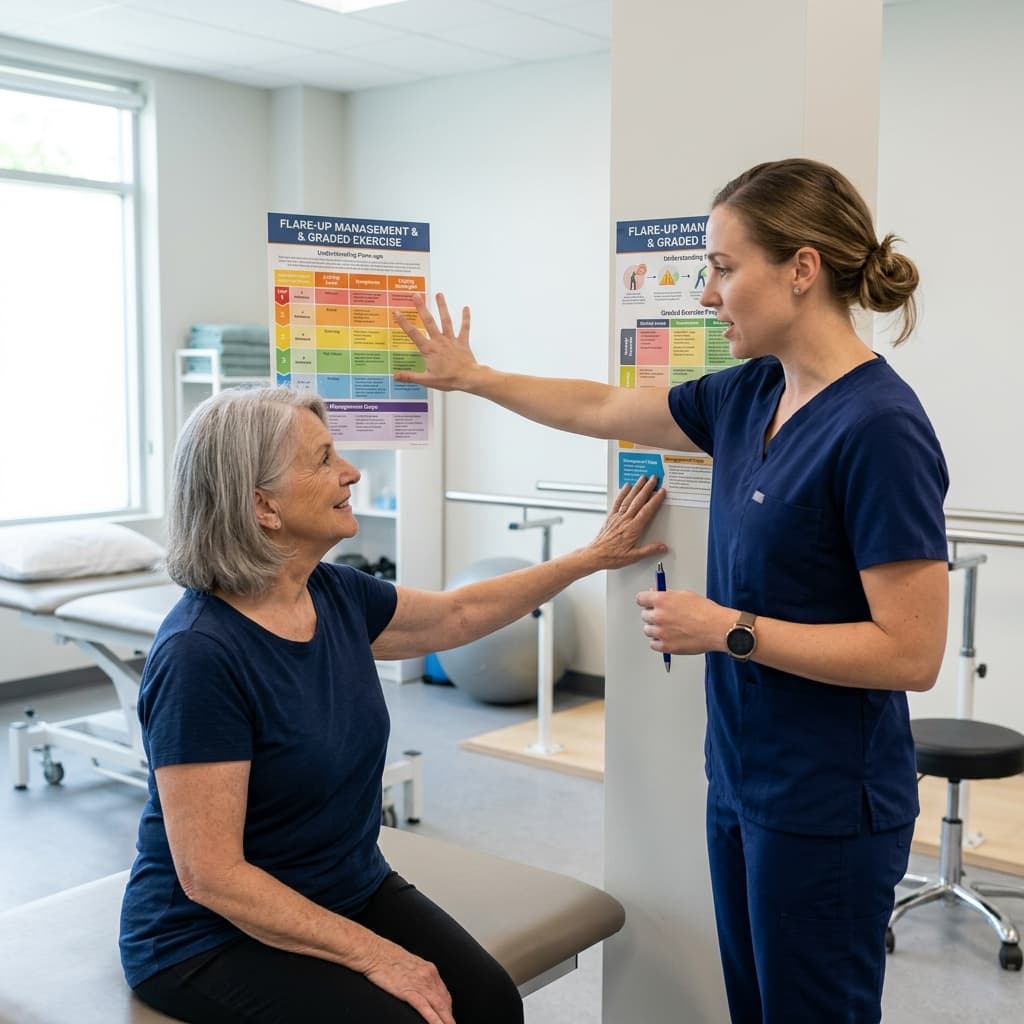
We identify where the pain cycle is being reinforced by fear, avoidance, overdoing on good days, underdoing on bad days, or poor recovery. That gives us a more realistic starting point for progression.

Treatment then aims to rebuild tolerance and confidence steadily, using meaningful functional goals instead of chasing complete symptom removal before activity resumes.

Your Plan May Include

Assessment of pain behaviour, function limits, and aggravating patterns
Graded rehabilitation plan matched to current tolerance
Practical pacing and flare-up management strategies
Progress tracking based on function as well as symptom response
1

Assess and calm symptoms

  • Assessment of pain behaviour, function limits, and aggravating patterns
  • Pain-science-based assessment and education
  • Graded movement and paced loading progression
2

Restore movement and capacity

  • Graded rehabilitation plan matched to current tolerance
  • Flare-up planning and symptom-monitoring strategy
  • Functional strength and conditioning within tolerance
3

Return to daily activity and sport

  • Progress tracking based on function as well as symptom response
  • Functional strength and conditioning within tolerance
  • Support for returning to meaningful daily activity
Patient Recovery Protocol

Active Management Guidance

Use pacing so activity becomes more consistent from week to week
Track function gains, not just pain scores, during rehab
Avoid the pattern of doing too much on good days and crashing afterward
Build sleep, recovery, and movement habits alongside direct rehab work

Clinical Q&A

Does chronic pain mean the problem is all in my head?

No. The pain is real, but long-standing pain often involves a more sensitive protective system, which changes how recovery needs to be managed.

Can exercise still help if movement feels threatening?

Yes, when it is introduced gradually and matched to your current tolerance. The goal is to rebuild confidence and function without repeated big flare-ups.

What counts as progress if pain is still present?

Progress can include better sleep, longer walking tolerance, more confidence, fewer big flare-ups, and improved ability to work or exercise even before pain is fully settled.