
Section Guide
6 Sections

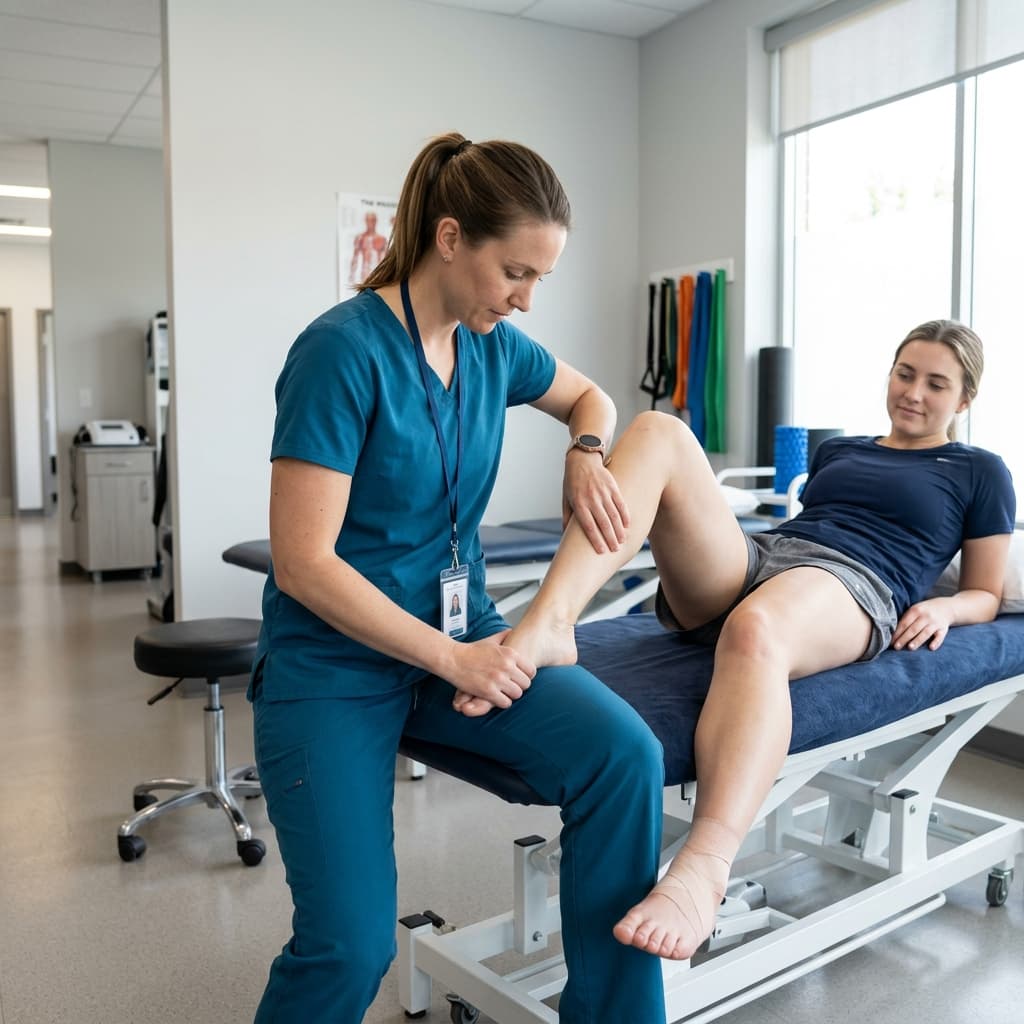
Sports and injury rehabilitation for sprains and ligament injuries affecting stability, swelling, balance, and return-to-play confidence.
Section Guide
6 Sections
This section explains how symptoms typically behave, what often keeps them going, and which physical capacities usually need to improve for recovery to hold up in daily life.
Ligament injuries commonly affect the ankle, knee, thumb, or other joints after twisting, landing, contact, or sudden directional change. Early symptoms often include pain, swelling, reduced confidence, and loss of stability under load.
Good rehab goes beyond rest. It needs to rebuild strength, balance, reaction to load, and trust in the joint so recurrence risk is reduced when you return to training or daily activity.

Clinical Snapshot
Sports and injury rehabilitation for sprains and ligament injuries affecting stability, swelling, balance, and return-to-play confidence.
Typical Symptom Pattern
What We Clarify During Assessment
Related Guides
If your symptoms feel more specific or overlap with another pattern, these guides can help you understand the closest condition pathways.
ACL Injury Recovery
Criteria-based rehabilitation after ACL injury or reconstruction with staged strength, control, and return-to-sport planning.
Meniscus Injury
Knee rehabilitation for twisting injuries, joint-line pain, swelling, locking-like symptoms, and staged return to activity.
Foot and Ankle Pain
Targeted physiotherapy for ankle sprains, plantar heel pain, Achilles overload, calf strain, and lower-limb movement dysfunction.
We first establish how reactive the injured joint is and whether the main limiter is pain, swelling, weakness, or instability. That shapes whether the early focus is symptom control or starting stability work sooner.
Later stages build single-leg control, dynamic strength, and return-to-play readiness so the joint feels reliable under real sporting demand.
Your Plan May Include
Not always. Bracing decisions depend on the joint, injury severity, and stage of recovery, and are usually combined with progressive rehabilitation rather than replacing it.
That is assessed through strength, balance, movement control, symptom response, and how well you tolerate sport-specific progression.
Recurrence is common when strength, balance, and dynamic control are not rebuilt fully before returning to higher-demand activity.