
Section Guide
6 Sections

Assessment-led rehab for kneecap pain during stairs, squats, running, jumping, and repeated lower-limb loading.
Section Guide
6 Sections
This section explains how symptoms typically behave, what often keeps them going, and which physical capacities usually need to improve for recovery to hold up in daily life.
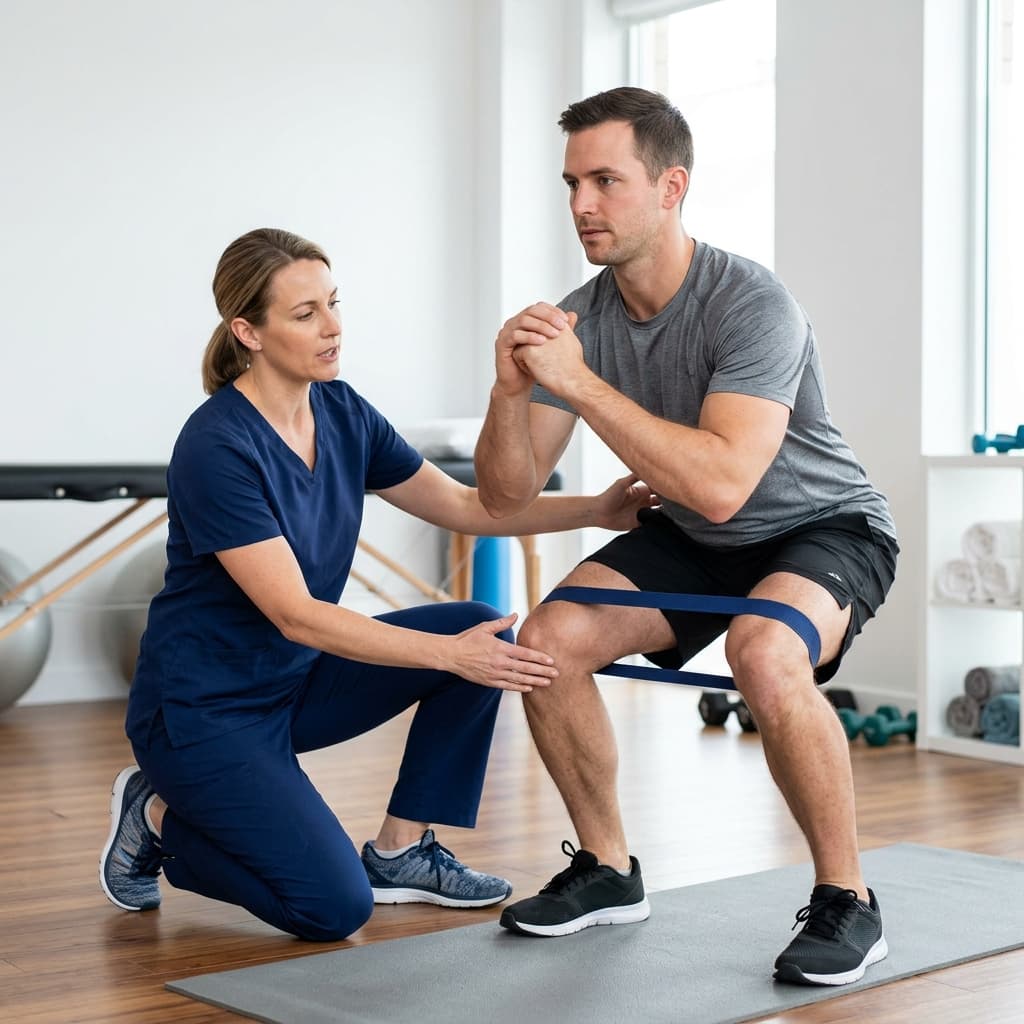
Patellofemoral pain often appears as pain around or behind the kneecap, especially during stairs, squatting, running, lunging, jumping, or long sitting. It is usually influenced by load tolerance, training progression, strength deficits, and movement-control factors rather than a single structural problem.
Recovery works best when painful tasks are modified intelligently and strength is rebuilt through the hip, thigh, calf, and whole kinetic chain.

Clinical Snapshot
Assessment-led rehab for kneecap pain during stairs, squats, running, jumping, and repeated lower-limb loading.
Typical Symptom Pattern
What We Clarify During Assessment
Related Guides
If your symptoms feel more specific or overlap with another pattern, these guides can help you understand the closest condition pathways.
Knee Pain
Evidence-based rehabilitation for patellofemoral pain, meniscal irritation, ligament recovery, arthritis-related stiffness, and load-related knee pain.
Meniscus Injury
Knee rehabilitation for twisting injuries, joint-line pain, swelling, locking-like symptoms, and staged return to activity.
Achilles Tendinopathy
Targeted rehabilitation for Achilles pain, tendon stiffness, running overload, and reduced push-off confidence.
We assess which tasks provoke the kneecap most and whether the main limits are load tolerance, single-leg control, strength, or training error. That helps us change the plan without shutting activity down completely.
Later stages focus on restoring confidence with stairs, running, jumping, and gym loading so the knee feels reliable under real demands.
Your Plan May Include
No. Patellofemoral pain is often a load and movement-tolerance problem, especially in active adults, and is not the same as established arthritic change.
Usually not. Squats often stay in the plan with changes to depth, tempo, load, or range so capacity improves without repeated flare-ups.
Often yes. Running usually needs temporary modification rather than a full stop, depending on how reactive the pain is and how the knee responds afterward.