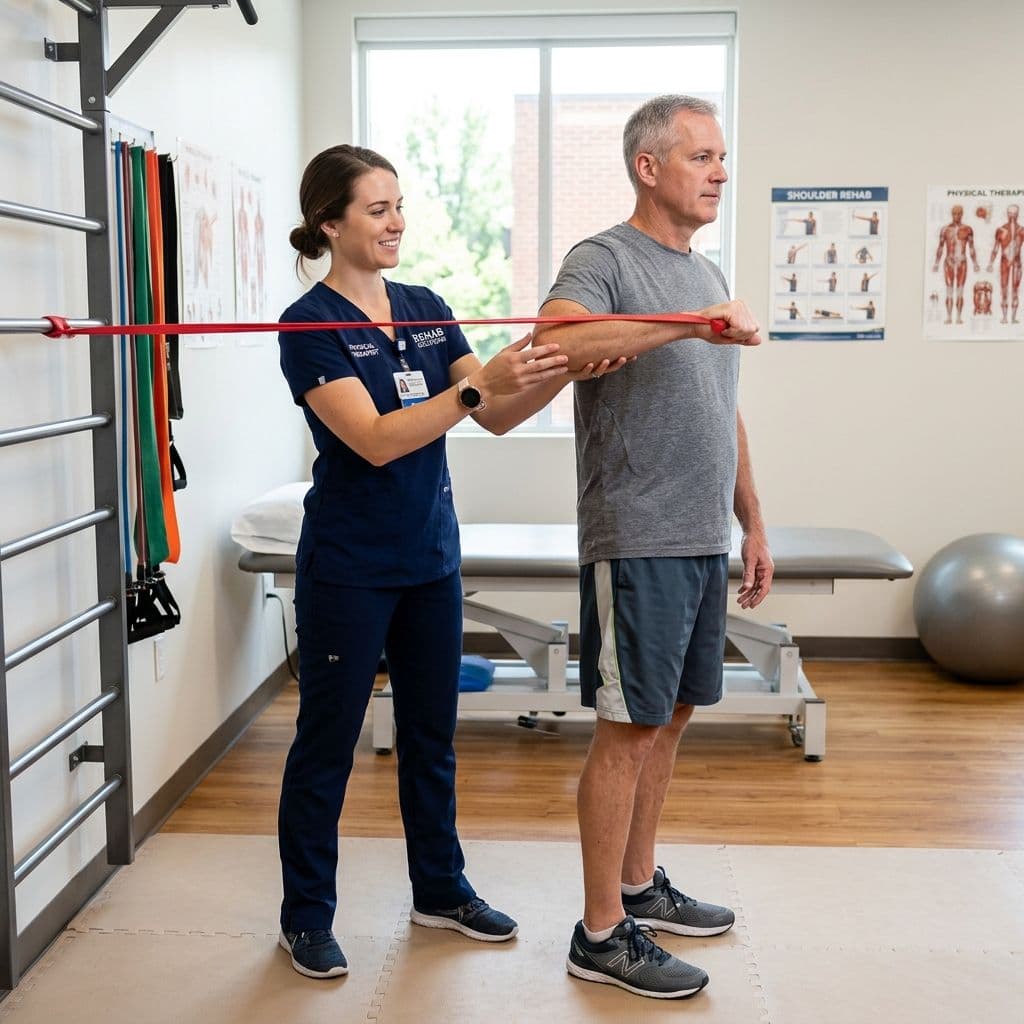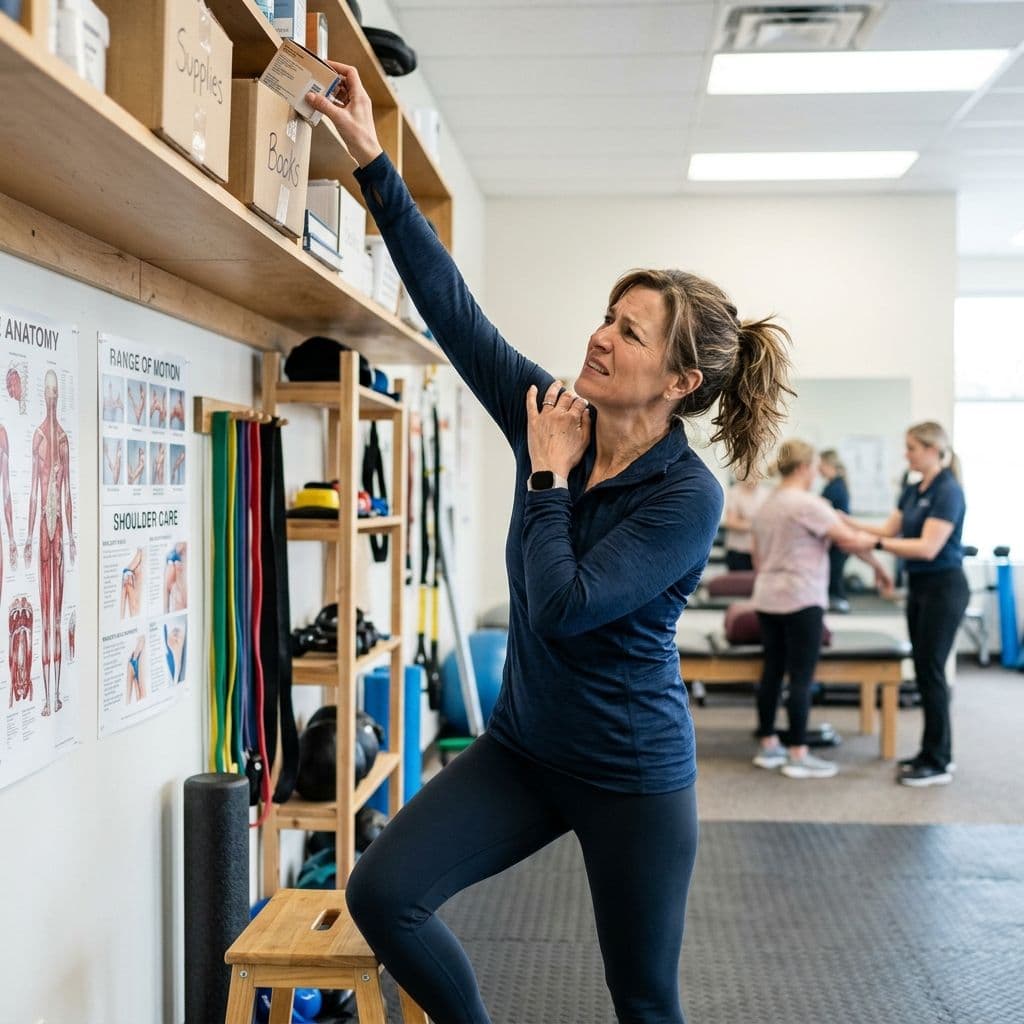

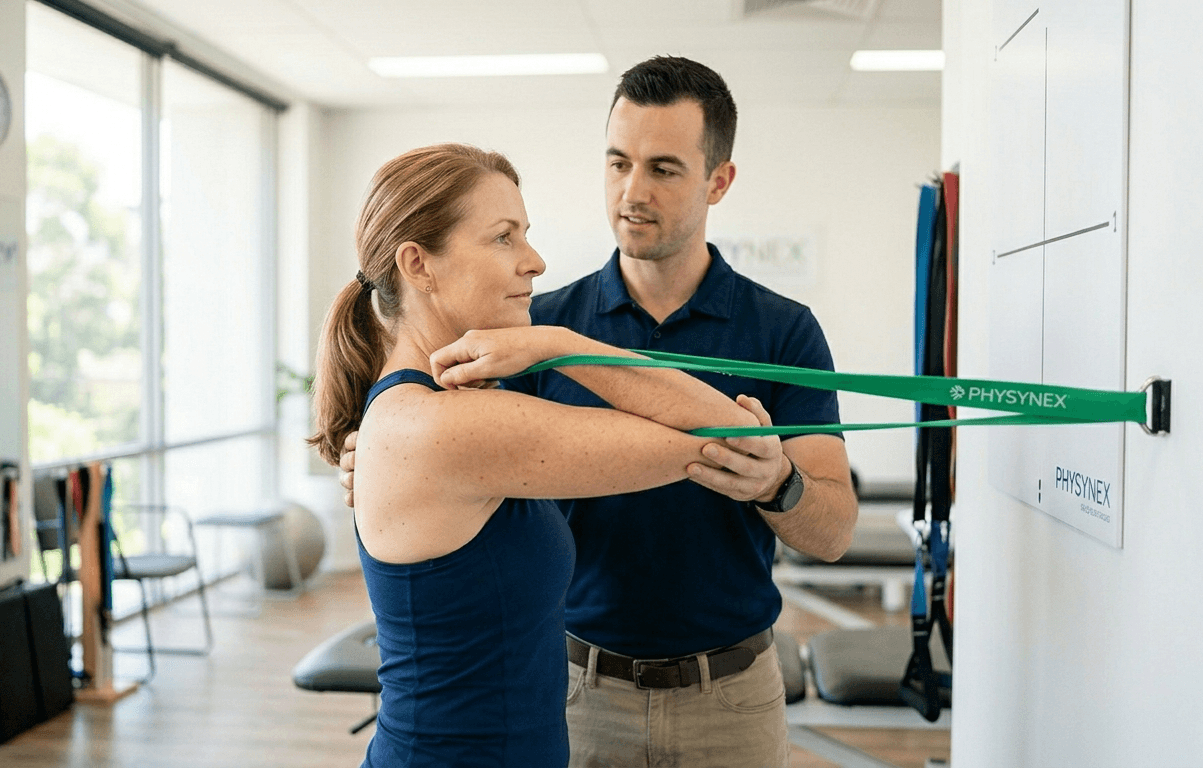
Frozen shoulder is frustrating because it rarely behaves like a simple strain. It often begins with pain, then gradually becomes stiffness, then starts interfering with everyday life in oddly specific ways. Reaching behind the back becomes hard. Dressing becomes awkward. Sleeping on the affected side becomes painful. Reaching into a cupboard feels blocked. The shoulder starts feeling less like a joint and more like a locked door.
Frozen shoulder, also called adhesive capsulitis, usually improves over time, but the timeline can be long. The role of physiotherapy is not to force the shoulder open. It is to guide the shoulder through recovery with the right amount of movement, the right level of challenge, and enough education that the person does not become fearful or overly protective.
Why frozen shoulder feels different
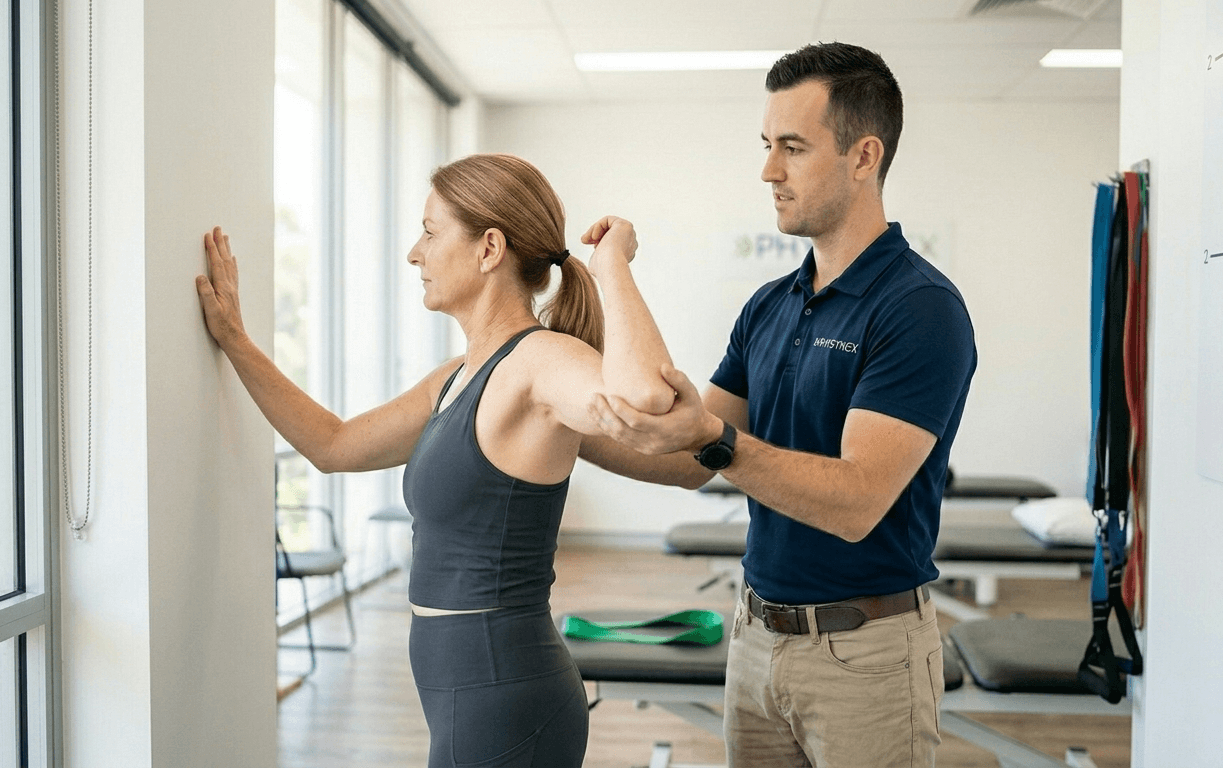
Many shoulder problems hurt mainly in certain loaded movements. Frozen shoulder tends to reduce movement in several directions. The capsule around the shoulder becomes stiff and sensitive. The shoulder may hurt at rest, at night, or during sudden reaching. In the painful phase, aggressive stretching can make symptoms worse. In the stiff phase, the shoulder may tolerate more mobility work but still needs patience.
Common symptoms include:
- Deep shoulder ache, often worse at night
- Loss of motion when reaching overhead
- Difficulty reaching behind the back
- Pain while dressing, bathing, or fastening clothing
Also note: Stiffness that does not feel like ordinary tightness; Guarding and fear of sudden shoulder movement.
The stages matter
Frozen shoulder is often discussed in stages. These stages are not perfectly separate, but they help guide treatment.
Pain-dominant stage: Pain is high and the shoulder reacts easily. The priority is calming symptoms, protecting sleep, maintaining gentle movement, and avoiding repeated flare-ups.
Stiffness-dominant stage: Pain may reduce, but motion remains limited. This is where mobility work, progressive stretching, and functional reach practice become more important.
Recovery stage: Movement gradually improves. Strength, control, and confidence need rebuilding so the arm is useful again, not just less painful.
A self-check for frozen shoulder pattern
Ask yourself:
- Is shoulder rotation behind the back clearly restricted?
- Is reaching overhead limited even when you try gently?
- Does the shoulder feel stiff in more than one direction?
- Is sleep affected by shoulder pain?
Also note: Did the problem build slowly rather than after one clear injury?; Are you avoiding normal arm swing or daily tasks?.
If the answer is yes to several, an assessment can help confirm whether frozen shoulder is likely or whether another shoulder problem is present.
What physiotherapy should include
Pain education: People often worry that every painful movement is causing damage. With frozen shoulder, the shoulder is sensitive and stiff, but complete avoidance is usually not helpful. Education helps people move without panic.
Gentle mobility: Mobility should match the stage. Pendulum movements, supported table slides, wand-assisted movement, wall walks, and gentle external rotation may be used, but the dose matters. The right question is not "Can you force it further?" It is "Can you move it today without paying for it tomorrow?"
Sleep and daily modification: Sleep loss makes pain harder to manage. Pillow support, avoiding prolonged compression on the shoulder, and changing dressing techniques can reduce irritation.
Strength when ready: Once pain is less reactive, light strengthening helps restore confidence. This may include scapular control, rotator cuff work, isometrics, and functional reaching progressions.
Functional practice: The shoulder has to return to real tasks: hair care, reaching shelves, putting on clothes, lifting light items, and eventually gym or sport demands if relevant.
What not to do
Avoid these common traps:
- Forcing painful stretches aggressively every day
- Avoiding the arm completely for weeks
- Expecting a one-session fix
- Comparing your timeline with someone else's
Also note: Training heavy overhead movements before basic motion returns; Ignoring sleep, stress, diabetes, or other health factors.
A practical 2-week reset
This is a general framework:
- Identify the most painful daily task.
- Modify that task so it is easier for two weeks.
- Do short mobility sessions once or twice daily.
- Track night pain, reaching ability, and next-day soreness.
- Progress only if symptoms settle back within a reasonable time.
The aim is to reduce the irritability of the shoulder so progress becomes possible.
How progression should feel
Frozen shoulder rehab should not feel like a battle with the joint. In the painful stage, progress may mean better sleep, less guarding, and fewer sharp catches. In the stiffness stage, progress may mean gaining a few degrees of reach and being able to use the arm more naturally. In the recovery stage, progress may mean lifting, dressing, and reaching without planning every movement.
Use a simple response rule. During exercise, mild discomfort may be acceptable. After exercise, symptoms should settle back to baseline within a reasonable time. If pain spikes for the rest of the day or sleep becomes worse that night, the dose was probably too much.
What a clinic progression may include
A physiotherapy plan may move through several layers:
- Pain control and sleep positioning
- Gentle range of motion work
- Assisted mobility using the other hand, a wall, or a stick
- Shoulder blade control and posture tolerance
Also note: Light isometric strength when pain allows; Functional reaching practice; Progressive resistance for rotator cuff and shoulder muscles; Return to gym, work, or sport tasks if relevant.
This order is not fixed for everyone. A person with high night pain needs a different starting point from someone who mainly has stiffness. Diabetes, thyroid conditions, previous shoulder injury, and how long symptoms have been present can also change the plan.
How to make daily tasks easier while recovering
You do not need to suffer through every task to prove the shoulder is improving. Change the task while the shoulder catches up.
- Put frequently used items at waist or chest height.
- Dress the painful arm first and undress it last.
- Use pillows to support the arm at night.
- Avoid sudden reaching behind the body.
Also note: Break overhead tasks into smaller parts.; Keep the arm moving gently during the day instead of guarding it..
These changes reduce unnecessary irritation without stopping recovery.
When progress feels slow
Frozen shoulder progress can be quiet. A person may feel nothing is changing because the shoulder is still stiff, but useful signs may already be present. Night pain may reduce. Dressing may become less stressful. The arm may swing more naturally while walking. Reaching may still be limited, but the sharp catch may appear less often.
This is why tracking matters. Measure one or two practical tasks every week:
- How high can you reach on the wall?
- Can you wash your hair with less compensation?
- Can you reach the back pocket more easily?
- Did night pain wake you fewer times?
- Can you dress with less hesitation?
When progress is slow, the answer is not always harder stretching. Sometimes the plan needs better symptom control, more frequent gentle movement, or a different strengthening entry point.
Red flags
Seek medical review if:
- Pain began after a major fall or trauma
- You cannot actively lift the arm after injury
- The shoulder is red, hot, or very swollen
- There is fever or unexplained illness
- Pain is associated with chest tightness or breathlessness
- There is significant neck pain with numbness or weakness in the arm
Common questions about frozen shoulder
How long does frozen shoulder take?
It often takes months, and in some people recovery can take much longer. A good plan helps keep the process moving and reduces unnecessary flare-ups.
Should frozen shoulder be stretched hard?
Not usually, especially when pain is high. Stretching should be tolerable and stage-appropriate.
Can injections help?
Some people benefit from medical options such as anti-inflammatory medication or injections. Physiotherapy remains important because pain relief alone does not rebuild movement and function.
Can I continue gym training?
Often yes, with modifications. Lower-body and pain-free upper-body work may continue, while provocative shoulder loads are adjusted.
When frozen shoulder needs assessment
Book an assessment if shoulder stiffness is affecting sleep, dressing, bathing, work, or basic reaching. It is especially useful when you are unsure whether to stretch more, rest more, or seek medical options. Frozen shoulder can look similar to other shoulder problems, so guessing can waste time.
A proper assessment checks active and passive motion, pain irritability, strength, neck contribution, daily triggers, and stage of recovery. The plan should tell you what to do on high-pain days and what to do when stiffness becomes the main limitation. That clarity prevents the two common mistakes: forcing the shoulder when it is angry, or avoiding it so much that confidence drops further.
Explore related shoulder care
Clinic takeaway for frozen shoulder
Frozen shoulder is slow, but it is not hopeless. At Physynex, we help you understand the stage, calm the pain, recover motion gradually, and rebuild the practical reach you need for daily life.